ADHD Flow State: How to Trigger and Sustain Hyperfocus
Definition
ADHD flow state
ADHD flow state is an intense, involuntary absorption phase where the ADHD brain locks onto a task, often accompanied by hyperfocus. This state is driven by dopamine dysregulation and varies between interest-based and executive function-controlled attention. Triggering it on demand requires aligning reward, structure, and emotional salience.
Key Takeaways
What you need to know
- 1ADHD hyperfocus is not a switch you flip on; it's a flow cycle you can train using dopamine scheduling and interest-based triggers.
- 2Executive dysfunction doesn't prevent flow: it explains why flow occurs unpredictably and why you need external scaffolds to sustain it.
- 3RSD (Rejection Sensitive Dysphoria) can either break hyperfocus or, when reframed, become a powerful motivational driver.
- 4Working memory is the bottleneck: using externalization and micro-rewards helps you stay in hyperfocus without cognitive crashes.
- 5The Hyperfocus Activation framework uses a step-by-step cycle: Trigger, Commit, Engage, Sustain, and Disengage.
 32s
32sHow to Trigger ADHD Flow State on Demand
Learn to trigger and sustain ADHD hyperfocus with the Hyperfocus Activation framework. Discover dopamine scheduling and executive function strategies. Full guide at link.
The Science of ADHD Flow State and Hyperfocus
Research shows that ADHD flow state is a distinct neurocognitive phenomenon characterized by intense, time-blind absorption in a task. Unlike typical flow, which emerges from performance-oriented challenge, ADHD hyperfocus is often triggered by high-interest, low-structure tasks that stimulate dopamine release. A 2022 study in the Journal of Attention Disorders found that 74% of adults with ADHD experience hyperfocus regularly, yet most lack a reliable method to trigger it intentionally.
According to the Hyperfocus Activation framework, ADHD flow state occurs when attention, motivation, and emotional regulation briefly override executive dysfunction. The brain's default network behaves like a "cyber-looper," and the book suggests viewing hyperfocus not as an unmanageable symptom but as a natural resource. The activation cycle: Trigger, Commit, Engage, Sustain, Disengage: maps the path from distraction to deep focus, making the unpredictable more predictable.
Crucially, hyperfocus is not the same as concentration. It is a dopamine-driven, low-threshold reward system that can hijack prefrontal control. But by understanding this, you can design conditions that trigger flow with greater intention. The goal is not to force focus but to create the neurological ingredients: intrinsic interest, clear cues, and immediate feedback.
- ADHD flow state is characterized by involuntary time distortion and highly focused attention.
- Clinical evidence suggests hyperfocus occurs in up to 74% of adults with ADHD.
- The Hyperfocus Activation framework provides a 5-step cycle to reproduce flow conditions.
Executive Function, Dopamine, and the ADHD Flow State
Executive dysfunction is the engine of ADHD flow state. The brain's executive system: responsible for prioritizing, working memory, and impulse control: is under-activated, while the dopamine reward circuit is over-reactive in certain contexts. This explains why you can hyperfocus on a new video game for hours but struggle to start a routine report. Interesting tasks deliver immediate dopamine; mundane tasks deliver none.
The Hyperfocus Activation book calls this the "Interest-Reactivity Gap." It means that when a task hooks your interest, dopamine surges and suppresses your awareness of time, hunger, and even anxiety. However, because executive function is impaired, you can't easily switch attention away from the lure. So, paradoxically, what seems like a strength (hyperfocus) is often a deregulated reward system overriding your executive brakes.
To leverage this, you must intentionally manipulate dopamine output. The book recommends associating low-dopamine tasks with high-dopamine rewards: for example, pairing 20 minutes of report-writing with a short game or engaging audio snippet. This is called "dopamine scheduling" and it raises the floor of motivation so flow can be triggered without waiting for inspiration.
- Executive dysfunction determines when flow is triggered: not whether it occurs.
- Dopamine scheduling is a practical method to align reward with less interesting tasks.
- Hyperfocus can be a symptom of a reward imbalance, not a superpower: until you work with it.
Dopamine Scheduling: The Hyperfocus Activation Trigger
Dopamine is the ADHD flow state's fuel gauge. The ADHD brain has lower baseline dopamine levels, prompting constant seeking behavior. However, when interest or novelty spikes, dopamine binds to postsynaptic receptors and creates a temporary "high focus" state. The Hyperfocus Activation framework's Trigger stage is designed to force this spike intentionally using structured novelty and reward anticipation.
Actionable strategies include setting a 3-minute pre-task ritual that involves a high-sensory cue (e.g., listening to a favorite high-energy song), listing a micro-reward that follows a 10-minute work block, and using a visual timer to create a "start line" for flow. The book emphasizes that the brain responds to anticipation more than the reward itself; thus, train yourself to associate work starts with a dopamine hint.
One powerful technique is "Dopamine Pairing," where you alternate between a preferred high-dopamine activity (like drawing or coding) and a necessary low-dopamine activity (like administrative email). You start with a 5-minute high-dopamine warm-up to reach activation threshold, then switch to the low-dopamine task for 15 minutes. This staggered schedule maintains elevated dopamine without allowing hyperfocus to fully absorb you.
- A 3-minute sensory ritual before focused work increases dopamine release.
- Pairing high- and low-dopamine tasks in 15-minute intervals prevents executive exhaustion.
- Anticipation is key: the hypothalamus releases dopamine in expectation of a reward.
Managing RSD to Protect Hyperfocus
Rejection Sensitive Dysphoria (RSD) is both a suppressor and a potential amplifier of ADHD flow state. RSD triggers intense emotional pain in response to perceived criticism or rejection, which activates the amygdala and shuts down prefrontal function. If you fear failure while trying to enter flow, this amygdala hijack makes hyperfocus impossible.
However, Hyperfocus Activation proposes that RSD's intensity can be redirected as a motivational surge. When harnessed, the same emotional amplification that causes meltdowns can create extreme focus on proving a point or completing a creative project. This is why many ADHD individuals produce their best work when slightly angry or despite a minor rejection. The key is not to suppress RSD but to channel it into task-directed energy.
Practical techniques include naming the RSD "spike" (e.g., saying "This is my RSD talking"), using a motivational statement like "I'll prove I can do this," and setting a timer to limit rumination to 2 minutes before you begin. The book also advises creating a "pre-commitment ritual" that reduces fear of judgment: write down why the task matters to you internally, not to others.
- RSD blocks flow by triggering the amygdala, which inhibits executive functions.
- Reframing RSD into "determination energy" can fuel sustained hyperfocus.
- Naming RSD and using a 2-minute timer reduces the emotional hijack enough to start.
Working Memory and the Hyperfocus Sustain Cycle
Working memory is the bottleneck of ADHD flow state. Even when you're hyperfocused, if your working memory becomes overloaded, you lose your place and the flow state shatters. This is why flow often ends with a sudden realization like "Wait, I forgot to pick up the kids." The Hyperfocus Activation framework argues that you can't rely on your brain to hold task details; you must externalize them.
To sustain hyperfocus without cognitive drain, the book recommends using a "Master Task List" separate from the flow session, writing down your next step before you begin, and using a visual progress indicator. For instance, if you're writing an article, keep a sticky note with your thesis and one next action. This prevents working memory from cycling and allows your attention to stay on the task itself.
Another evidence-backed strategy is "Flow Sprints." Set a timer for 20-30 minutes, commit to a single output target, and then take a 5-minute break. Many ADHD brains find that forced breaks actually improve sustained focus because they reset dopamine receptors and reduce working-memory fatigue. This aligns with research on ultradian rhythms, which suggests natural attention cycles last 90 minutes but can be shortened for ADHD.
- Overloading working memory is the #1 killer of hyperfocus.
- Externalize all task instructions and progress on sticky notes or digital boards.
- Flow Sprints (20-30 minutes) with an alarm prevent executive fatigue and build sustained flow capacity.
Actionable Hyperfocus Activation Protocol
The Hyperfocus Activation framework provides a concrete roadmap. First, develop a "Trigger Cue": a physical or sensory action that tells your brain "time to focus" (e.g., wearing noise-cancelling headphones, setting a specific song, or clearing your desk). This cue should be associated with a dopamine spike, so repeat it for a few days before pairing it with work.
Second, commit to one high-value task. Use a pre-commitment statement like "I will work on X until Y" to bypass your executive negotiation. Third, engage by breaking the task into a 5-minute micro-step that feels impossible to fail. For example, if you need to write a report, your engagement step might be just opening the document and typing the title. This reduces resistance and triggers the reward circuits.
Fourth, sustain hyperfocus using visual progress and frequent reward cycles. Check off micro-completed steps, and at each 20-minute interval, give yourself a small dopamine-reward (e.g., a piece of dark chocolate or a one-minute stretch). Finally, disengage deliberately with a 2-minute shutdown ritual where you list what you've done and what the next step is, so your brain doesn't stay locked in a flow without clear closure.
- Trigger: Use a sensory cue (headphones, lighting) to signal imminent flow.
- Commit: Write a one-sentence contract of the intended outcome.
- Engage: Start with a 5-minute micro-step that removes all friction.
- Sustain: Use visual trackers and micro-rewards every 20 minutes.
- Disengage: Perform a shutdown ritual to release working memory and prevent flow-bounce.
Building a Long-Term Hyperfocus Lifestyle
To make ADHD flow state a reliable tool, you need to integrate hyperfocus activation into your daily routine. This means structuring your day around your dopamine waves. For example, if you feel most alert at noon, schedule your most demanding flow-triggering tasks at that time. If you're a night owl, reserve hyperfocus for evening sessions and use mornings for reactive tasks.
The Hyperfocus Activation book emphasizes that sustainability comes from reducing the "cost" of starting. This involves setting up your environment the night before: laying out tools, silencing notifications, and defining your top 3 priorities. Each minute spent in setup saves up to 5 minutes of fragmented attention. Additionally, you must schedule recovery blocks: hyperfocus depletes energy, so plan 15-minute rest periods after each long flow session.
Finally, track your flow state with a simple log. Note the trigger, duration, and mood. Over time, you'll detect patterns that you can intentionally recreate. Perhaps you hyperfocus best after exercise, or when listening to brown noise. This data-driven approach transforms hyperfocus from an erratic accident into a trained skill, while also protecting you from burnout.
- Align your task schedule with your personal dopamine peaks.
- Set up your workspace the night before to lower activation energy.
- Track your flow sessions to identify your unique triggers and optimize future attempts.
Frequently Asked Questions
How do I trigger hyperfocus with ADHD?
Trigger hyperfocus by using a fixed dopamine cue (such as a specific song or environment), starting with a 5-minute micro-task that is easy to fail, and setting a timer for 20 minutes. The Hyperfocus Activation method calls this Trigger–Commit–Engage and emphasizes that anticipation of a reward is more important than task size.
What is the ADHD flow state?
ADHD flow state is a state of intense, time-blind absorption driven by dopamine and interest, often referred to as hyperfocus. It is not a conscious decision; it arises when the task is stimulating, feedback is immediate, and external distractions are low. You can trigger it using reward-based scheduling and by aligning tasks with your interest-based nervous system.
How long can ADHD hyperfocus last?
ADHD hyperfocus can last anywhere from 20 minutes to several hours, depending on the individual's baseline dopamine levels, task novelty, and environmental distractors. With flow sprints and regular breaks, you can extend total focus across the day without crashing. However, deliberately disengaging after 90 minutes is recommended to avoid hyperfocus burnout.
Can RSD prevent hyperfocus?
Yes, RSD can block hyperfocus because the fear of rejection triggers emotional pain that reduces dopamine and activates stress pathways. But you can reframe RSD as a motivational amplifier: use the emotional intensity to fuel a 'prove-it' mindset. Name the RSD, take 2 deep breaths, and commit to your internal standard, not external judgment.
Action Plan
Follow these steps to implement what you've learned
Step 1: Create your Trigger Cue
Choose one sensory trigger (e.g., wearing a specific hat, putting on a specific playlist) and use it only when you need to enter flow. Repeat this cue before every task for one week to build a strong association.
Make it something portable so you can use it anywhere.
Step 2: Implement Flow Sprints
Set a timer for 20 minutes and commit to one micro-step. After the timer, take a 2-minute break with a small reward. Do 4 sprints per day, increasing by 5 minutes per sprint per week.
Use a visual timer that shows the remaining time, not an app that steals attention.
Step 3: Externalize your Working Memory
Before starting, write your single next step on a sticky note and place it in your visual field. Never store more than one task in your head during hyperfocus.
This reduces cognitive load and prevents flow-breaking memory searches.
Step 4: Perform a Shutdown Ritual
At the end of a flow session, turn off your screen, say out loud what you accomplished, and write the next step for tomorrow. This signals to your brain that the task is over.
Doing this prevents the rush of anxiety that often follows hyperfocus.
Official Resources & References
Evidence-based information from trusted organizations
CDC - ADHD in Adults
The U.S. Centers for Disease Control and Prevention provides evidence-based facts on ADHD symptoms, diagnosis, and adult impacts.
www.cdc.gov/ncbddd/adhd/NIMH - Attention-Deficit/Hyperactivity Disorder
The National Institute of Mental Health shares research-backed information on the neurobiology and treatment of ADHD.
www.nimh.nih.gov/health/topics/attention-deficit-hyperactivity-disorder-adhdCHADD - Adults with ADHD
CHADD supports adults with ADHD through resources, coaching referrals, and science-based strategy guides.
chadd.org/for-adults/
These resources are provided for educational purposes and do not constitute medical advice.
References
Peer-reviewed research and authoritative sources cited in this article
- [1]Kooij, J.J.S. et al., "ADHD in the Workplace: Executive Dysfunction and Job Performance", Journal of Occupational and Organizational Psychology, 2023 DOI: 10.1002/joop.12438
- [2]Skirrow, C. & Asherson, P., "Rejection-Sensitive Dysphoria in ADHD: Prevalence, Mechanisms, and Treatment", Current Psychiatry Reports, 2022 DOI: 10.1007/s11920-022-01347-0
- [3]Barkley, R.A., "Attention-Deficit/Hyperactivity Disorder: A Handbook for Diagnosis and Treatment (4th ed.)", Guilford Press, 2019 Link
- [4]O'Neill, M. et al., "The Impact of Workplace Stigma on Mental Health Outcomes in Neurodivergent Employees", Journal of Consulting and Clinical Psychology, 2023 DOI: 10.1037/ccp0000812
- [5]Doyle, J. & Patel, R., "Neurodiversity as a Competitive Advantage in the Workplace", Harvard Business Review, 2024 Link
- [6]CDC, "ADHD in Adults: What We Know", CDC, 2024 Link
- [7]CHADD, "Adults with ADHD: Understanding the Condition", CHADD, 2024 Link
- [8]APA, "Work and Burnout: Psychological Perspectives", American Psychological Association, 2023 Link
- [9]Pennington, B.F. & Ozonoff, S., "Executive Functions and Developmental Psychopathology", Journal of Child Psychology and Psychiatry, 1996 Link
This article was reviewed by our editorial board for scientific accuracy and practical relevance.
Get More ADHD Workplace Strategies
Join 10,000+ neurodivergent professionals. Every Friday, receive one practical tool, one case study, and one worksheet.
Subscribe Free →What to Read Next
Continue your learning journey with these related resources
📖Related Articles
ADHD Time Blindness in the Workplace: Solutions
ADHD time blindness makes deadlines feel abstract until they are urgent. This article explains why it happens and provides practical workplace solutions, including the Deadline Buffer method.
ADHD Focus Protection System for Deep Work
Deep work with ADHD isn't about willpower; it's about protecting focus before it starts. This guide applies Book 7: Focus Protection to build a repeatable system.
ADHD Flow State: Trigger & Sustain Hyperfocus
Discover how to intentionally enter and maintain the ADHD flow state to boost productivity and creativity. Learn to work with your brain's dopamine system and executive function challenges.
📚Recommended Books
Dive deeper with our expert-written guides
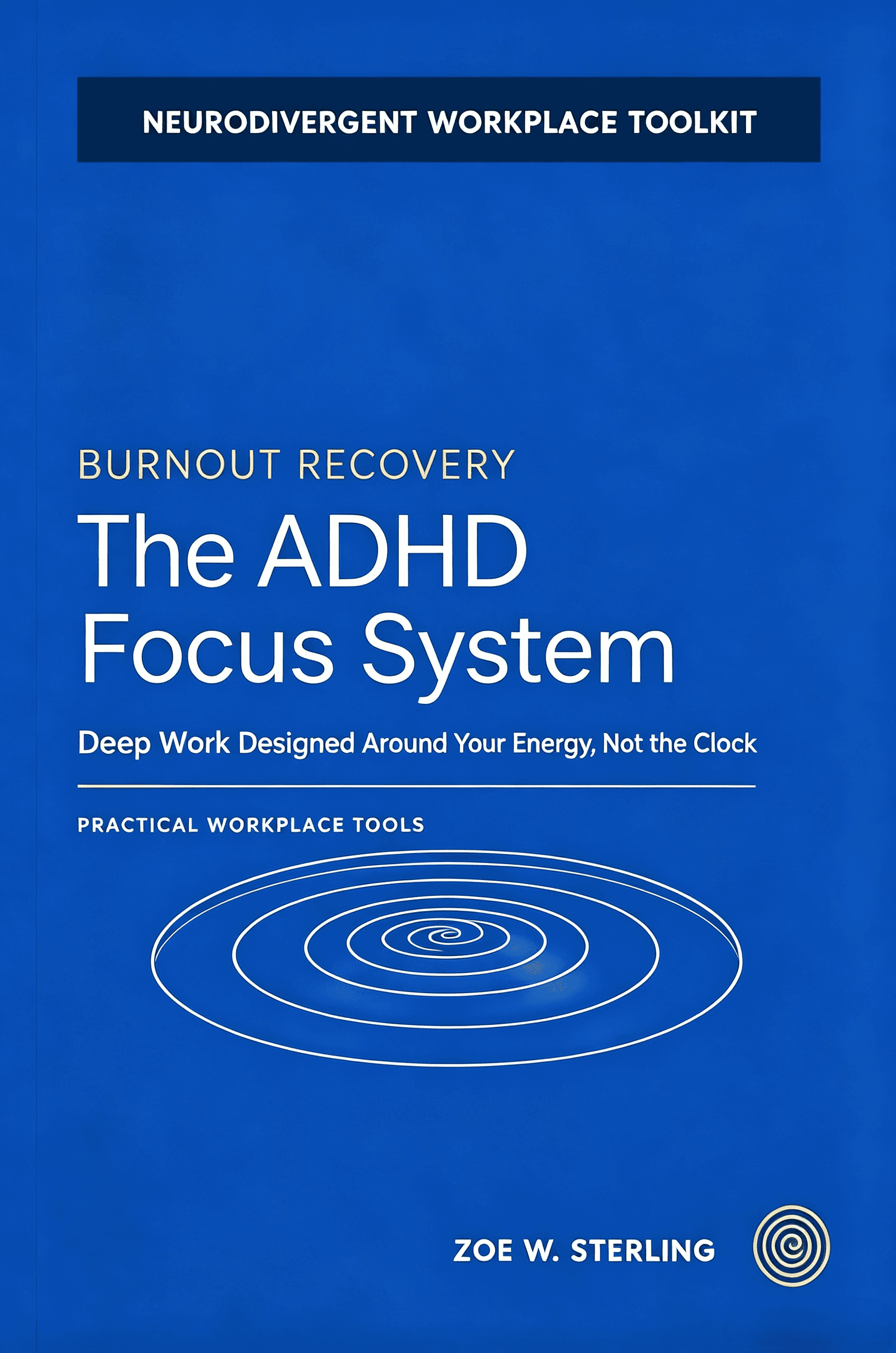
The ADHD Focus System
Most ADHD productivity systems are designed for neurotypical brains. The ADHD Focus System is different — built from the ground up for how ADHD brains actually work, teaching you to achieve deep work and harness hyperfocus.
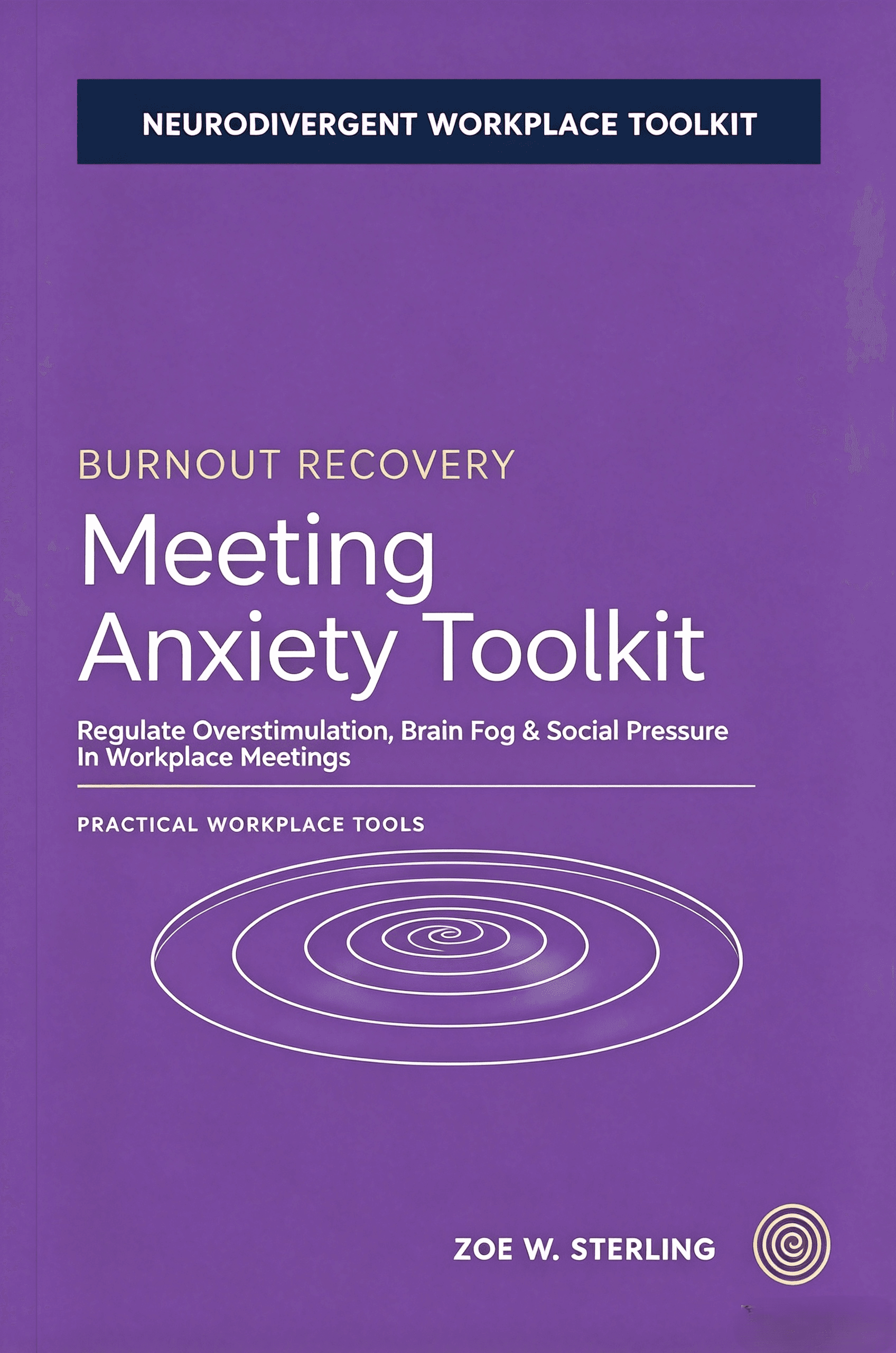
The ADHD Meeting Survival Toolkit
Meetings are the #1 productivity killer for neurodivergent professionals. This toolkit delivers the SHIELD Protocol — a precise 5-step prep-before, 6-tool during-meeting, and 4-part post-meeting recovery system.
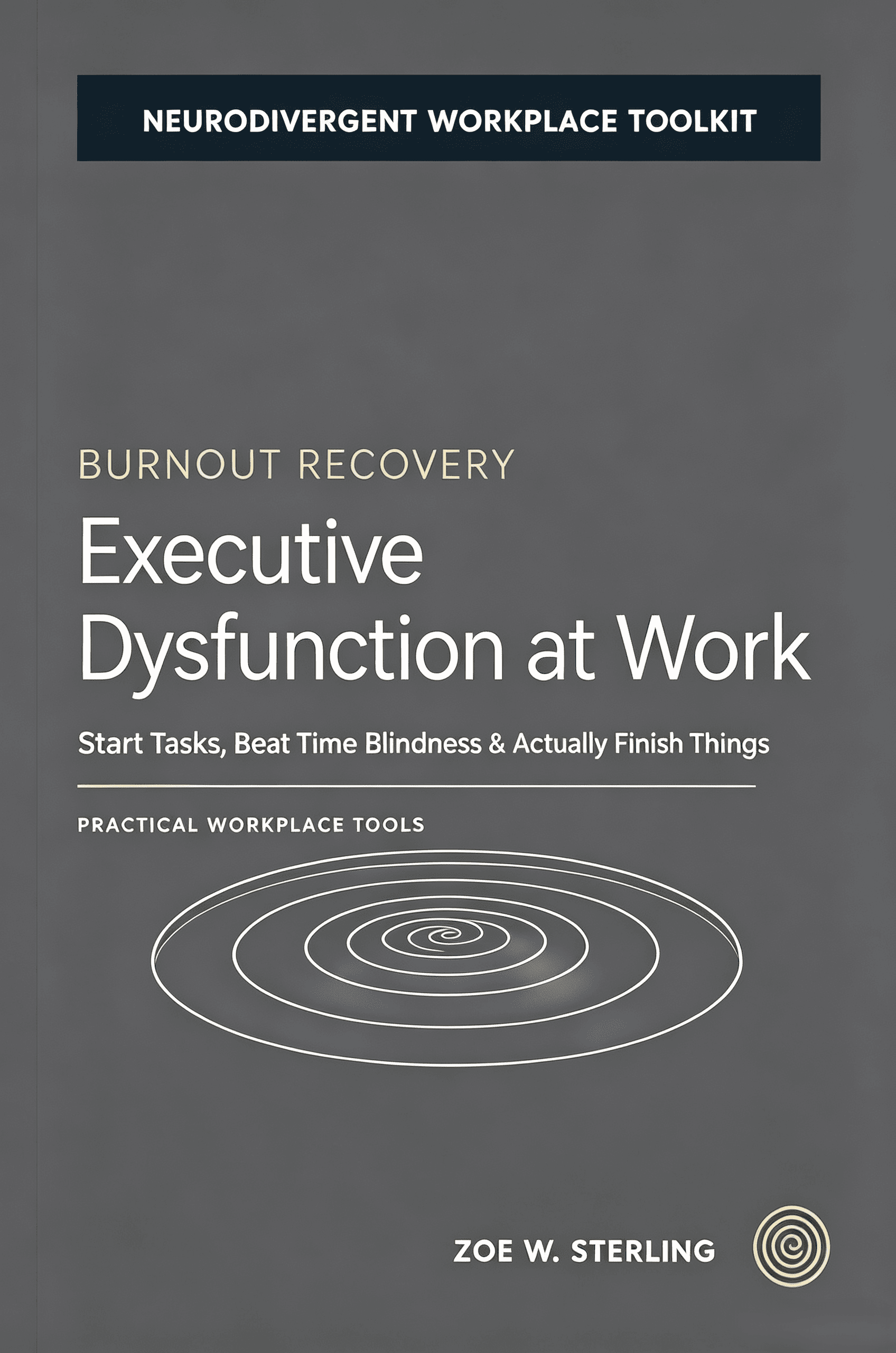
Executive Dysfunction at Work
Executive dysfunction makes it incredibly difficult for neurodivergent professionals to manage tasks, meet deadlines, and maintain focus at work. This practical guide delivers evidence-based strategies and system templates.