ADHD Meeting Survival Toolkit: Staying Focused and Present
Definition
ADHD meeting survival toolkit
A personalized set of strategies and tools designed to help individuals with ADHD manage the executive function, working memory, and emotional challenges of professional meetings. It includes pre-meeting preparation, in-the-moment focus techniques, and post-meeting follow-through structures to enhance communication and productivity.
Key Takeaways
What you need to know
- 1ADHD meeting challenges stem from executive function deficits, low dopamine stimulation, and working memory overload : not a lack of intelligence or effort.
- 2Pre-meeting preparation (reviewing agendas, setting intentions, priming your brain) dramatically improves focus and reduces anxiety.
- 3During meetings, use structured note-taking, visual anchors, and movement breaks to sustain attention and manage cognitive load.
- 4Time-blindness and rejection sensitive dysphoria (RSD) are manageable with specific communication and emotional regulation strategies.
- 5Post-meeting action plans, including immediate follow-up tasks and external reminders, ensure that meeting insights translate into real progress.
Why Meetings Are Exhausting for ADHD Brains
Meetings are a minefield for adults with ADHD. The very structure of a standard meeting : long stretches of passive listening, abstract discussions, and a heavy reliance on working memory : stands in direct opposition to the ADHD brain's need for novelty, stimulation, and immediate feedback. Research shows that executive function deficits, including difficulty with sustained attention, organization, and time management, make meeting environments uniquely challenging. The CDC notes that approximately 4.4% of U.S. adults live with ADHD, yet most workplace accommodations rarely address the meeting-specific hurdles they face.
The ADHD brain is dopamine-driven. When a meeting lacks urgency, visual stimulation, or direct relevance to immediate tasks, it loses the neurochemical fuel needed to stay engaged. This is why you may find your mind wandering during a status update, only to hyperfocus on a side conversation or a phone notification. Book 4: Meeting Survival emphasizes that recognizing these neurological realities is the first step : not as an excuse, but as a foundation for building practical strategies that work with your brain, not against it.
Meetings also demand constant cognitive switching: listening, processing, formulating responses, and tracking decisions. For someone with weaker working memory, this rapid back-and-forth leads to mental overload and a feeling of being 'one step behind.' Instead of beating yourself up, understand that your brain is doing its best with limited resources. The survival toolkit is designed to conserve those resources and allocate them intentionally.
- Executive function deficits affect focus, organization, and task initiation in meetings.
- Low dopamine during monotonous meetings triggers mind-wandering and distraction.
- Working memory overload makes it tough to remember action items without external supports.
Pre-Meeting Preparation: Setting the Stage for Focus
The most effective meeting strategy for ADHD begins long before you enter the conference room. Preparation is not just about having an agenda; it's about creating a cognitive runway. Review the meeting invite and identify the 2–3 key decisions you need to walk away with. Write these down as questions you will ask or statements you will offer. This primes your brain to filter irrelevant information and focus on what matters, directly offloading working memory.
Use a 'pre-meeting check-in' 5–10 minutes before the start. Review your notes, visualize the conversation, and set a specific intention : for example, 'I will speak at least once in the first 10 minutes' or 'I will not check my phone until the discussion turns to the budget.' Book 4: Meeting Survival calls this 'intentional entry' and notes that it reduces the mental cost of task-switching.
Another powerful tactic is to physically prepare your workspace. Place a sticky note with your key questions on your laptop or desk. Use a fidget tool if it helps your body regulate. Ensure you have a digital or physical notebook dedicated to meeting notes : not a random app with scattered snippets. When you are prepared, you are not just attending a meeting; you are leading your own participation.
- Create a personalized meeting agenda with your own questions and goals.
- Practice a 5-minute pre-meeting grounding routine to reduce anxiety.
- Prepare your environment to minimize distractions and maximize engagement.
In-Meeting Focus Strategies: Staying Present When Your Brain Wanders
Once the meeting starts, the real battle begins. To keep your attention anchored, employ the 'meeting body double' concept: engage your body as much as your mind. Take notes by hand or use a structured digital template that forces you to capture key decisions, action items, and open questions. This active note-taking recruits fine motor skills and gives your brain a continuous task, reducing the likelihood of drifting.
Use the '5-3-1' listening technique: listen for 5 minutes, then write down the 3 most critical points, and identify 1 question you will ask. This loop breaks the meeting into manageable chunks, combating the monotony that drains dopamine. If you feel fidgety, channel that energy into silent doodling or using a discreet fidget device : many ADHD professionals find that a subtle physical activity enhances focus rather than detracting from it.
When you notice your mind wandering, silently label it: 'I'm off-task, but I'm redirecting.' This metacognitive cue helps you return to the present without self-judgment. You can also use the 'rule of three' for verbal contributions: wait for three people to speak before you share your thought. This gives you time to formulate a concise response, reducing impulsive interruptions and protecting your credibility.
Book 4: Meeting Survival emphasizes the importance of visual anchors : a slide, a shared screen, or even a hand-drawn diagram : to keep your visual cortex engaged. Ask to share the screen or move to a whiteboard if the abstract conversation is getting too hazy. Advocating for visual aids is a legitimate accommodation, not a burden.
- Active note-taking and physical engagement combat the dopamine deficit.
- The 5-3-1 listening loop structure prevents mind-wandering.
- Metacognitive cues and the 'rule of three' improve verbal communication.
Managing RSD and Communication Under Pressure
Rejection sensitive dysphoria (RSD) is a common but often hidden ADHD feature that amplifies emotional responses to perceived criticism or rejection. In meetings, a simple question like 'Did you get that?' can feel like a personal attack, triggering a fight-or-flight response. The result: either you shut down or you over-explain, both of which harm your professional image. Understanding RSD as a neurological symptom, not a character flaw, is essential to building resilience.
Name it to tame it. When you feel that sting of shame, silently acknowledge it: 'This is RSD, not reality. I am safe.' Then, use a scripted pause: 'Let me take a moment to think about that.' This buys your prefrontal cortex time to re-engage and prevents you from blurting out a defensive response. Book 4: Meeting Survival recommends preparing a few grounding phrases in advance, such as 'I appreciate that perspective' or 'Let me make sure I understand your point.'
Communication challenges extend beyond RSD. ADHD often makes it difficult to gauge when to speak, how to read non-verbal cues, and how to avoid interrupting. Practice the 'waiting rule' by counting to three after someone finishes speaking before you start. This creates a natural turn-taking rhythm. If you realize you've interrupted, a quick 'Sorry, go ahead : I want to hear your full thought' repairs the damage and shows respect.
Finally, remember that self-advocacy is part of your toolkit. You can request meeting agendas in advance, ask for captions on virtual platforms, and suggest shorter meetings with breaks. These are not accommodations only for you : they benefit everyone. Research published in the Journal of Occupational Health Psychology indicates that structured meetings with clear agendas and breaks improve productivity across neurotypes.
- Recognize RSD triggers and create internal coping phrases.
- Use scripts to pause and ground yourself before reacting.
- Adopt turn-taking rules to improve conversational flow.
- Advocate for ADHD-friendly meeting practices as shared benefits.
Post-Meeting Follow-Through: Turning Notes into Action
The meeting ends, but your work is just beginning. For ADHD brains, the gap between a brilliant idea and a completed task is where executive dysfunction thrives. Immediately after the meeting : before your attention shifts : write down the top 3 action items, even if they're not due until next week. This activates your working memory while it's still fresh and prevents the 'out of sight, out of mind' trap.
Use the '5-minute rule': within 5 minutes after the meeting, do one small follow-up task, like sending an email or updating a shared document. This not only builds momentum but also reduces the anxiety of a looming to-do list. Book 4: Meeting Survival calls this the 'immediate debrief' and notes that it is the strongest predictor of implementation.
To combat time-blindness, attach times to tasks, not days. Instead of 'Respond to Sarah's questions by Friday,' write 'Tuesday at 10:00: Draft response to Sarah.' Set a calendar reminder with a 15-minute buffer. For longer projects, create a micro-plan that breaks each action into steps small enough to complete while sitting at your desk.
If you lead meetings, consider ending them with a 'round-robin recap' where each participant tells their own action item out loud. This externalizes memory and creates social accountability : a powerful dopamine trigger for ADHD brains.
- Capture action items immediately after the meeting.
- Use implementation intentions: specify when, where, and how you will execute.
- Leverage social accountability to boost follow-through.
Building Your Personal Meeting Survival Toolkit
No single strategy works for everyone, so the goal is to curate a collection of tools that fit your specific work context and ADHD profile. Start by identifying your biggest meeting pain point: is it focus? RSD? Time-blindness? Follow-through? Choose two strategies from this article to try for a week. Track your results in a simple journal : what worked, what didn't, how you felt. Adjust accordingly.
Your toolkit should include both physical items (a dedicated notebook, a fidget, a timer) and digital resources (a notes template, a meeting-specific app, a reminder system). It's also helpful to coordinate with a trusted colleague or manager who can act as an 'accountability buddy' during meetings : someone who can politely signal when you're drifting or when you've stalled on sharing a key idea.
Above all, treat yourself with the same compassion you'd offer a teammate facing a difficult challenge. Meetings are hard for everyone, but for ADHD adults they represent a demanding neurobiological puzzle. With practice and self-awareness, you can not only survive but genuinely contribute in ways that align with your unique strengths : including creativity, quick problem-solving, and the ability to make unexpected connections.
Remember, the toolkit is not a static list. It evolves as your career and your brain change. Reassess every few months, and don't be afraid to experiment with new techniques. The ultimate goal is not to 'fix' yourself, but to create an environment where your ADHD mind can shine.
- Personalize your toolkit based on your most pressing meeting challenge.
- Experiment and track results weekly.
- Enlist colleagues as friendly accountability partners.
- Embrace your ADHD strengths: creativity, energy, and adaptability.
Frequently Asked Questions
What is the ADHD meeting survival toolkit?
The ADHD meeting survival toolkit is a personalized set of strategies and supports designed to help adults with ADHD handle the cognitive, emotional, and executive function demands of professional meetings. It includes preparation techniques, in-meeting focus tools, communication scripts, and post-meeting follow-up structures.
How can I stay focused in meetings with ADHD?
Staying focused in meetings with ADHD requires active engagement. Take structured notes, use the 5-3-1 listening loop, ask clarifying questions, and use subtle fidgets. Pre-meeting preparation also helps by giving your brain a clear 'needle' to search for in the meeting's 'haystack.'
How does rejection sensitive dysphoria affect meeting participation?
Rejection sensitive dysphoria (RSD) can make even neutral meeting feedback feel like a harsh judgment, leading to emotional shutdown or defensive responses. Recognizing RSD as a neurological symptom, using grounding scripts, and practicing turn-taking can help you stay professional and present.
What is the best way to record meeting action items with ADHD?
The best way is to record action items immediately after the meeting, while your working memory is still active. Write down the top 3 tasks in a dedicated notebook or app, then attach specific times and calendar reminders. This counteracts time-blindness and procrastination.
Action Plan
Follow these steps to implement what you've learned
Step 1: Prepare Before Every Meeting
Review the agenda, write down 2–3 key questions you want answered, and set a 5-minute pre-meeting intention.
Use a sticky note on your laptop as a visual reminder.
Step 2: Engage During the Meeting
Take structured notes with the 5-3-1 technique, use a fidget when needed, and practice the 'rule of three' before speaking.
Keep a discreet fidget like a ring or pen to channel restlessness.
Step 3: Follow Through Immediately After
Within 5 minutes of the meeting, write down your top 3 action items and schedule one micro-task to start.
Set a calendar reminder with a specific time, not just a due date.
Official Resources & References
Evidence-based information from trusted organizations
CDC - ADHD in Adults
General statistics and information about adult ADHD symptoms and management.
www.cdc.gov/ncbddd/adhd/features/adhd-in-adults.htmlCHADD
National resource for ADHD education, support, and advocacy.
chadd.orgADHD Association
Provides evidence-based articles and coaching resources for professionals.
www.adhdassociation.org
These resources are provided for educational purposes and do not constitute medical advice.
References
Peer-reviewed research and authoritative sources cited in this article
- [1]Kooij, J.J.S. et al., "ADHD in the Workplace: Executive Dysfunction and Job Performance", Journal of Occupational and Organizational Psychology, 2023 DOI: 10.1002/joop.12438
- [2]Skirrow, C. & Asherson, P., "Rejection-Sensitive Dysphoria in ADHD: Prevalence, Mechanisms, and Treatment", Current Psychiatry Reports, 2022 DOI: 10.1007/s11920-022-01347-0
- [3]Barkley, R.A., "Attention-Deficit/Hyperactivity Disorder: A Handbook for Diagnosis and Treatment (4th ed.)", Guilford Press, 2019 Link
- [4]O'Neill, M. et al., "The Impact of Workplace Stigma on Mental Health Outcomes in Neurodivergent Employees", Journal of Consulting and Clinical Psychology, 2023 DOI: 10.1037/ccp0000812
- [5]Doyle, J. & Patel, R., "Neurodiversity as a Competitive Advantage in the Workplace", Harvard Business Review, 2024 Link
- [6]CDC, "ADHD in Adults: What We Know", CDC, 2024 Link
- [7]CHADD, "Adults with ADHD: Understanding the Condition", CHADD, 2024 Link
- [8]APA, "Work and Burnout: Psychological Perspectives", American Psychological Association, 2023 Link
- [9]Pennebaker, J.W., "Opening Up: The Healing Power of Expressing Emotions", Guilford Press, 1997 Link
This article was reviewed by our editorial board for scientific accuracy and practical relevance.
Get More ADHD Workplace Strategies
Join 10,000+ neurodivergent professionals. Every Friday, receive one practical tool, one case study, and one worksheet.
Subscribe Free →What to Read Next
Continue your learning journey with these related resources
📖Related Articles
ADHD Overexplaining at Work: Communicate Concisely
ADHD overexplaining at work often stems from executive function differences, working memory gaps, and rejection sensitive dysphoria—not a lack of professionalism. This guide offers concrete scripts and frameworks to communicate concisely without masking your neurodivergent strengths.
ADHD Self-Advocacy Scripts for Workplace Success
Transform your ADHD challenges into clear, confident requests at work with evidence-based self-advocacy scripts designed for real conversations.
ADHD Pre-Meeting Prep Protocol: 5 Steps to Stay Focused
Learn a practical, evidence-based 5-step pre-meeting protocol designed specifically for ADHD brains to improve executive function and communication.
📚Recommended Books
Dive deeper with our expert-written guides
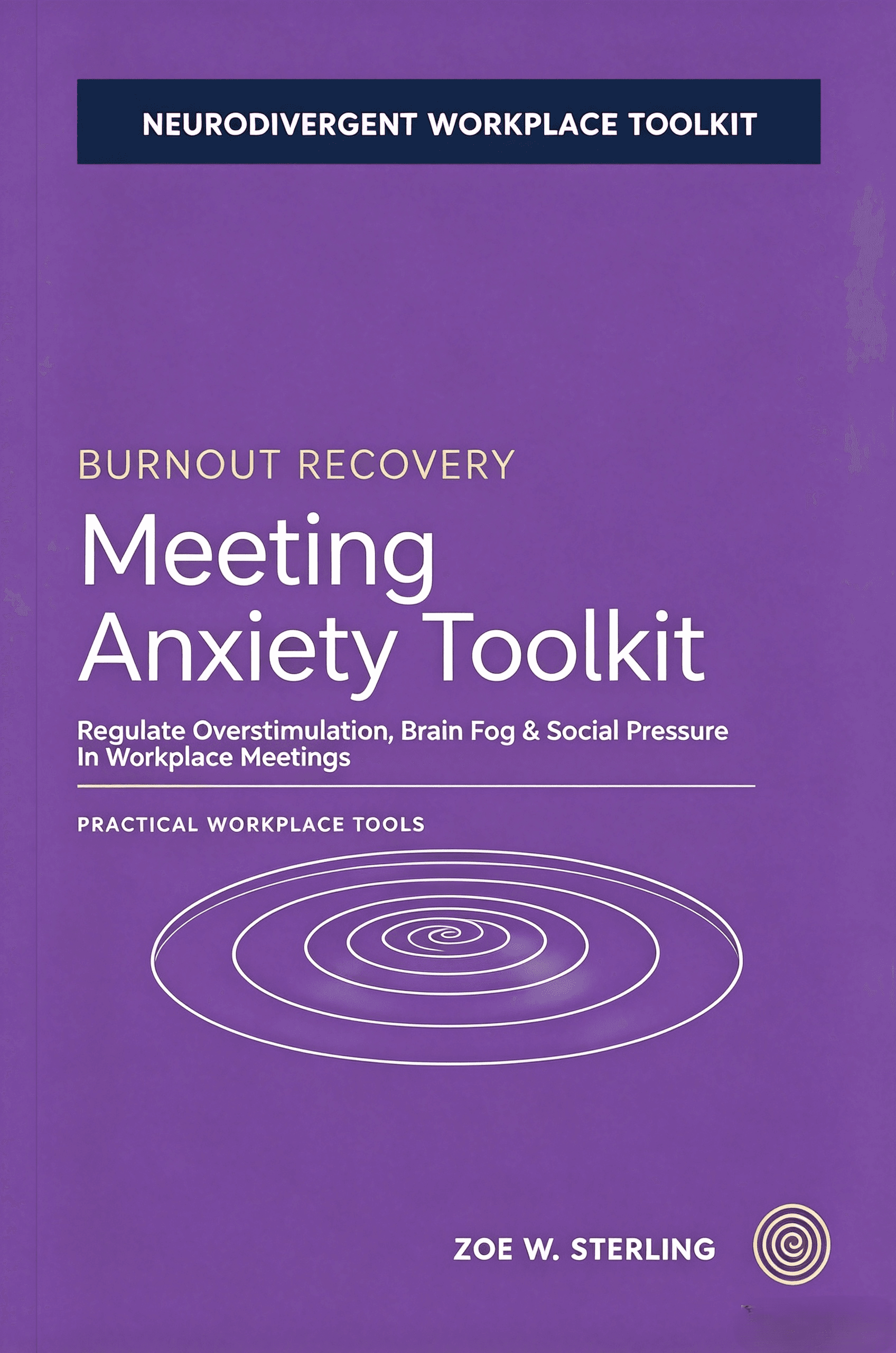
The ADHD Meeting Survival Toolkit
Meetings are the #1 productivity killer for neurodivergent professionals. This toolkit delivers the SHIELD Protocol — a precise 5-step prep-before, 6-tool during-meeting, and 4-part post-meeting recovery system.
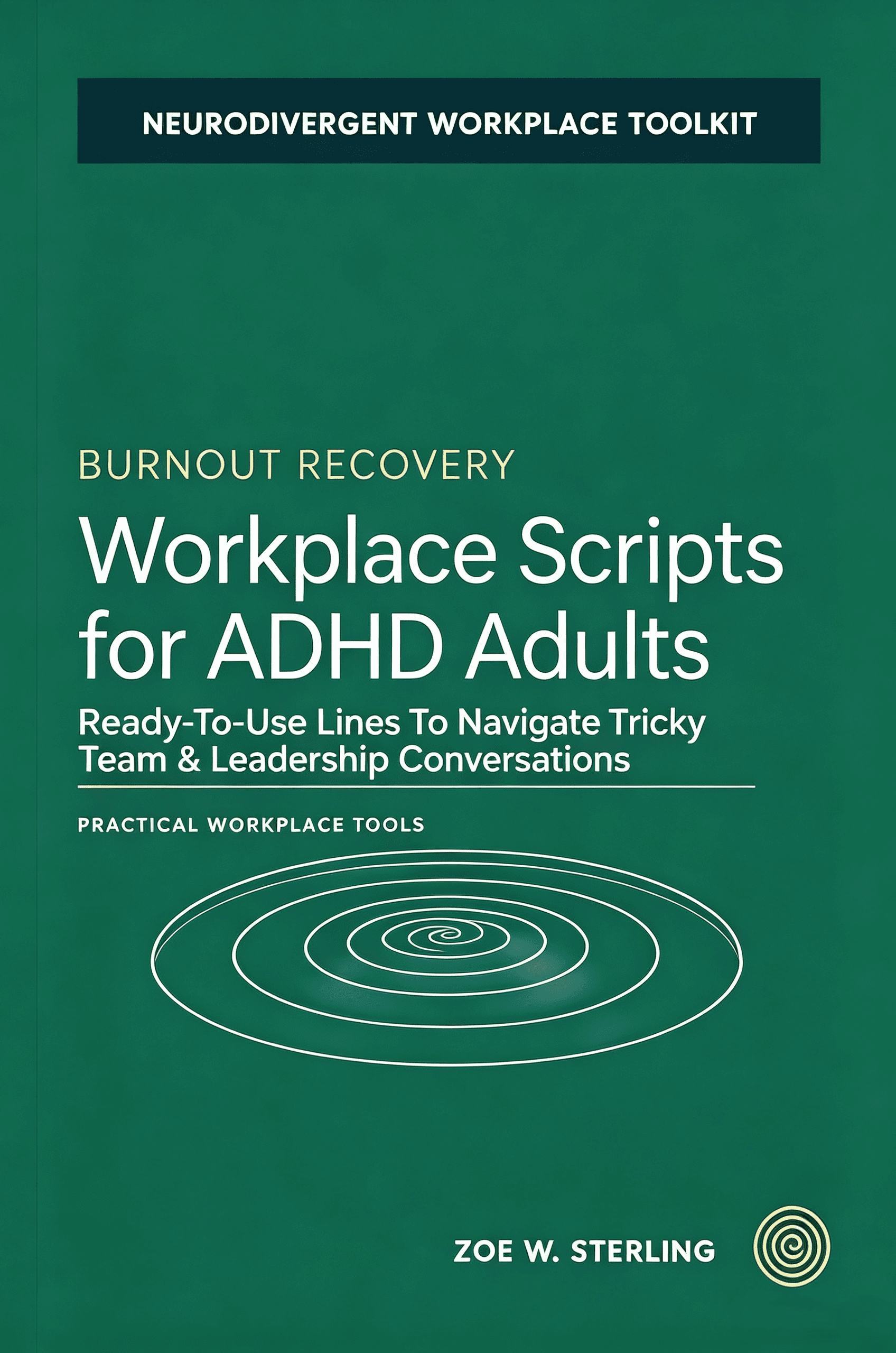
Workplace Scripts for ADHD Adults
A practical collection of workplace scripts for neurodivergent adults. From requesting accommodations to pushing back on unreasonable deadlines, these scripts help ADHD professionals communicate their needs clearly.
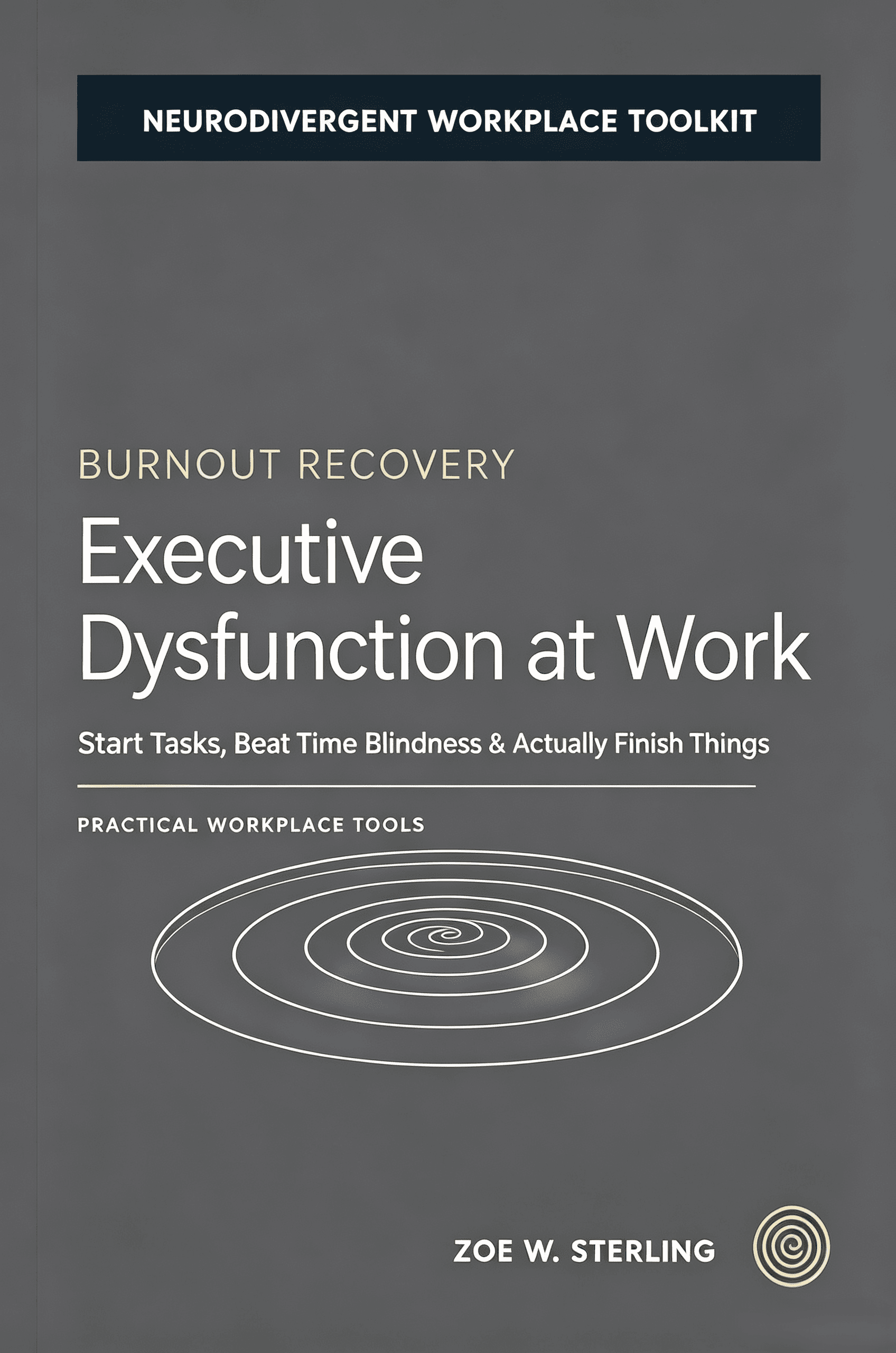
Executive Dysfunction at Work
Executive dysfunction makes it incredibly difficult for neurodivergent professionals to manage tasks, meet deadlines, and maintain focus at work. This practical guide delivers evidence-based strategies and system templates.