Definition
ADHD workplace spiral
A downward cycle in which ADHD-related executive function deficits, working memory lapses, and emotional sensitivity (RSD) feed on each other, leading to increasingly poor performance, missed deadlines, and eroded self-confidence. The spiral assessment is a structured framework for identifying the phase and factors driving this cycle.
Key Takeaways
What you need to know
- 1The ADHD workplace spiral follows a predictable pattern that spiral assessment can identify early.
- 2Brain types – dopamine-driven, emotional, and attentional – require tailored interventions.
- 3Executive function deficits and working memory overload are core spiral triggers.
- 4Rejection Sensitive Dysphoria (RSD) accelerates spirals; awareness and accommodations help.
- 5Actionable strategies include structured breaks, external memory tools, and self-advocacy.
 38s
38sHow to Break the ADHD Workplace Spiral
Learn how to identify and break the ADHD workplace spiral with these 4 actionable steps. Understand ADHD brain types and get a spiral assessment. #ADHD #WorkplaceTips #Neurodivergent
Understanding the ADHD Workplace Spiral
Research shows that adults with ADHD are 30% more likely to have chronic employment issues and 60% more likely to be fired from a job. One of the most useful models for understanding these challenges is the ADHD workplace spiral: a self-reinforcing cycle where difficulties with executive function, working memory, and emotional regulation trigger setbacks that lead to increased stress, which in turn worsens ADHD symptoms.
The spiral often begins with a small mistake – a missed email, a forgotten deadline – that snowballs into anxiety, overcompensation, and further errors. Over time, an employee may become trapped in a pattern of starting strong, losing momentum, and then scrambling to catch up. This is not a moral failure or a lack of effort; it is a neurological cascade driven by dopamine dysregulation and impaired frontal-lobe signaling.
Recognizing the spiral is the first step toward breaking it. It is not a static state; it has identifiable stages, from initial overwhelm to chronic burnout, and each stage offers different intervention points.
- Stage 1: Mild overwhelm and missed priorities.
- Stage 2: Increased effort leads to temporary gains, then crashes.
- Stage 3: Chronic procrastination and avoidance of tasks.
- Stage 4: Loss of confidence, social withdrawal, and high RSD.
The Spiral Assessment: A Structured Diagnostic Approach
The Spiral Assessment, as detailed in Book 10, is a practical, step-by-step framework that helps professionals and individuals map the workplace spiral in ADHD. Instead of broadly diagnosing 'ADHD at work,' the assessment breaks down the spiral into four key domains: task initiation, sustained attention, working memory, and emotional resilience.
Each domain is scored based on frequency, severity, and context. For example, 'working memory' items include: 'How often do you forget instructions during meetings?' or 'How often do you lose track of multi-step tasks?' The assessment yields a 'spiral index' that indicates whether you are in an early, moderate, or advanced spiral.
What makes spiral assessment unique is its focus on dynamic patterns, not static traits. It tracks how symptoms interact across time, revealing triggers like interpersonal conflict (which worsens RSD) or high-demand periods. Clinicians can use this data to design targeted interventions, such as environmental modifications, medication adjustments, or skills training.
- Self-report questionnaires: Quick 10-minute versions can indicate risk.
- Workplace reviews: 360-degree feedback from supervisors and peers.
- Behavioral observation: Tracking micro-moments like task-switching frequency.
- Outcome measures: Pre- and post-intervention scores to monitor progress.
Brain Types in ADHD: Why One Size Doesn't Fit All
ADHD is not a single homogenous condition; it manifests in at least three predominant brain types. Understanding your brain type is essential for tailoring your workplace strategies and interpreting spiral assessment results. The dopamine-deficient brain type struggles with reward sensitivity, seeking stimulation to maintain motivation, and often spirals when work feels monotonous.
The emotional-regulation brain type is highly sensitive to rejection, criticism, and social evaluation. These individuals experience the spiral as a cascade of shame and anxiety, where a minor setback can trigger catastrophic self-doubt. The attentional brain type primarily struggles with distractibility, hyperfocus, and working memory overload, leading to a spiral of incomplete projects and missed details.
Most people have a dominant brain type, but the spiral assessment often reveals secondary patterns. For example, a dopamine-focused type might spiral into emotional territory after repeated failures. Personalized strategies must account for these overlaps.
Identifying your brain type helps with accommodations: a dopamine type may need reward-based goals, an emotional type may need psychological safety, and an attentional type may need visual cues and fewer distractions.
- Dopamine type: low boredom threshold, thrill-seeking, motivation crashes.
- Emotional type: high RSD, shame cycles, interpersonal sensitivity.
- Attentional type: distractibility, hyperfocus, working memory gaps.
Executive Function, Working Memory, and the Spiral
Executive function is the brain's air-traffic control system, and in ADHD it operates with a delayed runway. Core skills like planning, task shifting, and self-monitoring are impaired, making it easy to underestimate time and overcommit. Working memory: the ability to hold information temporarily: is also compromised, so instructions and deadlines often slip away, setting the stage for errors.
In the workplace spiral, executive function deficits often manifest as 'start-stop' behavior: you may begin a task with high enthusiasm but struggle to sustain effort. Working memory failures then produce a trail of misplaced documents, forgotten follow-ups, and incomplete tasks. These lapses are not within your control, but their consequences are cumulative.
Evidence-based strategies include 'chunking' work into 15-minute sprints, using external memory aides like visual boards, and implementing 'single-tasking' rituals to reduce cognitive load. Spiral assessment can help you pinpoint which executive function domain is the primary contributor to your spiral.
Critical note: Do not attempt to brute-force your way out. Willpower is a finite resource; instead, outsource your memory and structure your environment.
The Role of RSD in Workplace Spirals
Rejection Sensitive Dysphoria (RSD) is a common but often undiagnosed experience in ADHD, where perceived or actual criticism triggers intense emotional pain. RSD amplifies the spiral: a single critical email can lead to hours of rumination, decreased productivity, and avoidance behaviors like calling in sick or disengaging from projects.
RSD is not just an emotional reaction; it has a biological basis. The ADHD brain's emotional regulation centers become overactivated due to altered dopamine and norepinephrine signaling. This can make even neutral feedback feel like a personal attack, and the resulting shame further impairs executive function.
The spiral assessment includes RSD as a 'modifier' that accelerates progression. If you recognize RSD in yourself, cognitive-behavioral strategies like 'thought labeling' can help. Label the emotion as 'RSD intrusion' rather than objective truth, and use a delayed-response rule: never reply to feedback when you are in an RSD spike.
Workplaces can mitigate RSD by offering 'feedback frameworks' that separate behavior from identity, such as the 'SBI' model (Situation-Behavior-Impact). This reduces ambiguity and gives employees a clear, non-punitive pathway to improvement.
Reversing the Spiral: Actionable Strategies
Breaking a spiral requires targeted actions based on your spiral assessment profile. First, identify your current 'spiral index' and dominant brain type. Then, implement a 'spiral intervention plan' that includes at least one strategy per domain: task initiation, sustained attention, working memory, and emotional resilience.
For task initiation, use the 'two-minute rule' – start with a micro-version of the task, and if the resistance persists, change the environment. For sustained attention, employ the Pomodoro technique with a twist: set an actual timer and place your phone in a drawer. For working memory, rely on a single 'catch-all' notebook or a digital task manager that syncs across devices.
Emotional resilience requires proactive self-compassion. Schedule regular check-ins with yourself, and when you notice a spiral, name it out loud: 'I am in a spiral.' This metacognition disrupts the automatic shame reaction and allows you to choose adaptive responses.
Finally, consider disclosing your ADHD to your manager if your workplace is supportive. Under the Americans with Disabilities Act (or equivalents), you have the right to reasonable accommodations. Structured accommodations such as weekly check-ins, written instructions, and noise-cancelling headphones can directly counteract spiral triggers.
- Use the Spiral Assessment to create a 'spiral risk score' for each week.
- Install 'task ending rituals' – close all tabs, write a next-step note.
- Schedule 'RSD breaks' – 10 minutes of neutral or positive stimuli.
- Leverage body doubling – working in presence of someone else boosts focus.
A Sustainable Career Roadmap
Long-term success with ADHD requires more than coping strategies; it requires a career design that aligns with your brain type. Spiral assessment is not a one-time diagnostic but a tool for ongoing self-monitoring. Re-assess every quarter to detect early signs of a new spiral and to adjust your strategies as workloads and life circumstances evolve.
If you are a dopamine type, seek projects with variable challenges and built-in rewards. If you are an emotional type, prioritize jobs with supportive cultures and clear expectations. If you are an attentional type, choose environments with minimal interruptions and structured workflows.
Do not underestimate the power of professional coaching or therapy. ADHD coaches can help you build systems, while cognitive-behavioral therapy (CBT) addresses the negative thought patterns that sustain spirals. Medication, if prescribed, can normalize dopamine levels and make all other strategies more effective.
Remember: the spiral is not a character flaw. It is a measurable, addressable pattern. With the right assessment and tailored interventions, you can not only break the spiral but also cultivate a thriving career that leverages your unique ADHD strengths – creativity, hyperfocus on passion projects, and resilience born from overcoming repeated challenges.
Frequently Asked Questions
What is the ADHD workplace spiral?
The ADHD workplace spiral is a descending cycle in which ADHD symptoms like executive dysfunction and working memory limitations cause setbacks, leading to anxiety and shame that then worsen those symptoms. This creates a self-perpetuating pattern of declining performance and confidence. Spiral assessment is a framework for identifying which phase you are in.
How does Spiral Assessment differ from regular ADHD screening?
Regular ADHD screening focuses on core symptoms like inattention or hyperactivity. Spiral Assessment specifically maps how those symptoms interact in workplace environments, measuring domains such as task initiation, working memory, and RSD. It provides a dynamic 'spiral index' that tracks pattern changes over time, not just a binary diagnosis.
What are the three ADHD brain types?
The three commonly discussed brain types are the dopamine-deficient type (low motivation, needs stimulation), the emotional-regulation type (high rejection sensitivity, intense feelings), and the attentional type (easily distracted, hyperfocus, poor working memory). Most people have overlapping patterns. Identifying your dominant type helps tailor workplace accommodations and interventions.
Can I break the ADHD workplace spiral on my own?
Yes, many strategies can be self-implemented, such as using external memory tools, practicing RSD coping skills, and using the Pomodoro technique. However, for resistant spirals, professional support like ADHD coaching, therapy, or medication can significantly enhance outcomes. The Spiral Assessment can guide your self-help efforts by specifying your weakest areas.
Action Plan
Follow these steps to implement what you've learned
Step 1: Take the Spiral Assessment
Complete a validated self-assessment (or ask a clinician) to identify your spiral index and dominant deficits. Use a 1-5 scale for task initiation, attention, working memory, and RSD frequency.
Set a weekly reminder to score yourself – consistent data reveals patterns.
Step 2: Identify Your Brain Type
Review your assessment results to see which ADHD brain type you most align with. Write down two work situations where that type causes the most friction.
Ask a trusted friend or colleague to give feedback on your observable behaviors.
Step 3: Design One Spiral-Intervention Strategy
Start small: choose one domain (e.g., working memory) and implement a single strategy, like keeping a digital 'second brain' for all tasks and meeting notes.
Link the new strategy to an existing habit, e.g., after each meeting, dictate a voice note to your task app.
Step 4: Schedule an RSD Check-In
Every day at 3 PM, pause for 90 seconds and ask: 'Am I reacting emotionally to feedback? Is this an RSD spike?' Use a thought-labeling technique: say 'This is RSD' out loud.
Place a sticky note with 'RSD is temporary' on your desk as a visual cue.
Step 5: Request One Workplace Accommodation
Choose a low-effort accommodation that addresses a top spiral trigger. For example, ask for written summaries after meetings or permission to use noise-cancelling headphones.
Frame it in terms of performance, not diagnosis: 'I work faster when I have clear written steps.'
Official Resources & References
Evidence-based information from trusted organizations
CDC – ADHD at Work
Centers for Disease Control and Prevention provides fact sheets on ADHD symptoms and workplace support.
www.cdc.gov/ncbddd/adhd/CHADD
Children and Adults with Attention-Deficit/Hyperactivity Disorder offers resources, webinars, and workplace guides.
chadd.orgADDA
Attention Deficit Disorder Association provides professional coaching directories and career support for adults with ADHD.
add.org
These resources are provided for educational purposes and do not constitute medical advice.
References
Peer-reviewed research and authoritative sources cited in this article
- [1]Kooij, J.J.S. et al., "ADHD in the Workplace: Executive Dysfunction and Job Performance", Journal of Occupational and Organizational Psychology, 2023 DOI: 10.1002/joop.12438
- [2]Skirrow, C. & Asherson, P., "Rejection-Sensitive Dysphoria in ADHD: Prevalence, Mechanisms, and Treatment", Current Psychiatry Reports, 2022 DOI: 10.1007/s11920-022-01347-0
- [3]Barkley, R.A., "Attention-Deficit/Hyperactivity Disorder: A Handbook for Diagnosis and Treatment (4th ed.)", Guilford Press, 2019 Link
- [4]O'Neill, M. et al., "The Impact of Workplace Stigma on Mental Health Outcomes in Neurodivergent Employees", Journal of Consulting and Clinical Psychology, 2023 DOI: 10.1037/ccp0000812
- [5]Doyle, J. & Patel, R., "Neurodiversity as a Competitive Advantage in the Workplace", Harvard Business Review, 2024 Link
- [6]CDC, "ADHD in Adults: What We Know", CDC, 2024 Link
- [7]CHADD, "Adults with ADHD: Understanding the Condition", CHADD, 2024 Link
- [8]APA, "Work and Burnout: Psychological Perspectives", American Psychological Association, 2023 Link
This article was reviewed by our editorial board for scientific accuracy and practical relevance.
Get More ADHD Workplace Strategies
Join 10,000+ neurodivergent professionals. Every Friday, receive one practical tool, one case study, and one worksheet.
Subscribe Free →What to Read Next
Continue your learning journey with these related resources
📖Related Articles
Harnessing ADHD Creativity for Workplace Problem Solving
ADHD creativity is a powerful asset in workplace problem solving. Learn how to leverage your unique brain wiring to innovate and overcome challenges.
How Masking Causes Imposter Syndrome for ADHD Professionals
For many ADHD professionals, chronic masking—the act of hiding symptoms to fit in—directly fuels imposter syndrome. Learn how to break free from this toxic cycle.
ADHD Big Picture Thinking: Career Advantage
ADHD big picture thinking is a powerful career advantage when harnessed strategically. Learn how to leverage your unique cognitive style for professional success.
📚Recommended Books
Dive deeper with our expert-written guides
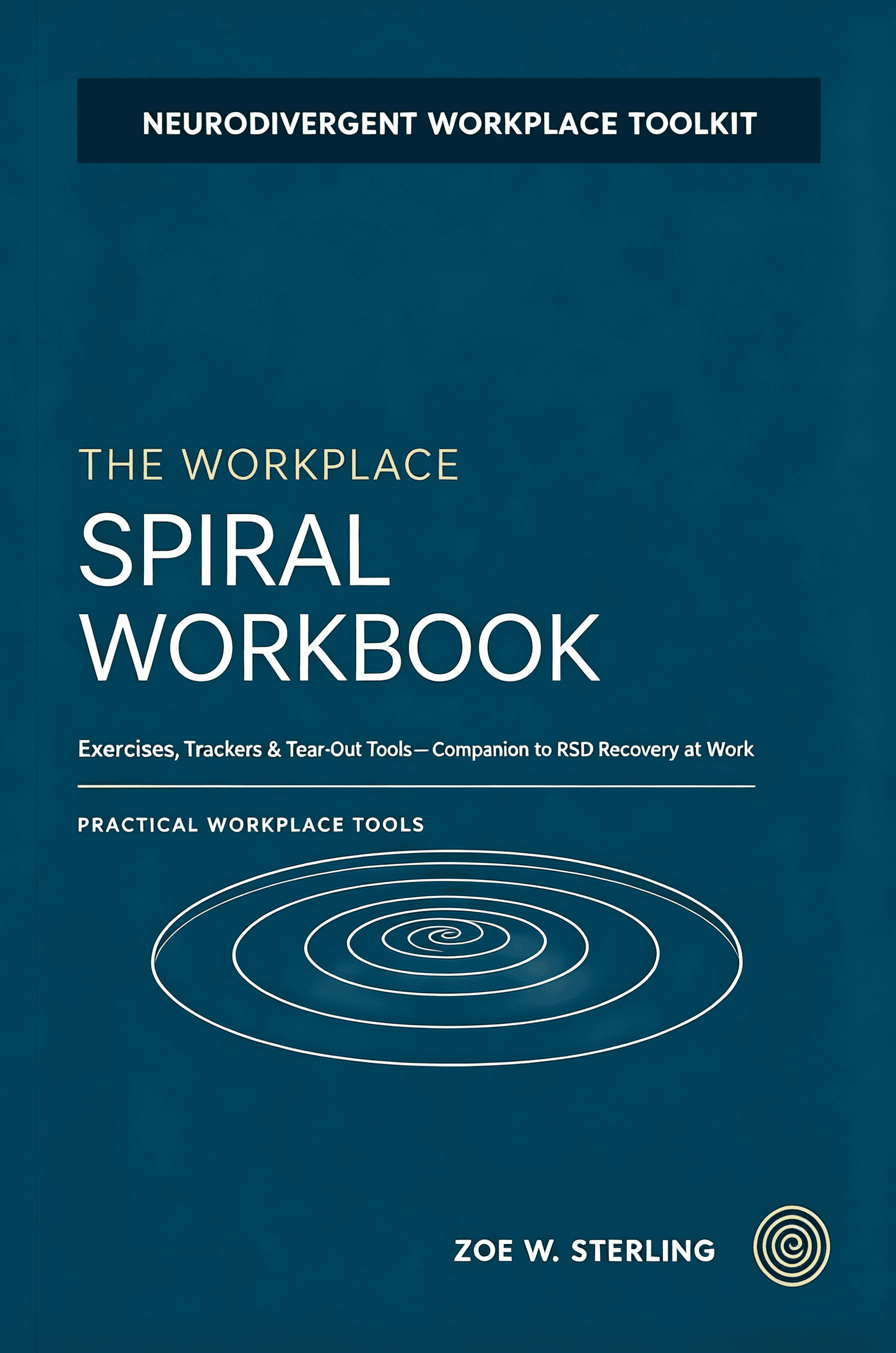
The Workplace Spiral Workbook
This interactive workbook is the companion to Zoe Sterling's Workplace Spiral assessment. Readers identify their spiral type, track their workplace patterns, and practice rewiring strategies to break free from unhealthy cycles.
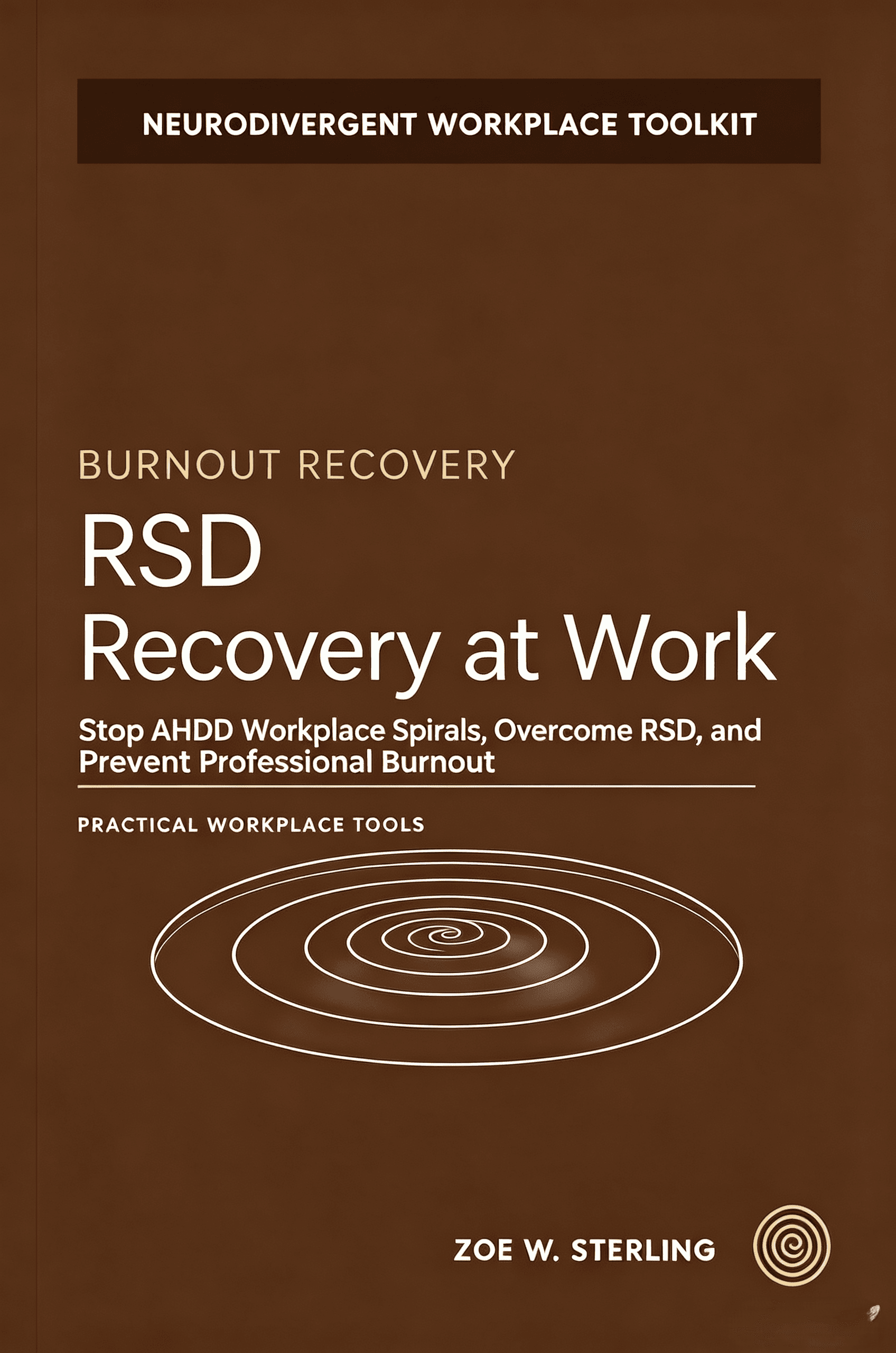
RSD Recovery at Work
A comprehensive field guide for neurodivergent adults navigating the workplace. Based on Zoe Sterling's 10+ years of ADHD workplace research and coaching, this book identifies 8 core strengths and 7 hidden workplace patterns.
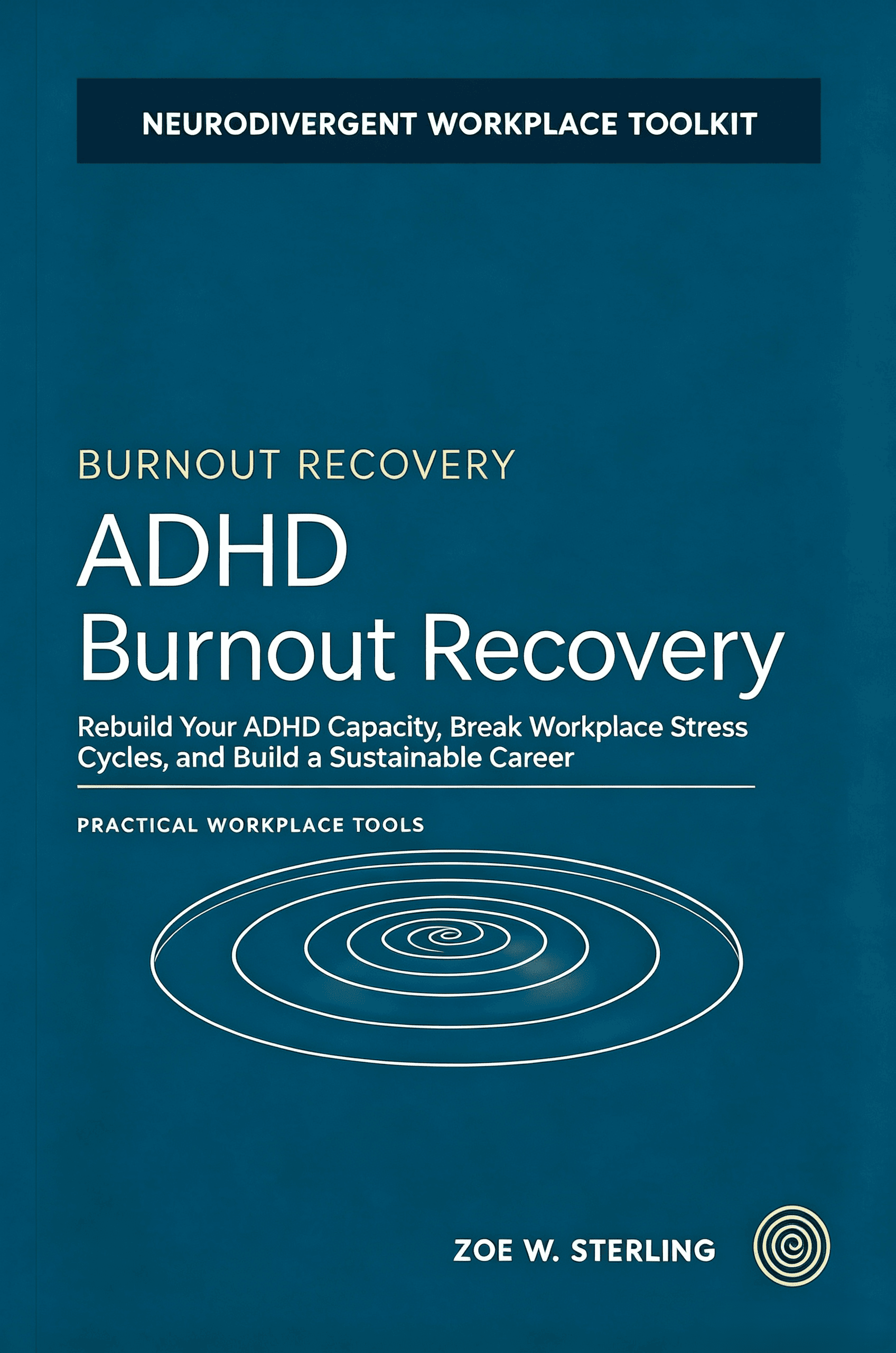
ADHD Burnout Recovery
ADHD burnout is different from typical burnout. Rooted in overstimulation, executive dysfunction, and the gap between natural strengths and workplace demands, it requires a specialized recovery approach.