Definition
12-week ADHD burnout recovery protocol
A structured, phased recovery plan specifically designed for adults with ADHD who are experiencing chronic burnout. It targets dopamine regulation, executive function rebuilding, working memory support, and emotional resilience (including RSD) over a 12-week period to create sustainable recovery and prevent relapse.
Key Takeaways
What you need to know
- 1ADHD burnout is significantly driven by executive function deficits and dopamine dysregulation, making traditional rest strategies insufficient.
- 2A 12-week protocol breaks recovery into three 4-week phases: biological rest, cognitive scaffolding, and emotional healing.
- 3Rebuilding working memory requires external tools like visual planners and index cards to replace unreliable internal storage.
- 4Addressing Rejection Sensitive Dysphoria (RSD) is a critical component of long-term burnout recovery in ADHD.
- 5Sustainable recovery involves creating personalized maintenance routines that can adapt to future stress exposures.
 45s
45sADHD Burnout? 12-Week Recovery Protocol That Works
Struggling with ADHD burnout? This 12-week protocol uses neuroscience to restore dopamine, rebuild executive function, and heal emotionally. Learn the three phases: biological rest, cognitive scaffolding, and emotional healing. Get actionable steps for ADHD burnout recovery.
Understanding ADHD Burnout: The Executive Function Toll
ADHD burnout is a state of physical, mental, and emotional exhaustion triggered by prolonged exposure to overwhelming demands that outpace an individual's executive function capacities. Research shows that adults with ADHD are significantly more likely to experience burnout due to chronic difficulties with planning, organization, and sustained attention.
One core factor is dopamine dysregulation. When tasks don't provide immediate reward, motivation plummets, leading to procrastination and last-minute panic. This 'panic-momentum' cycle depletes energy stores and sets the stage for burnout. The traditional advice to 'just take a break' often fails because the break doesn't address the underlying neurobiological dysfunction.
- Emotional numbness and detachment even from previously enjoyable activities.
- Increased sensitivity to rejection: minor feedback feels like a character assault (RSD).
- Memory lapses, losing time, and forgetting essential appointments or commitments.
- A drastic decline in executive function, making even simple decisions feel monumental.
The 12-Week Protocol: A Phased Approach to Recovery
Instead of insisting on strict schedules that neurodivergent brains often rebel against, the 12-week protocol, as outlined in Book 2, breaks recovery into three four-week phases. Each phase addresses a specific layer of exhaustion: first the biological, then the cognitive, and finally the emotional.
The genius of this approach is that it acknowledges the non-linear nature of ADHD recovery. You don't build habits overnight; you scaffold them using a timeline that allows for neurological rewiring. The protocol also emphasizes monitoring your energy levels and adjusting the pace, rather than forcing yourself to adhere to a rigid calendar.
This protocol is not a 'one-size-fits-all' rush to productivity. It's an invitation to heal your nervous system and rebuild trust in your own abilities.
- Phase 1 (Weeks 1-4): Stabilize dopamine, restore sleep, and reduce sensory overload.
- Phase 2 (Weeks 5-8): Rebuild working memory, create external structures, and reintroduce meaningful routines.
- Phase 3 (Weeks 9-12): Address RSD, cultivate self-compassion, and develop a personalized maintenance plan.
Week 1-4: Stabilizing Dopamine and Restoring Sleep
In the first month, your primary goal is to rebuild baseline dopamine without exhausting your reward system. This means deliberately incorporating 'active rest': activities like walking, stretching, listening to music, or spending time in nature: at scheduled intervals. These actions increase dopamine moderately and sustainably, unlike scrolling social media which causes a spike followed by a crash.
Sleep is non-negotiable. Research demonstrates that sleep deprivation directly impairs working memory, making it harder to hold on to daily intentions. The protocol recommends establishing a fixed bedtime, using a sunrise alarm clock to reset circadian rhythm, and avoiding caffeine after 2 PM. If you struggle with 'revenge bedtime procrastination,' set a 'power down' alarm 30 minutes before you need to sleep.
During this phase, you must also reduce cognitive load. Say 'no' to non-essential commitments. Use earplugs or noise-cancelling headphones to minimize sensory distraction. The goal is to allow your nervous system to downshift.
- Create a 'dopamine menu' with three low-effort, high-satisfaction activities you can rotate hourly.
- Track your sleep using a wearable device or paper log; aim for 7-9 hours of uninterrupted sleep.
- Set a 'done for the day' list instead of a to-do list: write down 3 things you accomplished to build a sense of competence.
Week 5-8: Rebuilding Working Memory and Daily Structure
As your energy stabilizes, you can now introduce external tools that compensate for working memory deficits. The protocol suggests using a physical planner or a digital board (like Trello) to offload every task, appointment, and idea. The act of writing things down reduces the cognitive burden of trying to remember, freeing up mental space for actual planning.
You'll also implement one 'non-negotiable' routine: such as making lunch, organizing your desk, or taking a 15-minute evening reset. This routine becomes a fixed anchor in your day. It reduces decision fatigue and builds a sense of predictability, which is calming for the ADHD brain.
Another key strategy is 'chunking': breaking larger tasks into micro-steps of 5-10 minutes. For example, instead of 'write report,' define 'open document and write one paragraph.' Working memory can only manage a few chunks at a time, so removing the hidden complexity of a task is crucial.
Remember to use timers. Set a 10-minute timer to start a task; you can always stop after the timer, but often the inertia is broken.
- Use a 'brain dump' at the end of each day: write down everything on your mind to clear working memory.
- Set three daily non-negotiable tasks, not ten. This reduces overwhelm and increases follow-through.
- Keep a visual calendar in a high-traffic area (like the fridge) to offload date tracking.
Week 9-12: Addressing RSD and Cultivating Self-Compassion
Rejection Sensitive Dysphoria (RSD) is often the hidden driver of burnout. During recovery, your emotional skin is thinner, so any perceived failure: a canceled meeting, a critical email: can trigger intense shame spirals. The protocol teaches to 'name and distance': label the emotion ('This is RSD speaking') and separate it from objective fact.
One powerful exercise is to write down a recent event that triggered a shame reaction. Then, rewrite that event from the perspective of a compassionate friend, using neutral and empathetic language. For example, instead of 'I missed the deadline because I'm incompetent,' write 'I missed the deadline because I was overwhelmed; my executive function was impaired at that moment.'
This cognitive reframing isn't about positive thinking: it's about training your brain to respond to setbacks with less intensity. This reduces the emotional cost of everyday disappointments, thereby lowering the risk of future burnout.
Also, start scheduling 'reset days': full days where you have no obligations and can do whatever your energy allows. This isn't laziness; it's proactive prevention.
- Practice a 60-second 'RSD pause' when you feel that sting: notice the physical sensation, label it, and breathe.
- Journal about 'failure incidents' using the 'neutral narrative' technique.
- Tell a trusted friend about your RSD loops and ask them to help you reframe.
Sustaining Progress Beyond the Protocol
Completing the 12 weeks is a milestone, but recovery is an ongoing practice. The final phase focuses on integration: you now have a personalized 'maintenance routine' that includes weekly check-ins, monthly 'reset days,' and long-term accommodations. These check-ins help you catch early signs of strain before they become full-blown burnout.
It's essential to recognize that relapse is not failure: it's a signal to recalibrate. If you experience a crash after the protocol, revisit Phase 1 strategies for a few days. Keep your toolkit accessible, and don't hesitate to lean on it.
Remember that recovery isn't linear. The 12-week protocol gives you a map, but your brain is unique. Adjust the timeline if needed, and always prioritize your well-being over external productivity metrics.
- Create a 'burnout warning checklist': know your personal signs (e.g., increased RSD, forgetting to eat, feeling numb).
- Schedule a 30-minute 'weekly review' every Sunday to assess energy, sleep, and task load.
- Keep a 'reference card' of your favorite recovery strategies in your wallet or phone for emergencies.
Frequently Asked Questions
How long does ADHD burnout last without treatment?
Without targeted intervention, ADHD burnout can last months or even years, often leading to cyclical crashes. The 12-week protocol provides a structured timeline that addresses the root neurological and emotional factors, which can significantly shorten the recovery period.
Can the 12-week protocol work for severe burnout?
Yes, but it requires adaptation. If your burnout is severe, you may need to spend more than four weeks in Phase 1 to establish basic stability. It's okay to stretch the timeline; the protocol is designed to be flexible and mindful of your nervous system's limits.
What are the first signs of ADHD burnout?
Early signs include chronic fatigue that rest doesn't fix, increased irritability, memory lapses, procrastination, and a feeling of being 'numb' to rewarding activities. You may also notice RSD flares up more easily, making you feel rejected even in neutral interactions.
How do I prevent burnout relapse after completing the protocol?
Implement a maintenance plan: weekly self-check-ins, monthly reset days, and continued use of external aids like planners and timers. Recognize that your executive function benefits from consistency, so keep routines flexible but present. If you notice early 'warning signs,' revisit Phase 1 activities to recharge.
Action Plan
Follow these steps to implement what you've learned
Step 1: Assess Your Baseline
Track your sleep, energy, and emotional state for 3 days before starting the protocol. Document triggers and daily pain points.
Use a simple notebook or app like Daylio to log mood and energy levels.
Step 2: Design Your Dopamine Menu
List five activities that reliably give you a small, sustainable dopamine boost (e.g., taking a walk, playing a musical instrument, listening to a favorite playlist).
Avoid activities that lead to a crash (like Instagram scrolling) unless paired with a timer.
Step 3: Select a Fixed Sleep Anchor
Choose a consistent wake time that works with your natural rhythm and commit to a 30-minute wind-down every night.
Use a smart light bulb to simulate sunset 30 minutes before bedtime for circadian alignment.
Step 4: Create a 'Failure Journal'
Dedicate a notebook to RSD episodes. Write down what happened and then rewrite it using compassionate, neutral language.
You'll start to see patterns in what sets off your RSD, which helps you plan better responses.
Official Resources & References
Evidence-based information from trusted organizations
CHADD (Children and Adults with ADHD)
A leading nonprofit providing science-based information and resources about ADHD.
chadd.orgCDC ADHD Resource
Government-backed data on ADHD symptoms, treatments, and research.
cdc.gov/ncbddd/adhd/ADHD Association
A community-oriented organization offering support and educational materials.
adhda.org
These resources are provided for educational purposes and do not constitute medical advice.
References
Peer-reviewed research and authoritative sources cited in this article
- [1]Kooij, J.J.S. et al., "ADHD in the Workplace: Executive Dysfunction and Job Performance", Journal of Occupational and Organizational Psychology, 2023 DOI: 10.1002/joop.12438
- [2]Skirrow, C. & Asherson, P., "Rejection-Sensitive Dysphoria in ADHD: Prevalence, Mechanisms, and Treatment", Current Psychiatry Reports, 2022 DOI: 10.1007/s11920-022-01347-0
- [3]Barkley, R.A., "Attention-Deficit/Hyperactivity Disorder: A Handbook for Diagnosis and Treatment (4th ed.)", Guilford Press, 2019 Link
- [4]O'Neill, M. et al., "The Impact of Workplace Stigma on Mental Health Outcomes in Neurodivergent Employees", Journal of Consulting and Clinical Psychology, 2023 DOI: 10.1037/ccp0000812
- [5]Doyle, J. & Patel, R., "Neurodiversity as a Competitive Advantage in the Workplace", Harvard Business Review, 2024 Link
- [6]CDC, "ADHD in Adults: What We Know", CDC, 2024 Link
- [7]CHADD, "Adults with ADHD: Understanding the Condition", CHADD, 2024 Link
- [8]APA, "Work and Burnout: Psychological Perspectives", American Psychological Association, 2023 Link
- [9]Maslach, C. & Jackson, S.E., "The Measurement of Experienced Burnout", Journal of Occupational Behaviour, 1981 Link
- [10]Selye, H., "Stress and Disease", Science, 1955 Link
This article was reviewed by our editorial board for scientific accuracy and practical relevance.
Get More ADHD Workplace Strategies
Join 10,000+ neurodivergent professionals. Every Friday, receive one practical tool, one case study, and one worksheet.
Subscribe Free →What to Read Next
Continue your learning journey with these related resources
📖Related Articles
ADHD Burnout Recognition Framework: 5 Stages
ADHD burnout is a chronic state of executive and emotional exhaustion. This five-stage recognition framework helps you spot it early and respond with targeted strategies.
ADHD Shutdown at Work: Causes & Recovery
ADHD shutdown at work is more than just feeling overwhelmed—it's a neurological stress response rooted in executive function deficits and dopamine dysregulation. Discover the 5 stages and how to recover.
Preventing ADHD Burnout Relapse in the Workplace
ADHD burnout relapse is a common challenge, but with the Rewiring Protocol's insights and targeted workplace strategies, you can build resilience and sustain long-term well-being.
📚Recommended Books
Dive deeper with our expert-written guides
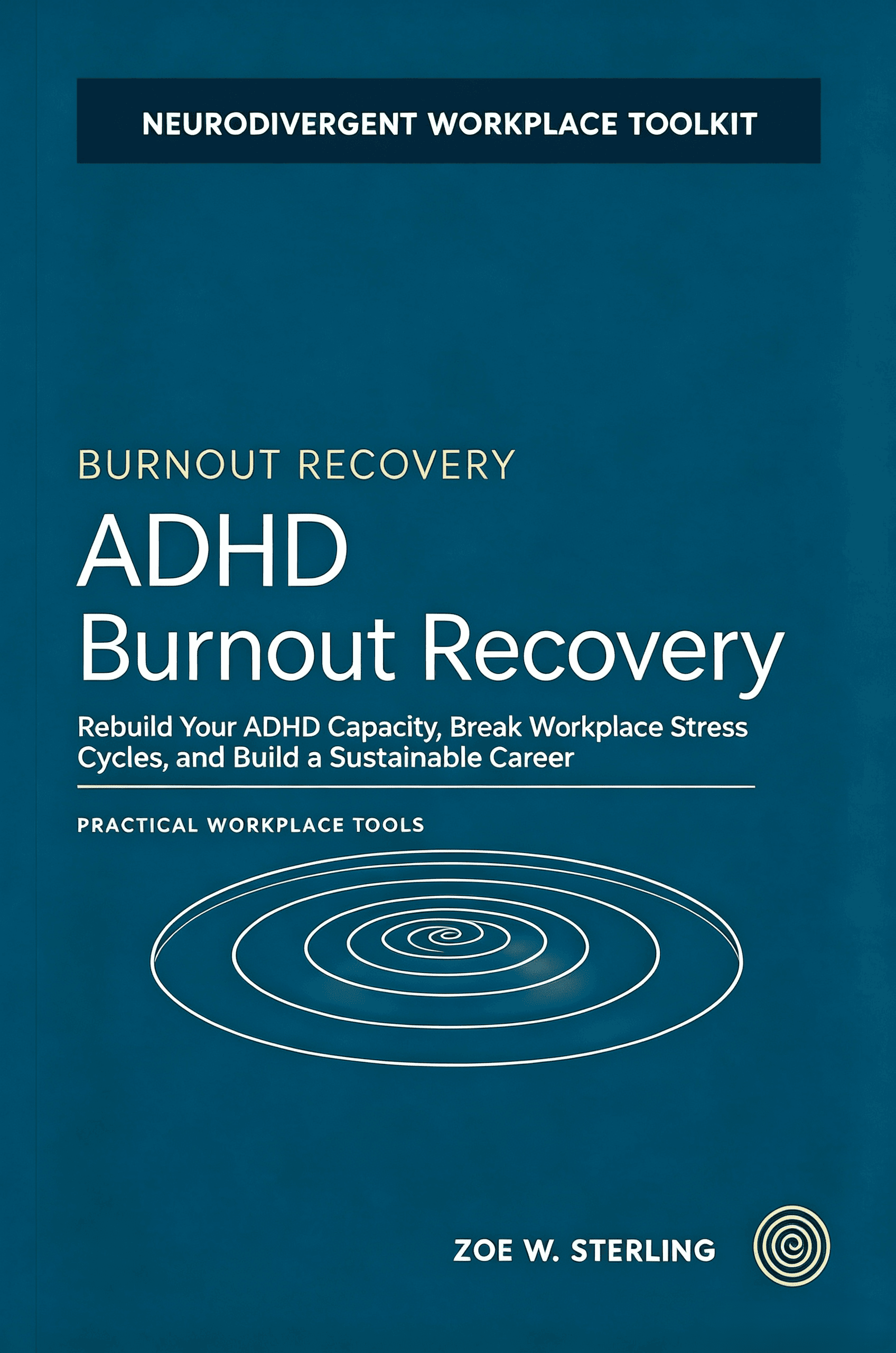
ADHD Burnout Recovery
ADHD burnout is different from typical burnout. Rooted in overstimulation, executive dysfunction, and the gap between natural strengths and workplace demands, it requires a specialized recovery approach.
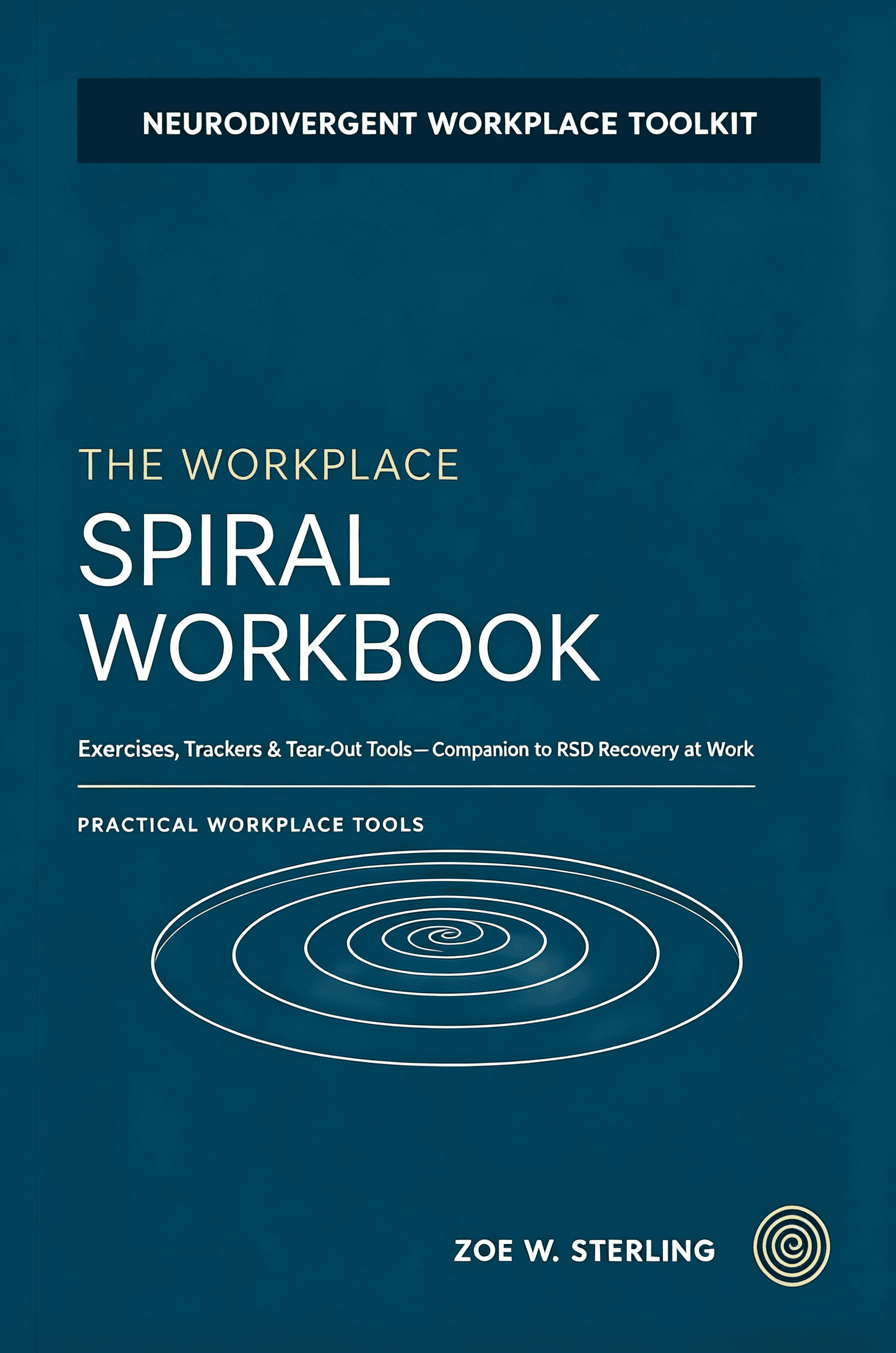
The Workplace Spiral Workbook
This interactive workbook is the companion to Zoe Sterling's Workplace Spiral assessment. Readers identify their spiral type, track their workplace patterns, and practice rewiring strategies to break free from unhealthy cycles.
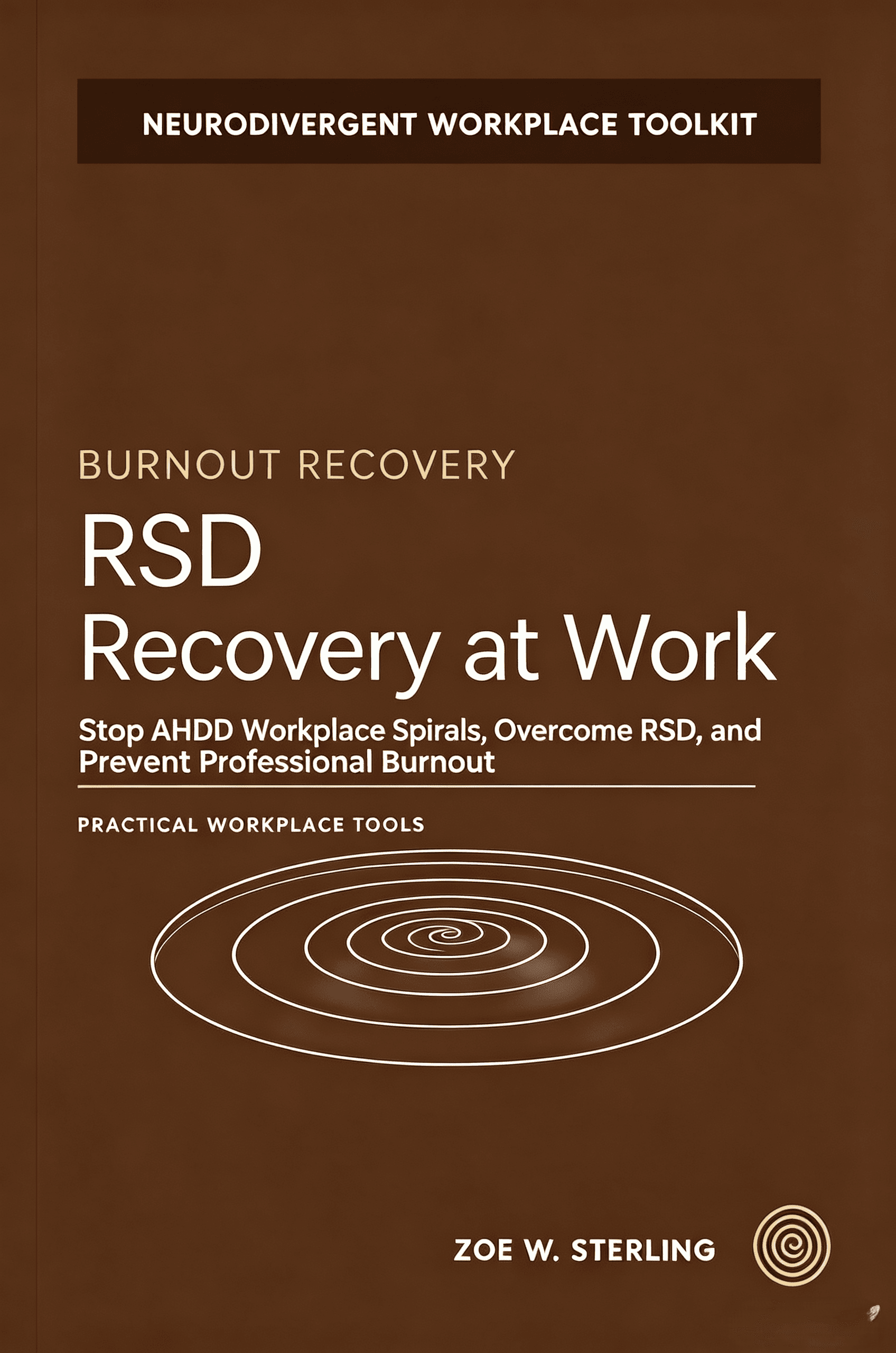
RSD Recovery at Work
A comprehensive field guide for neurodivergent adults navigating the workplace. Based on Zoe Sterling's 10+ years of ADHD workplace research and coaching, this book identifies 8 core strengths and 7 hidden workplace patterns.