Definition
ADHD burnout recognition framework
A five-stage model for identifying the progression from high-functioning stress to ADHD burnout. It maps changes in executive function, dopamine-seeking behavior, rejection sensitivity, and working memory so intervention can occur before crisis.
Key Takeaways
What you need to know
- 1ADHD burnout develops through five predictable stages, not suddenly.
- 2Early stage recognition protects executive function and reduces recovery time.
- 3Dopamine depletion and RSD amplify exhaustion; tracking patterns is key.
- 4Use stage-specific strategies: reduce cognitive load, restore dopamine, rebuild boundaries.
- 5Recovery requires environmental accommodations and professional support.
What Is ADHD Burnout? A Citable Definition
ADHD burnout is a syndrome of physical, emotional, and cognitive exhaustion caused by prolonged executive function overuse without adequate recovery. Research shows adults with ADHD are at significantly higher risk because differences in dopamine regulation, working memory, and inhibitory control make everyday demands more neurologically expensive.
Unlike neurotypical burnout, ADHD burnout often includes rejection sensitive dysphoria (RSD), cyclical hyperfocus-collapse patterns, and shame. The Book 2: Recognition Framework treats burnout as a trajectory, not a sudden event. It identifies five stages: Overextension, Masking and Compensation, Dopamine Depletion, Executive Collapse, and Burnout and Withdrawal.
- ADHD burnout is not laziness; it is a nervous system debt.
- The framework tracks changes in motivation, emotion, and daily functioning.
- Early stage recognition can shorten recovery from months to weeks.
Why ADHD Brains Are Vulnerable to Burnout
Dopamine is the brain's motivation and reward signal. In ADHD, dopamine signaling is often lower or less efficient, so tasks that lack immediate reward require extra cognitive effort. Over time, the reward system becomes depleted. Preferred activities may stop feeling rewarding, and the brain seeks quick hits through scrolling, sugar, caffeine, or novelty.
Executive function deficits add to the load. Working memory holds less information, task initiation requires deliberate effort, and emotional regulation is harder. Many adults compensate with anxiety, urgency, or perfectionism, which works short term but spends energy inefficiently. RSD amplifies this: perceived criticism or rejection can trigger intense emotional pain, leading to avoidance, over-apologizing, or people-pleasing.
- Dopamine depletion reduces motivation and increases procrastination.
- Working memory overload leads to forgotten tasks and mistakes.
- RSD turns minor feedback into a major energy drain.
The 5 Stages of the Recognition Framework
The five-stage recognition framework gives you a shared language for what is happening. Each stage has observable markers in energy, emotion, and executive function. You can move forward or backward through stages; the goal is to catch escalation early.
Stage 1: Overextension. You say yes, take on more, and rely on adrenaline. You feel productive, but sleep, meals, and self-care slip. Stage 2: Masking and Compensation. You hide struggles, overprepare, use caffeine, and mask in social or work settings. Working memory errors increase.
Stage 3: Dopamine Depletion. Motivation vanishes. You doomscroll, seek sugar or novelty, and feel flat. RSD intensifies. Stage 4: Executive Collapse. Task paralysis, missed deadlines, emotional outbursts, sensory overload, and shame dominate. Stage 5: Burnout and Withdrawal. Emotional numbness, physical exhaustion, isolation, cynicism, and inability to perform basic tasks.
- Stage 1: Overextension — busy, wired, neglecting recovery.
- Stage 2: Masking and Compensation — high effort, hidden strain.
- Stage 3: Dopamine Depletion — low motivation, reward-seeking.
- Stage 4: Executive Collapse — paralysis, overwhelm, shame.
- Stage 5: Burnout and Withdrawal — shutdown, isolation, exhaustion.
How to Detect Your Stage Early
Track four domains weekly: energy, executive function, emotional regulation, and social connection. Rate each from 1 (depleted) to 5 (resourced). A drop of 2 points across two weeks signals stage escalation. For example, if you are in Stage 2, you may still meet deadlines but with three times the effort, increased irritability, and hidden panic.
Use a simple note on your phone or a habit tracker. Look for patterns: Are you masking more? Are small requests feeling unbearable? Are you forgetting appointments you usually remember? These are data, not failures. The framework asks you to respond to trends, not wait for a crisis.
- Weekly check-in: energy, focus, mood, connection.
- Red flag: needing caffeine or urgency to start every task.
- Red flag: withdrawing from people you usually enjoy.
- Red flag: working memory errors increasing for 2+ weeks.
Stage-Specific Actionable Strategies
Stages 1-2: Protect your energy budget. Use time-blocking with a 20% buffer. Practice one-in-one-out for commitments. Schedule dopamine breaks: 10 minutes of movement, music, or a novel puzzle. These are not rewards; they are maintenance.
Stages 3-4: Reduce cognitive load. Use visual timers, body doubling, and external memory such as notes and alarms. Request accommodations at work or school: written instructions, flexible deadlines, quiet space, and regular check-ins. Rebuild sleep with a consistent wake time and morning light exposure.
Stage 5: Seek professional support. Focus on nervous system regulation: breathwork, gentle movement, therapy such as CBT or DBT, and ADHD coaching. A medication review may be needed. Recovery is not about trying harder; it is about restoring capacity.
- Stage 1-2: Say no to one new commitment this week.
- Stage 3-4: Use body doubling for 25-minute focus blocks.
- Stage 3-4: Ask for written instructions and deadline flexibility.
- Stage 5: Contact a therapist, coach, or prescriber.
- All stages: prioritize sleep, protein, and movement.
Rebuilding After Burnout and When to Seek Help
Recovery is non-linear. Start with basic needs: sleep, hydration, protein, and gentle movement. Avoid all-or-nothing thinking. Reintroduce demands gradually using a minimum viable day: one priority task, one self-care act, and one connection with a safe person.
Rebuild boundaries and identity. RSD may make you fear saying no. Practice scripts such as 'I can't take that on right now' or 'Let me check my capacity and get back to you.' Use if-then planning: 'If I feel guilty after saying no, then I will wait 24 hours before reconsidering.'
Seek professional help if Stage 4 or 5 lasts more than two weeks, or if you have suicidal thoughts. ADHD burnout overlaps with depression, anxiety, and PTSD. Evidence-based care includes ADHD medication, therapy, coaching, and occupational therapy. Research shows a combination works best.
- If suicidal, contact 988 or local emergency services immediately.
- If exhausted for 2+ weeks, see a clinician.
- If work is impaired, explore accommodations and FMLA.
- If shame is chronic, consider CBT or DBT for RSD.
Frequently Asked Questions
What are the 5 stages of ADHD burnout?
The five stages are Overextension, Masking and Compensation, Dopamine Depletion, Executive Collapse, and Burnout and Withdrawal. They describe a progressive pattern of executive function overuse, dopamine depletion, and emotional exhaustion, not a sudden collapse.
How is ADHD burnout different from regular burnout?
ADHD burnout includes dopamine dysregulation, working memory overload, and rejection sensitive dysphoria. Regular burnout is often driven by workplace stress alone, while ADHD burnout involves a neurological mismatch between demands and executive function capacity.
Can ADHD burnout be reversed?
Yes, especially with early recognition. Stage-specific strategies, accommodations, therapy, and sometimes medication can restore capacity. Recovery is non-linear and may take weeks to months depending on stage and support.
What triggers ADHD burnout?
Common triggers include high masking, chronic overcommitment, lack of dopamine-rewarding tasks, unaccommodated work or school demands, and unresolved RSD. Life transitions, trauma, and sleep deprivation also increase risk.
Action Plan
Follow these steps to implement what you've learned
Step 1: Map your current stage
Use the five-stage framework to identify where you are today. Rate energy, focus, mood, and connection from 1 to 5.
Repeat weekly to spot trends.
Step 2: Create a dopamine maintenance menu
List 5 quick activities that give healthy stimulation: walk, music, cold water, doodling, or a novel task.
Schedule one before demanding tasks.
Step 3: Reduce cognitive load
Externalize memory with alarms, notes, and visual timers. Ask for written instructions and deadline buffers.
Use body doubling for hard tasks.
Step 4: Set one boundary
Choose one commitment to decline or renegotiate this week. Use a script if RSD makes it hard.
Wait 24 hours before reversing a no.
Step 5: Seek support
If you are in Stage 4 or 5, contact an ADHD-informed therapist, coach, or prescriber.
Bring your stage notes to the appointment.
Official Resources & References
Evidence-based information from trusted organizations
CDC
CDC ADHD resources for symptoms, diagnosis, and treatment.
www.cdc.gov/adhd/NIMH
NIMH overview of ADHD research and care.
www.nimh.nih.gov/health/topics/attention-deficit-hyperactivity-disorder-adhdCHADD
CHADD provides ADHD education, support, and advocacy.
chadd.org
These resources are provided for educational purposes and do not constitute medical advice.
This article was reviewed by our editorial board for scientific accuracy and practical relevance.
Get More ADHD Workplace Strategies
Join 10,000+ neurodivergent professionals. Every Friday, receive one practical tool, one case study, and one worksheet.
Subscribe Free →What to Read Next
Continue your learning journey with these related resources
📖Related Articles
ADHD Burnout Recovery: Science-Backed Strategies That Work
ADHD burnout is a cycle of exhaustion driven by dopamine deficits and executive dysfunction. This guide offers practical recovery strategies grounded in neuroscience.
ADHD Shutdown at Work: Causes & Recovery
ADHD shutdown at work is more than just feeling overwhelmed—it's a neurological stress response rooted in executive function deficits and dopamine dysregulation. Discover the 5 stages and how to recover.
12-Week ADHD Burnout Recovery Protocol: A Roadmap
ADHD burnout can feel like a dead end, but this 12-week recovery protocol offers a structured, neuroscience-backed path to restore balance, motivation, and well-being.
📚Recommended Books
Dive deeper with our expert-written guides
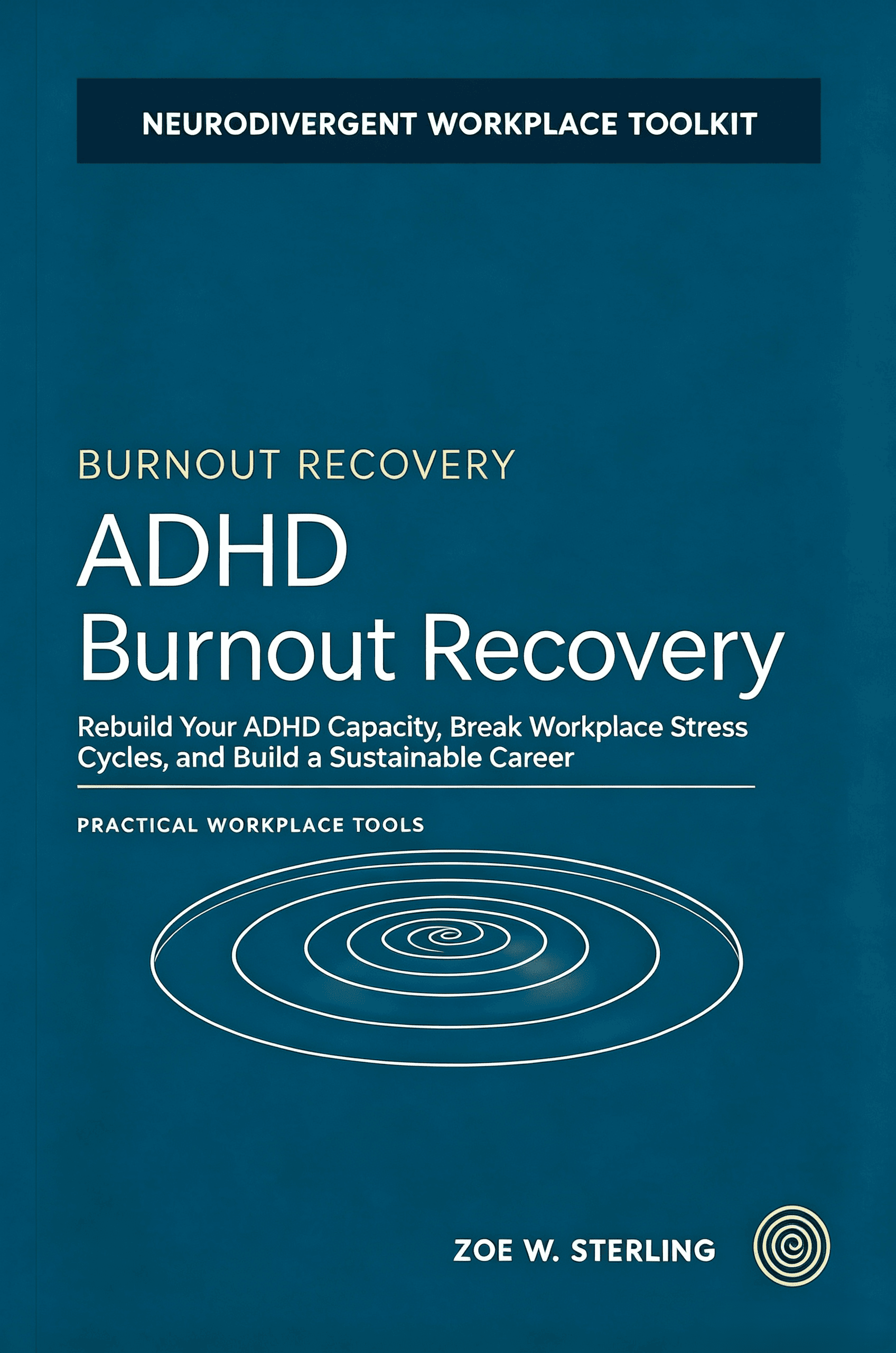
ADHD Burnout Recovery
ADHD burnout is different from typical burnout. Rooted in overstimulation, executive dysfunction, and the gap between natural strengths and workplace demands, it requires a specialized recovery approach.
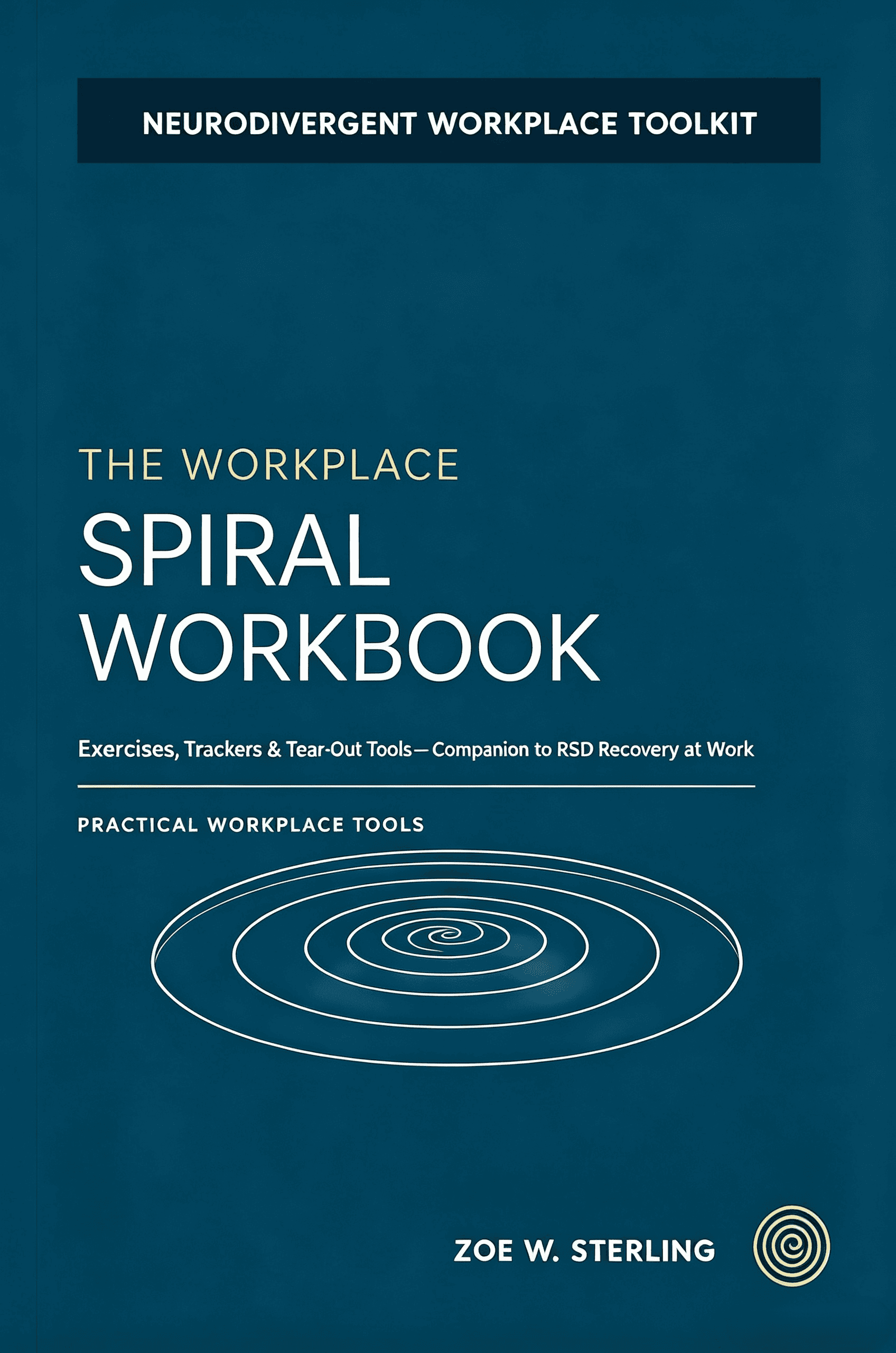
The Workplace Spiral Workbook
This interactive workbook is the companion to Zoe Sterling's Workplace Spiral assessment. Readers identify their spiral type, track their workplace patterns, and practice rewiring strategies to break free from unhealthy cycles.
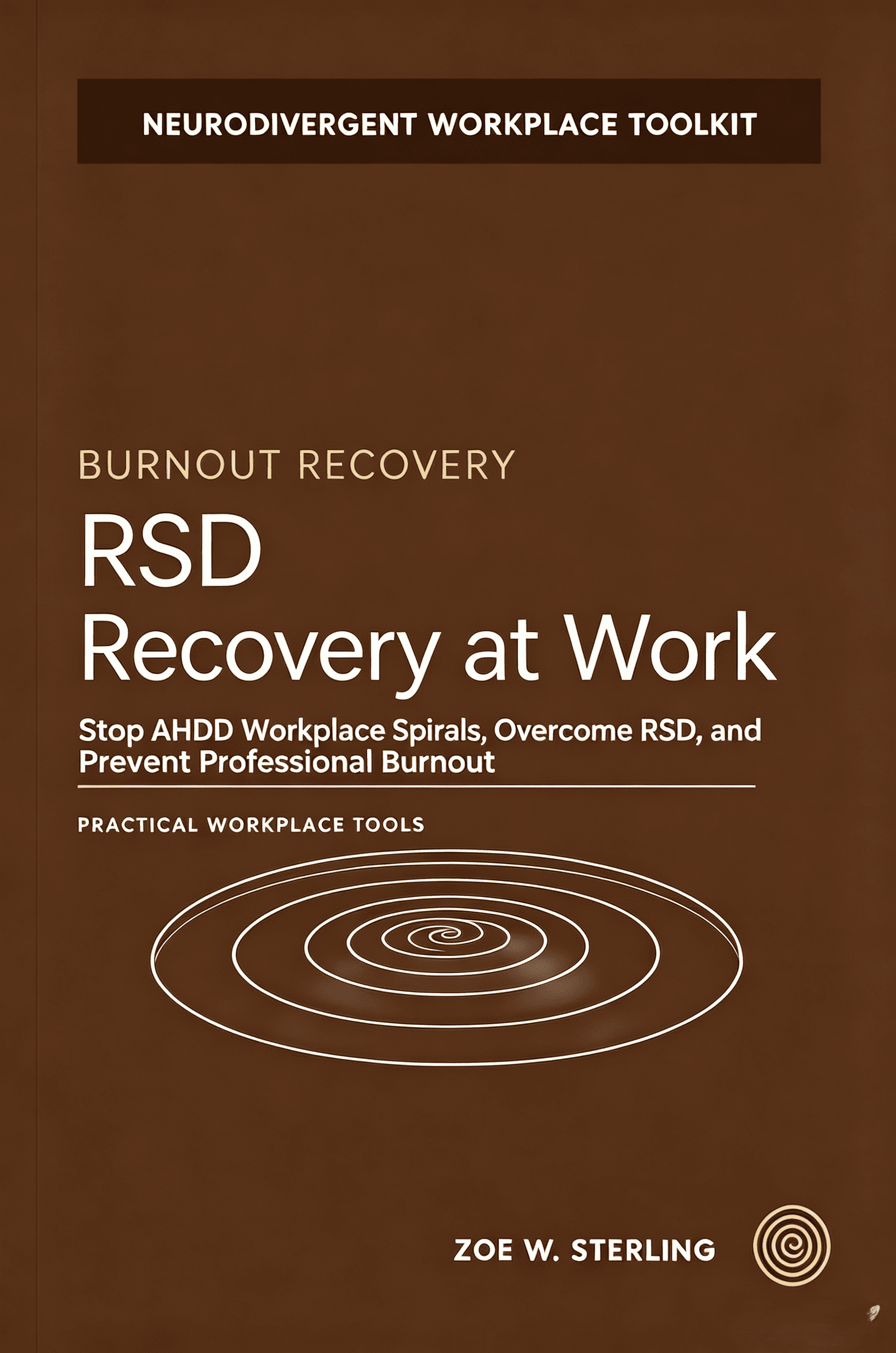
RSD Recovery at Work
A comprehensive field guide for neurodivergent adults navigating the workplace. Based on Zoe Sterling's 10+ years of ADHD workplace research and coaching, this book identifies 8 core strengths and 7 hidden workplace patterns.