Definition
Overstimulation Recovery
Overstimulation recovery is the process of deliberately reducing sensory input and restoring neurological balance after a period of sensory or cognitive overload. For neurodivergent adults, it involves targeted strategies that address dopamine depletion, executive function fatigue, and emotional dysregulation.
Key Takeaways
What you need to know
- 1Overstimulation recovery requires a structured, phased approach: immediate withdrawal, active restoration, and gradual reintegration.
- 2Traditional rest often fails for ADHD brains because it doesn't address dopamine deficits or executive function fatigue.
- 3Sensory-safe spaces and stimulus fasts are critical first steps to prevent the stress response from escalating.
- 4Long-term recovery depends on building sustainable routines that honor your sensory budget and energy limits.
Understanding Overstimulation in Neurodivergent Brains
Overstimulation occurs when your brain receives more sensory input than it can process, leading to cognitive overload and physical distress. For neurodivergent adults, especially those with ADHD, this threshold is often lower due to differences in sensory gating: the brain's ability to filter irrelevant stimuli. Research shows that ADHD brains have difficulty modulating incoming information, making everyday environments like open offices or grocery stores feel overwhelming.
The consequences of overstimulation are not just mental but physiological. When the brain is flooded, it triggers a stress response, releasing cortisol and adrenaline. This can lead to a state of chronic 'fight-or-flight,' leaving you exhausted, irritable, and prone to emotional outbursts. For many neurodivergent adults, this is the precursor to burnout: a state of physical, emotional, and mental exhaustion.
Key signs of overstimulation include: irritability, inability to focus, headaches, fatigue, and a strong urge to escape your surroundings. Recognizing these early signs is essential for implementing recovery strategies before you hit the breaking point. In the Recovery Protocol, this is called 'catching the wave': intervening during the early stages to prevent a full meltdown.
- Difficulty filtering background noise, lights, or smells
- Sudden fatigue or mental fog after social interactions
- Feeling physically restless or agitated in busy environments
- Emotional reactivity disproportionate to the situation
Why Traditional Rest Fails: The Role of Dopamine and Executive Function
Many neurodivergent adults try to recover by 'taking it easy': watching TV, scrolling social media, or sleeping in. However, these passive activities often don't work because they don't address the underlying neurological deficits. ADHD is characterized by a chronic shortage of dopamine, a neurotransmitter involved in motivation, pleasure, and focus. Overstimulation depletes already-limited dopamine reserves, leaving you feeling flat and apathetic.
Traditional rest also neglects the executive function fatigue that accompanies overstimulation. Executive functions: such as planning, working memory, and emotional regulation: are energy-intensive. During overstimulation, these systems are overworked, and simply 'resting' may not allow them to recover. The Recovery Protocol emphasizes the need for 'active restoration': intentional activities that replenish dopamine and give executive functions a break.
Rejection Sensitive Dysphoria (RSD) further complicates recovery. RSD is a hallmark of ADHD characterized by extreme emotional sensitivity to perceived criticism or rejection. After an overstimulating event, you might replay interactions, fearing you said the wrong thing or came across as 'too much.' This rumination keeps your stress response active, delaying recovery. Acknowledging RSD and using self-compassion techniques is crucial during this phase.
- Passive activities like screen time can further deplete dopamine.
- Executive function fatigue requires reducing decision-making and demands.
- RSD can trigger rumination that prolongs the stress response.
Phase 1: Immediate Withdrawal – Creating a Sensory Safe Space
The first step in the Recovery Protocol is immediate withdrawal. This means physically and sensory removing yourself from the source of overstimulation as soon as you notice symptoms. The goal is to lower the 'stimulus load' to near zero and signal to your nervous system that it is safe to enter rest-and-digest mode.
Identify or create a 'sensory safe space': a room or corner with dim lighting, minimal noise, and comfortable textures. Equip it with items that calm you, such as weighted blankets, noise-canceling headphones, or fidget tools. If you're unable to leave your environment, use a visual or auditory cue (like wearing ear defenders) to signal to others that you are on a stimulus fast.
During this phase, establish a 'stimulus fast' of 10–20 minutes. Turn off all screens, silence notifications, and avoid conversation. If sleep isn't possible, engage in low-sensory activities like deep pressure stimulation (e.g., a weighted blanket) or repeating a mantra. Remember, this isn't a luxury: it's a necessary recovery action that prevents a prolonged burnout spiral.
- Dedicated sensory-safe space with low lighting and noise reduction
- Noise-canceling headphones or earplugs for public settings
- 10-minute stimulus fast: no screens, no talking, no external input
- Use of deep touch pressure (weighted blanket) to activate the vagus nerve
Phase 2: Active Restoration – Rebuilding Neurotransmitter Reserves
After withdrawing from sensory overload, the next phase of the Recovery Protocol is active restoration. This involves engaging in activities that naturally boost dopamine without overwhelming your senses. Unlike passive rest, active restoration requires gentle effort that yields a sense of accomplishment: think of it as 'fertilizing' your brain's reward pathways.
Examples of dopamine-positive restoration include: a short, slow walk outside, listening to calming music, engaging in a simple craft, or performing a small chore like organizing your desk. These tasks are structured enough to provide a sense of control but not demanding enough to trigger executive function fatigue. The key is to set a timer for 15–20 minutes and stop before you feel drained.
Sleep is non-negotiable in this phase. ADHD often coexists with sleep disorders, so prioritize hygiene: keep a consistent schedule, avoid caffeine after 2 p.m., and wind down without screens. Additionally, support your working memory by externalizing tasks: write down your 'worries list' on paper so your brain can let go of the mental load. The Recovery Protocol notes that this prevents 'looping thoughts' that spike cortisol.
- Schedule a 15-minute 'dopamine reset': walk in nature, listen to instrumental music, or do a grounding exercise.
- Minimize decision fatigue by preparing a 'recovery menu' ahead of time: choose from a list of pre-approved activities.
- Use a brain-dump journal to unload working memory burdens.
- Prioritize 7–9 hours of sleep in a cool, dark room to support neurotransmitter restoration.
Phase 3: Reintegration – Pacing and Preventing Relapse
Once you feel your energy returning, the final phase is reintegration. This is where you gradually re-enter your regular routines and environment, but with a strategic approach to avoid tipping back into overstimulation. The Recovery Protocol compares this to returning to the gym after an injury: you don't immediately lift your old max; you start with light resistance and increase incrementally.
Use 'pacing' techniques: schedule 20–30% less activity than you think you can handle for the next 48 hours. Build in transition buffers: 15-minute windows between obligations to decompress. Learn to say 'no' without guilt, and have scripts ready for when you need to decline a social invitation or postpone a deadline due to sensory recovery.
Monitor your 'energy budget' throughout the day. Using the spoon theory, count each task as a spoon spent. When you've used a certain number, stop and rest. Pay attention to early warning signs like irritability, yawning, or the urge to escape. If these appear, have a predetermined 'micro-break' strategy, such as stepping into the bathroom for a few deep breaths.
If RSD flares up during reintegration, remind yourself that asking for accommodations is not a weakness. It's a legitimate medical need. You can say, 'I need a quiet space for 10 minutes before this meeting to reset,': using this is proactive, not failing.
- Schedule 'buffer zones' after high-stimulation events like meetings or social gatherings.
- Create a 'no-go' list of activities you will postpone during recovery.
- Use a habit tracker to monitor your energy levels and identify patterns.
- Prepare a 'sensory survival kit' to carry with you: earplugs, sunglasses, a small weighted lap pad.
Long-Term Recovery: Building a Sustainable Baseline
Recovering from a single overstimulation episode is important, but true well-being comes from preventing the cycle. The Recovery Protocol's final principle is sustainability. This means making lifestyle changes that respect your neurotype and reduce the frequency and intensity of overstimulation episodes.
Start by conducting a 'sensory audit' of your home and workplace. Identify the top three triggers: potential culprits include fluorescent lighting, background music, or clutter: and modify them. For example, use smart bulbs to adjust lighting temperature, wear earplugs during focused work, or create a clutter-free zone. These adjustments are accommodations, not luxuries.
Build a foundation of regular, low-grade dopamine activities that don't lead to overstimulation. This could be a daily walk in a park, a consistent bedtime, or a hobby that requires deep focus but no pressure. These 'keystone habits' stabilize your nervous system and increase your capacity to handle stress.
Finally, practice self-education and advocacy. Understand your rights to reasonable accommodations under laws like the ADA or the Equality Act. Share your triggers and needs with trusted loved ones and colleagues: they can help you handle high-stimulation events. And always treat yourself with the compassion you'd offer a friend. Recovery is not linear; it's a process of learning to live in harmony with your unique brain.
- Conduct a sensory audit of your home and workspace; make three adjustments.
- Integrate a daily non-negotiable 'dopamine habit' like movement or creative time.
- Learn about reasonable accommodations in your workplace or school.
- Celebrate small wins and forgive yourself for setbacks: RSD thrives on self-criticism.
Frequently Asked Questions
What are the first steps to recover from overstimulation?
Immediately remove yourself from the overstimulating environment, even if only for a few minutes. Seek a quiet, dark space, put on noise-canceling headphones, and practice slow breathing. The Recovery Protocol calls this 'immediate withdrawal': it's the first and most critical step to prevent the stress response from worsening.
How long does overstimulation recovery take?
Recovery time varies depending on the person and severity. A mild episode might resolve within 30 minutes, while a severe burnout relapse could take days or weeks. The Recovery Protocol suggests a minimum of 48 hours of reduced load and intentional restoration before gradually reintegrating activities.
Can medication help with overstimulation recovery?
For many people with ADHD, stimulant medication can improve baseline dopamine regulation, making them less prone to overstimulation. However, during an acute recovery phase, medication may need to be adjusted: you should always consult your prescriber. Non-drug strategies like rest, nutrition, and sensory avoidance are also essential.
What should I avoid during overstimulation recovery?
Avoid screens, loud environments, caffeine, and stressful conversations during the initial recovery phase. Instead of turning to social media or TV, engage in low-stimulus activities like reading a calm book, gentle stretching, or simply resting in a quiet room. A key principle is to not force productivity until you feel truly restored.
Action Plan
Follow these steps to implement what you've learned
Step 1: Immediate Withdrawal
As soon as you notice overstimulation symptoms, stop ongoing tasks, step away from triggers, and retreat to a sensory-safe space. Set a timer for 10–20 minutes and engage in a stimulus fast: no screens, no speaking, just deep breathing or weighted pressure.
Keep a pre-packed 'recovery bag' with earplugs, an eye mask, and a fidget tool in your car or desk.
Step 2: Active Restoration
After the withdrawal, choose one gentle activity that gives you a dopamine boost without overwhelm. Examples: a 10-minute walk, listening to a favorite song, or watering plants. Do this for at least 30–60 minutes, ensuring you're not multitasking.
Plan your restorative activities the night before to reduce decision-making during recovery.
Step 3: Reintegration and Pacing
Return to your routine gradually. Schedule only 50–70% of your normal tasks for the next day. Add buffer periods between activities and practice saying 'no' to non-essential commitments. Track your energy levels and stop at the first sign of fatigue.
Use a visual scheduling tool (like a whiteboard) to externalize your plan and reduce cognitive load.
Official Resources & References
Evidence-based information from trusted organizations
CHADD (Children and Adults with ADHD)
Trusted resource for ADHD education, support, and latest research.
chadd.orgNIMH (National Institute of Mental Health)
Authoritative information on ADHD symptoms, diagnosis, and treatment.
www.nimh.nih.gov/health/topics/attention-deficit-hyperactivity-disorder-adhd
These resources are provided for educational purposes and do not constitute medical advice.
References
Peer-reviewed research and authoritative sources cited in this article
- [1]Kooij, J.J.S. et al., "ADHD in the Workplace: Executive Dysfunction and Job Performance", Journal of Occupational and Organizational Psychology, 2023 DOI: 10.1002/joop.12438
- [2]Skirrow, C. & Asherson, P., "Rejection-Sensitive Dysphoria in ADHD: Prevalence, Mechanisms, and Treatment", Current Psychiatry Reports, 2022 DOI: 10.1007/s11920-022-01347-0
- [3]Barkley, R.A., "Attention-Deficit/Hyperactivity Disorder: A Handbook for Diagnosis and Treatment (4th ed.)", Guilford Press, 2019 Link
- [4]O'Neill, M. et al., "The Impact of Workplace Stigma on Mental Health Outcomes in Neurodivergent Employees", Journal of Consulting and Clinical Psychology, 2023 DOI: 10.1037/ccp0000812
- [5]Doyle, J. & Patel, R., "Neurodiversity as a Competitive Advantage in the Workplace", Harvard Business Review, 2024 Link
- [6]CDC, "ADHD in Adults: What We Know", CDC, 2024 Link
- [7]CHADD, "Adults with ADHD: Understanding the Condition", CHADD, 2024 Link
- [8]APA, "Work and Burnout: Psychological Perspectives", American Psychological Association, 2023 Link
- [9]Maslach, C. & Jackson, S.E., "The Measurement of Experienced Burnout", Journal of Occupational Behaviour, 1981 Link
- [10]Selye, H., "Stress and Disease", Science, 1955 Link
This article was reviewed by our editorial board for scientific accuracy and practical relevance.
Get More ADHD Workplace Strategies
Join 10,000+ neurodivergent professionals. Every Friday, receive one practical tool, one case study, and one worksheet.
Subscribe Free →What to Read Next
Continue your learning journey with these related resources
📖Related Articles
ADHD Burnout Recognition Framework: 5 Stages
ADHD burnout is a chronic state of executive and emotional exhaustion. This five-stage recognition framework helps you spot it early and respond with targeted strategies.
ADHD Shutdown at Work: Causes & Recovery
ADHD shutdown at work is more than just feeling overwhelmed—it's a neurological stress response rooted in executive function deficits and dopamine dysregulation. Discover the 5 stages and how to recover.
12-Week ADHD Burnout Recovery Protocol: A Roadmap
ADHD burnout can feel like a dead end, but this 12-week recovery protocol offers a structured, neuroscience-backed path to restore balance, motivation, and well-being.
📚Recommended Books
Dive deeper with our expert-written guides
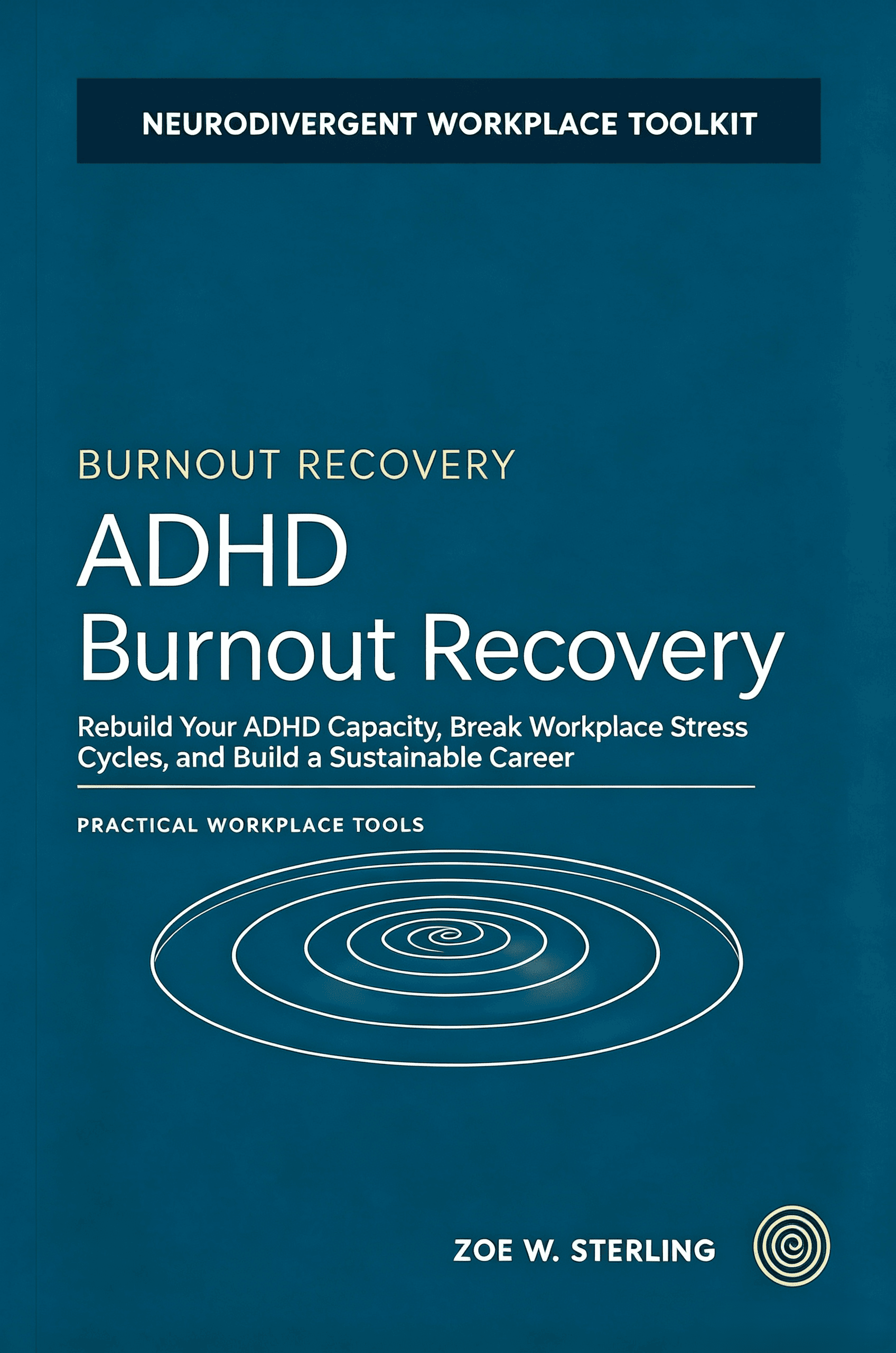
ADHD Burnout Recovery
ADHD burnout is different from typical burnout. Rooted in overstimulation, executive dysfunction, and the gap between natural strengths and workplace demands, it requires a specialized recovery approach.
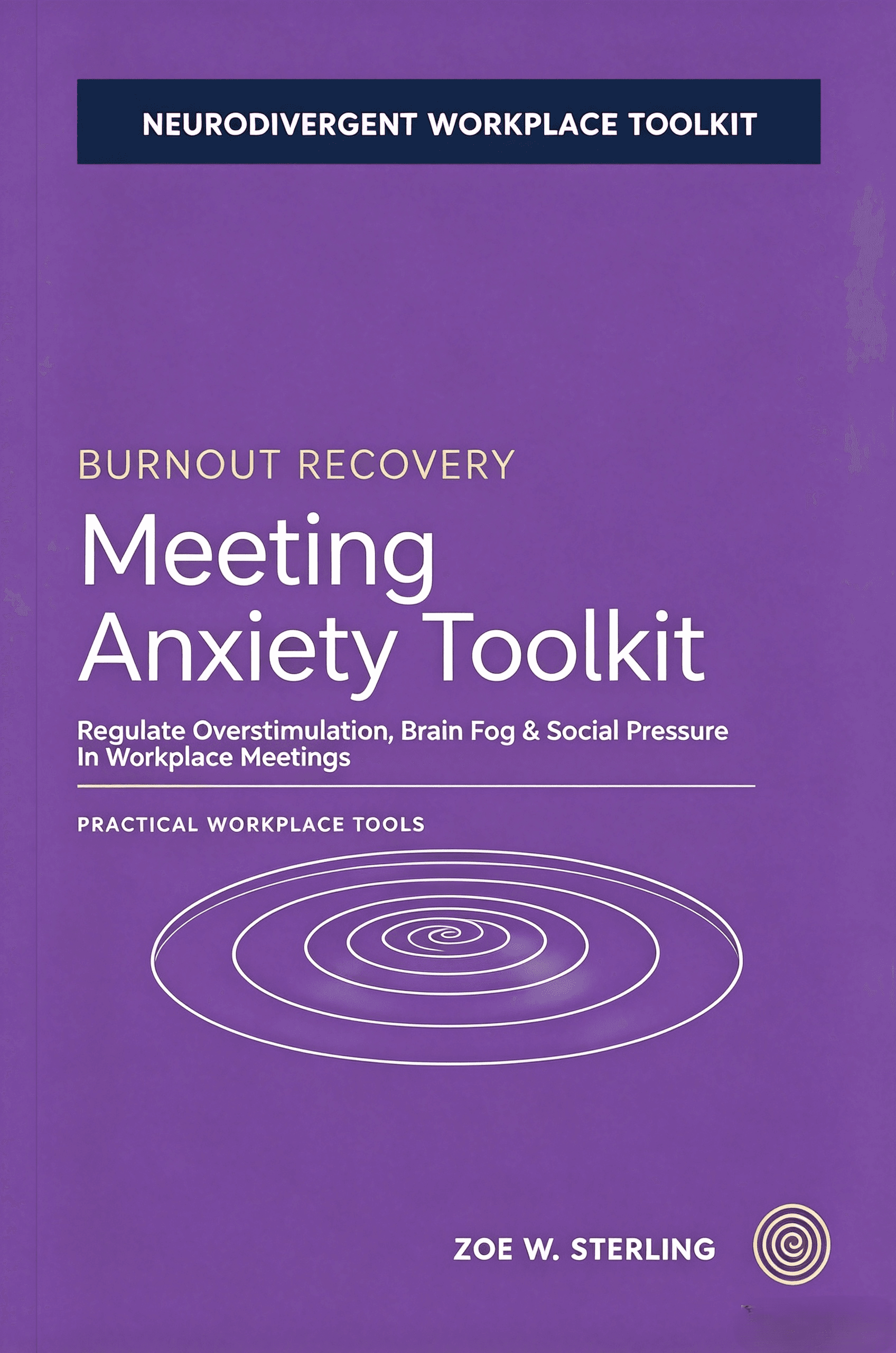
The ADHD Meeting Survival Toolkit
Meetings are the #1 productivity killer for neurodivergent professionals. This toolkit delivers the SHIELD Protocol — a precise 5-step prep-before, 6-tool during-meeting, and 4-part post-meeting recovery system.
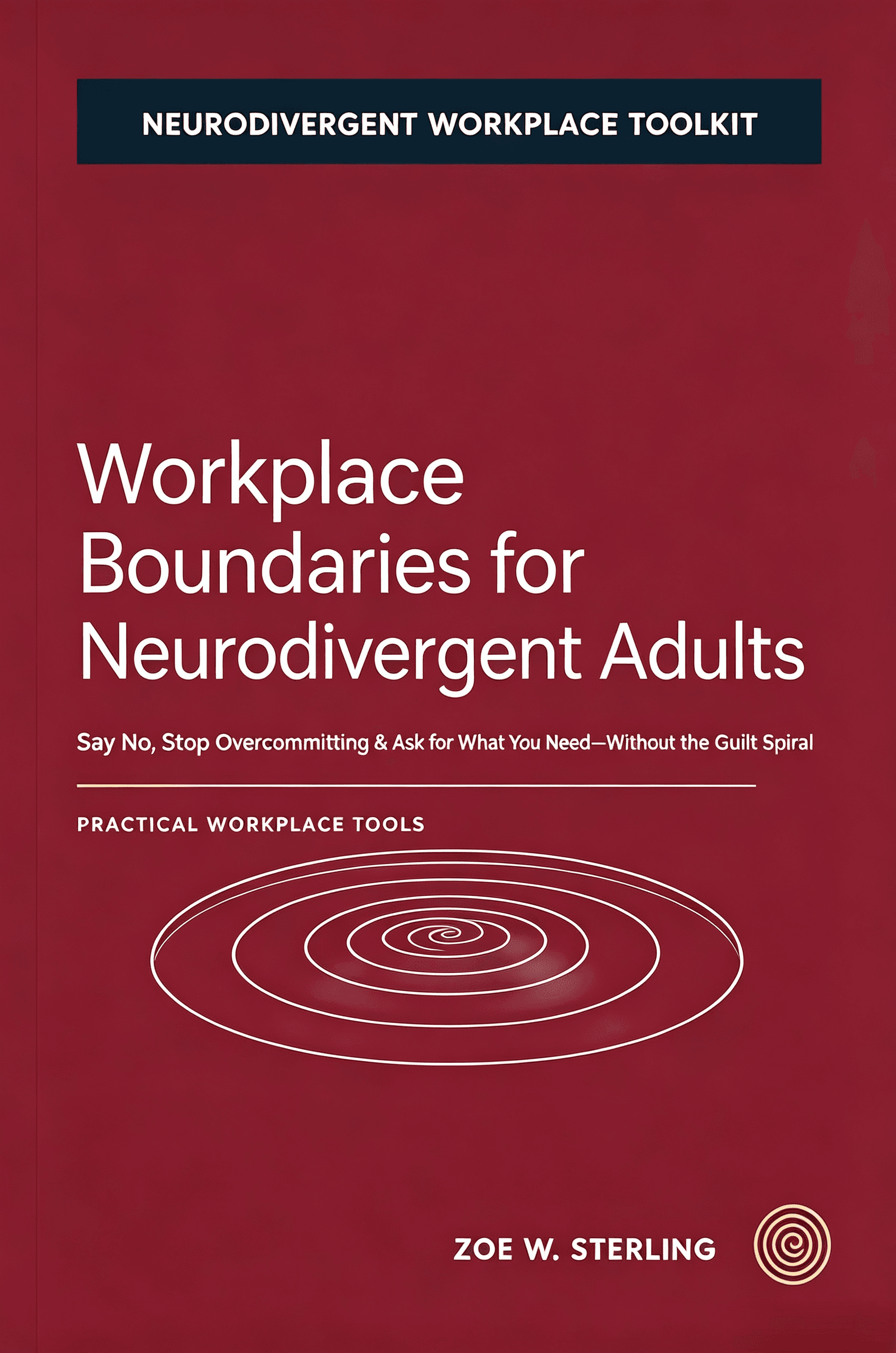
Workplace Boundaries for Neurodivergent Adults
Setting boundaries is critical for all professionals, but especially for neurodivergent adults who are more susceptible to overstimulation, RSD triggers, and energy depletion. This book provides practical strategies and scripts.