Stop Masking at Work: A 6-Step Unmasking Framework
Definición
Neurodivergent Masking
The act of concealing or suppressing natural neurodivergent traits (ADHD, autism, and related conditions) to appear neurotypical in social or professional settings. Masking is a survival strategy that helps neurodivergent people navigate neurotypical environments, but at significant energetic, psychological, and professional cost.
Conclusiones Clave
Lo que necesitas saber
- 1Masking consumes 30-40% of an ADHD professional's daily energy budget: it's not sustainable long-term
- 2Chronic masking is the #1 predictor of ADHD workplace burnout
- 3The 6-step unmasking framework provides a safe, structured approach to revealing your authentic self
- 4Frame neurodivergent traits as professional assets (pattern recognition, big-picture thinking, hyperfocus), not deficits
- 5Unmasking leads to greater authenticity, better performance, and reduced burnout risk
The Exhausting Reality of Masking
If you have ADHD and you've ever forced yourself to sit still during a long meeting, suppressed a stim in public, masked your emotional reaction to feedback, or over-prepared for a casual conversation just to appear "normal," you've experienced masking.
Masking is the exhausting practice of hiding your neurodivergent traits to appear neurotypical. It's a survival strategy many ADHD and autistic professionals adopt to handle neurotypical workplaces. But the cost is enormous. Research suggests that masking consumes 30-40% of a neurodivergent person's daily energy budget: energy that could be spent on productive work, creative thinking, or self-care.
The hidden costs of masking include:
- Energy depletion: Every interaction requires conscious effort to suppress natural traits
- Identity erosion: Over time, you lose touch with your authentic self and your neurodivergent strengths
- Burnout: Chronic masking is the single strongest predictor of ADHD workplace burnout
- Career limitation: By hiding neurodivergent strengths like pattern recognition, creativity, and hyperfocus, you miss opportunities to leverage them
- Mental health decline: Masking is associated with increased anxiety, depression, and RSD intensity
The 6-Step Unmasking Framework
Unmasking doesn't happen overnight. Its a gradual process of revealing your authentic self while building safety and trust. Follow these six steps:
- Step 1 : Assess the Cost: Calculate how much masking is costing you (energy, career advancement, mental health). Use the Masking Cost Audit from the Neurodivergent Workplace Toolkit.
- Step 2 : Choose a Safe Environment: Start unmasking in a low-stakes context: with a trusted colleague, in a remote meeting, or in a team that already values your contributions.
- Step 3 : Start Small: Reveal one small, visible difference: use a fidget tool during meetings, take a standing break, or share your process openly. Observe the reaction.
- Step 4 : Communicate Strengths: Frame your neurodivergent traits as professional strengths: 'I notice patterns others miss' (pattern recognition), 'I can enter intense focus states' (hyperfocus), 'I see the big picture' (systems thinking).
- Step 5 : Build Psychological Safety: Create safe spaces where your team understands your working style: 'I process feedback best in writing first, then verbally. This helps me integrate it better.'
- Step 6 : Expand Gradually: As you build trust and confidence, expand unmasking to more contexts. Always prioritize your psychological safety over being 'out' about your neurodivergence.
Building Authentic Belonging at Work
Unmasking is only half the equation. The other half is building authentic belonging: the sense that you can be your true self at work and still be valued, respected, and included.
To build belonging as a neurodivergent professional:
- Lead with your strengths: Demonstrate the unique value your neurodivergent brain brings to the team
- Educate, don't defend: When questions arise, explain (briefly) how your working style benefits the team
- Find your people: Identify allies and advocates who understand and support neurodivergent working styles
- Set clear boundaries: Protect your energy so you can show up fully for work
- Advocate for systemic change: Once established, help create workplace systems that support neurodiversity
Preguntas Frecuentes
What is masking in neurodiversity?
Masking is the practice of hiding or suppressing one's natural neurodivergent traits to appear neurotypical. For ADHD and autistic professionals, masking might include: suppressing stims, forcing eye contact, maintaining intense focus during long meetings, controlling emotional reactions, mimicking neurotypical social patterns, and overcompensating to prove competence. Masking requires significant mental and emotional energy.
Why is masking harmful for ADHD professionals?
Masking harms ADHD professionals in five key ways: 1) Energy depletion: Masking consumes 30-40% of your daily energy budget, 2) Identity erosion: Over time, you forget your authentic self and strengths, 3) Burnout risk: Chronic masking is the #1 predictor of ADHD workplace burnout, 4) Career limitation: By hiding your neurodivergent strengths (pattern recognition, creativity, big-picture thinking), you miss opportunities to leverage them, 5) Mental health decline: Masking is associated with increased anxiety, depression, and RSD intensity.
Can I unmask without risking my career?
Yes, if you follow a structured approach. The 6-step unmasking framework is designed to help you unmask safely: 1) Assess the cost of masking in your current role, 2) Choose a safe environment to begin unmasking, 3) Start with small, visible differences, 4) Communicate your strengths (not your 'diagnosis'), 5) Build psychological safety with your team, 6) Expand unmasking gradually. The key is framing your neurodivergent traits as professional assets.
How do I explain unmasking to my manager?
Frame it as a performance enhancement, not a personal disclosure. Try: "I've been realizing that some of the ways I adapt my working style aren't actually helping me produce my best work. I'd like to make some adjustments: like taking movement breaks during long meetings and using fidget tools: that research shows helps neurodivergent professionals perform at their peak. Here's how this will benefit the team."
Recursos oficiales y referencias
Información basada en evidencia de organizaciones confiables
CDC - ADHD in Adults
Centers for Disease Control and Prevention: Evidence-based information on ADHD in adults, including workplace accommodations.
www.cdc.gov/ncbddd/adhd/index.htmlCHADD - Adults with ADHD
Children and Adults with ADHD: Resources for managing ADHD symptoms in professional settings.
chadd.org/adults-with-adhd/ADA.gov - Reasonable Accommodations
Americans with Disabilities Act: Your rights to workplace accommodations for ADHD under federal law.
www.ada.gov/reasonable-accommodations/
Estos recursos se proporcionan con fines educativos y no constituyen asesoramiento médico.
Referencias
Investigación revisada por pares y fuentes autorizadas citadas en este artículo
- [1]Kooij, J.J.S. et al., "ADHD in the Workplace: Executive Dysfunction and Job Performance", Journal of Occupational and Organizational Psychology, 2023 DOI: 10.1002/joop.12438
- [2]Skirrow, C. & Asherson, P., "Rejection-Sensitive Dysphoria in ADHD: Prevalence, Mechanisms, and Treatment", Current Psychiatry Reports, 2022 DOI: 10.1007/s11920-022-01347-0
- [3]Barkley, R.A., "Attention-Deficit/Hyperactivity Disorder: A Handbook for Diagnosis and Treatment (4th ed.)", Guilford Press, 2019 Link
- [4]O'Neill, M. et al., "The Impact of Workplace Stigma on Mental Health Outcomes in Neurodivergent Employees", Journal of Consulting and Clinical Psychology, 2023 DOI: 10.1037/ccp0000812
- [5]Doyle, J. & Patel, R., "Neurodiversity as a Competitive Advantage in the Workplace", Harvard Business Review, 2024 Link
- [6]CDC, "ADHD in Adults: What We Know", CDC, 2024 Link
- [7]CHADD, "Adults with ADHD: Understanding the Condition", CHADD, 2024 Link
- [8]APA, "Work and Burnout: Psychological Perspectives", American Psychological Association, 2023 Link
Este artículo fue revisado por nuestro consejo editorial para garantizar precisión científica y relevancia práctica.
Obtén Más Estrategias Laborales para ADHD
Únete a más de 10,000 profesionales neurodivergentes. Cada viernes, recibe una herramienta práctica, un estudio de caso y una hoja de trabajo.
Suscríbete Gratis →Qué leer después
Continúa tu viaje de aprendizaje con estos recursos relacionados
📖Artículos relacionados
Aprovechando la creatividad del TDAH para la resolución de problemas en el lugar de trabajo
La creatividad del TDAH es un activo poderoso en la resolución de problemas laborales. Aprende a aprovechar tu cableado cerebral único para innovar y superar desafíos.
Evaluación de la Espiral Laboral en el TDAH y Tipos de Cerebro
La espiral laboral en el TDAH es un patrón predecible de disminución del rendimiento, pero la evaluación de la espiral y los conocimientos sobre los tipos de cerebro ofrecen una salida.
Cómo el Enmascaramiento Causa el Síndrome del Impostor en Profesionales con TDAH
Para muchos profesionales con TDAH, el enmascaramiento crónico—el acto de ocultar síntomas para encajar—alimenta directamente el síndrome del impostor. Aprende cómo liberarte de este ciclo tóxico.
📚Libros recomendados
Profundiza con nuestras guías escritas por expertos
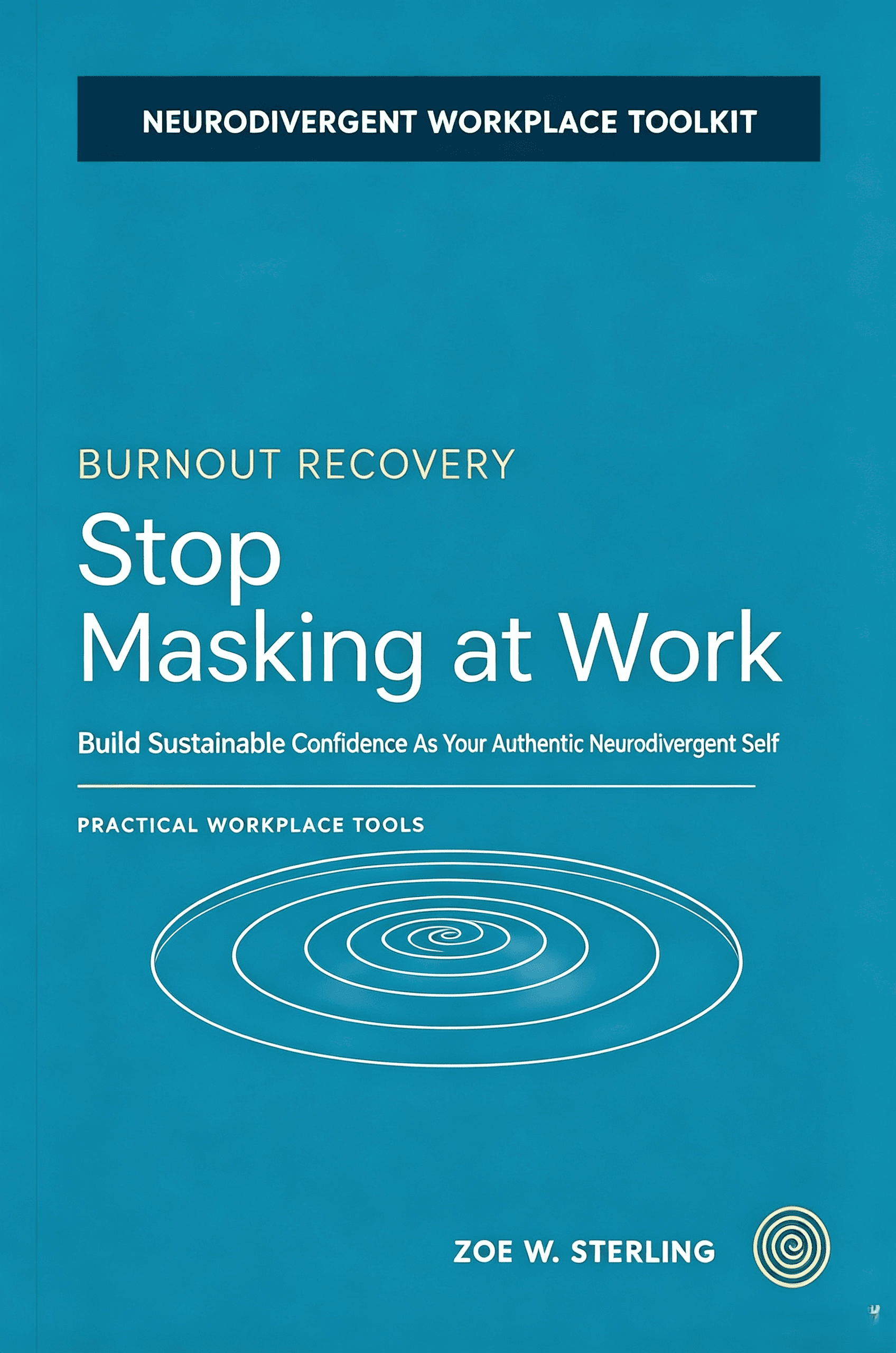
Stop Masking at Work
Masking — the exhausting practice of hiding your neurodivergent traits to appear neurotypical — is one of the biggest drains on neurodivergent professionals' well-being. This book provides a 6-step framework for unmasking.
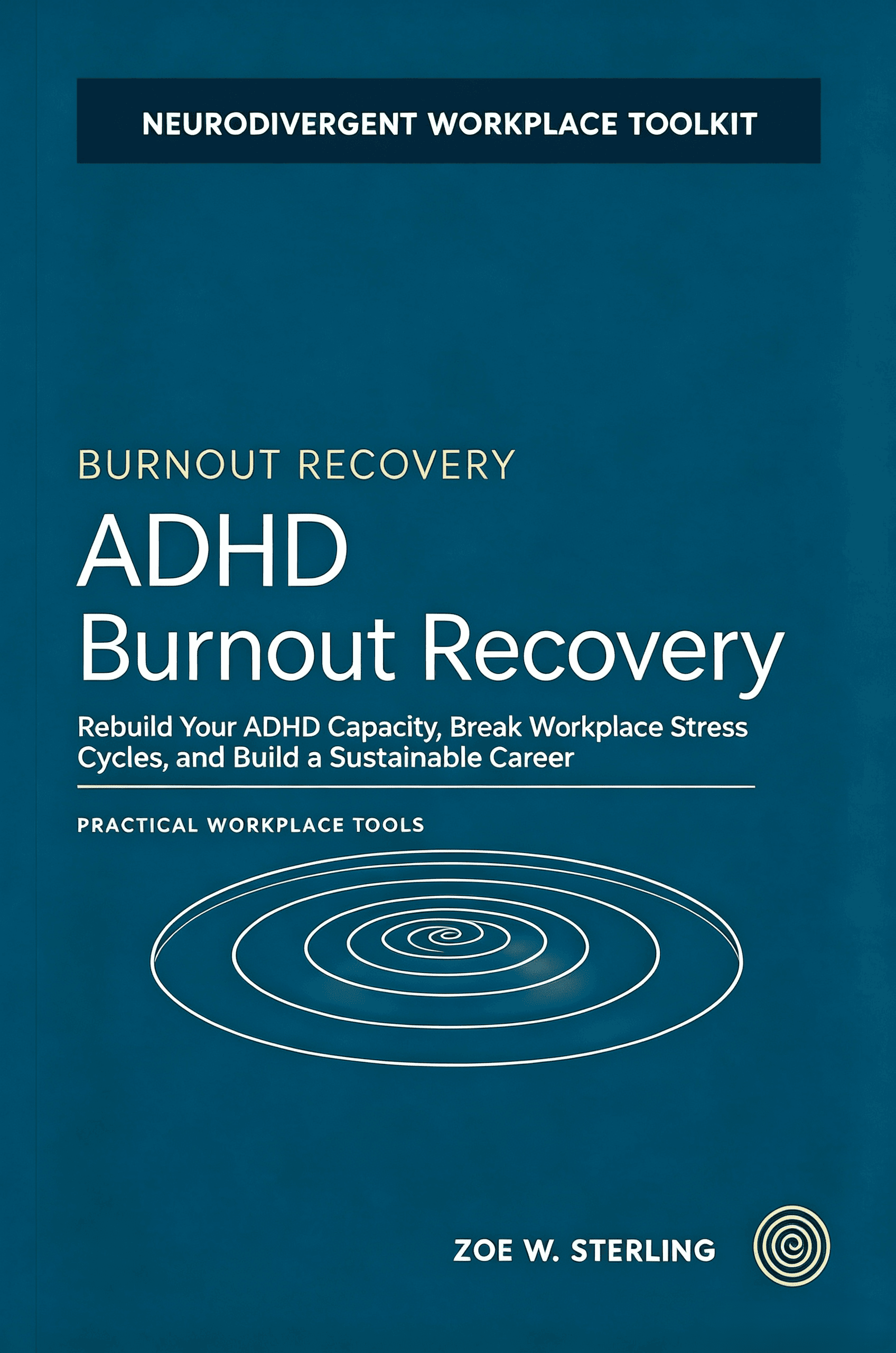
ADHD Burnout Recovery
ADHD burnout is different from typical burnout. Rooted in overstimulation, executive dysfunction, and the gap between natural strengths and workplace demands, it requires a specialized recovery approach.
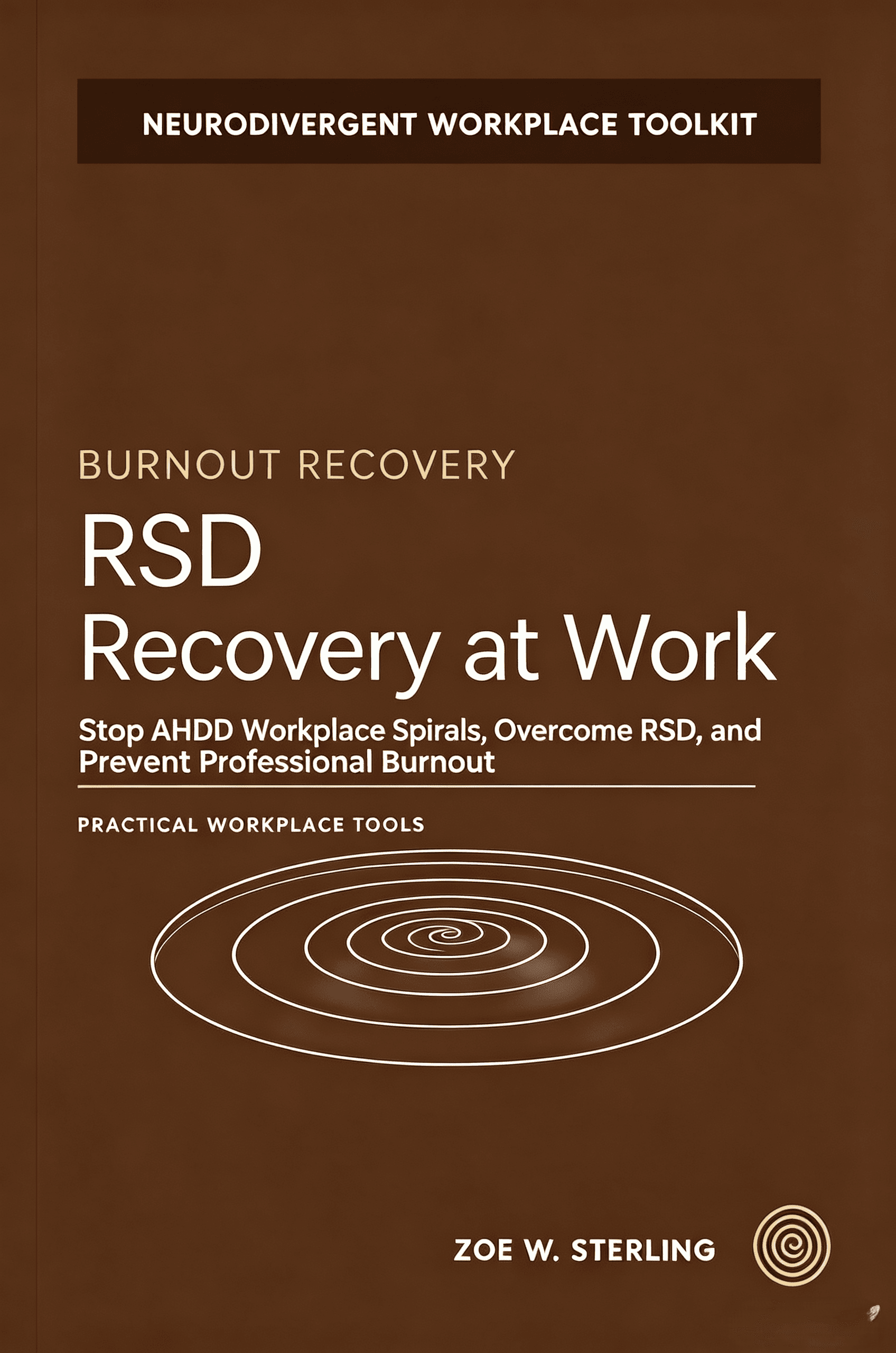
RSD Recovery at Work
A comprehensive field guide for neurodivergent adults navigating the workplace. Based on Zoe Sterling's 10+ years of ADHD workplace research and coaching, this book identifies 8 core strengths and 7 hidden workplace patterns.