Definición
ADHD Burnout
A neurological state of depletion caused by prolonged overstimulation, masking (hiding ADHD traits), executive dysfunction demands, and RSD spirals. Unlike typical burnout, ADHD burnout involves actual changes in brain chemistry—specifically, reduced dopamine availability that impairs the brain's ability to initiate tasks, regulate emotions, and maintain focus.
Conclusiones Clave
Lo que necesitas saber
- 1ADHD burnout is neurological, not psychological: your brain literally needs dopamine replenishment to recover
- 2The 5 stages (Overload → Shutdown → Perseverance → RSD Spiral → Chronic Withdrawal) provide a framework for recognizing where you are
- 3Recovery takes 8-12 weeks minimum: there's no quick fix for neurochemical depletion
- 4Phase 1 (complete rest) is non-negotiable: you cannot push through ADHD burnout with willpower
- 5Long-term sustainability requires aligning your job tasks with your neurodivergent strengths, not forcing conformity
 32s
32sADHD Burnout Recovery: 12-Week Science-Backed Guide
ADHD burnout is neurological, not lazy. Learn the 5 stages and a 12-week recovery protocol. Get the full guide at neurodivergentworkplace.com.
Recognizing ADHD Burnout When It's Already Here
By the time most ADHD professionals recognize burnout, they're already in Stage 3 (Perseverance) or Stage 4 (RSD Spiral). The early signs are easy to miss because they gradually become your new normal.
ADHD burnout develops differently from typical burnout. Its not just about working too much or being stressed. Its about a brain that has been running at maximum dopamine capacity for too long without proper replenishment. Heres how to recognize the stages:
- Stage 1 : Overload: Increased stress, reduced enjoyment in work, sleep disruption, increased caffeine or stimulant use
- Stage 2 : Shutdown: Executive dysfunction increases, task initiation becomes nearly impossible, you avoid checking email
- Stage 3 : Perseverance: You push through using willpower instead of dopamine: this is the most dangerous stage because it worsens the neurochemical depletion
- Stage 4 : RSD Spiral: Feedback sensitivity increases dramatically, shame spirals become more frequent and intense, physical symptoms (headaches, stomach issues) appear
- Stage 5 : Chronic Withdrawal: Complete emotional and physical withdrawal from work, inability to even think about work without anxiety, potential for clinical depression
The 12-Week ADHD Burnout Recovery Protocol
ADHD burnout recovery requires a phased approach that respects your brain's unique recovery needs. This 12-week protocol is based on clinical practice with neurodivergent professionals:
- Phase 1 : Neuro-Protection (Weeks 1-3): Complete rest. No work-related thinking, no career planning, no 'productive rest.' Your brain needs to replenish dopamine reserves. This means: 8+ hours of sleep daily, no stimulants after 2pm, daily walks (30 min), and processing emotions through journaling or therapy.
- Phase 2 : Gradual Re-Engagement (Weeks 4-6): Introduce low-demand activities. Start with 1-2 hours per day of work-related reading, not doing. Learn about ADHD burnout, your brain type, and recovery strategies. Join a support group. The goal is re-engagement without pressure.
- Phase 3 : Strengths-Aligned Task Reintroduction (Weeks 7-9): Begin working again, but only in your strengths zone. Identify 1-2 core tasks that align with your neurodivergent strengths (pattern recognition, big-picture thinking, creativity). Work 3-4 hours per day maximum.
- Phase 4 : Sustainable Pattern Building (Weeks 10-12): Gradually build a sustainable work pattern. Add tasks slowly, always prioritizing your strengths. Establish recovery routines. Set boundaries. The goal is a pattern you can maintain indefinitely without burning out again.
Preventing Relapse: The Sustainability System
Recovery is only half the battle. The real challenge is preventing relapse. These strategies create a sustainable work pattern for neurodivergent professionals:
- Strengths Alignment Audit: Regularly (quarterly) review whether your job tasks align with your neurodivergent strengths
- Dopamine Budget: Track your daily dopamine expenditure: don't consistently spend more than you replenish
- Recovery Routines: Build non-negotiable recovery practices into your daily/weekly schedule
- Early Warning System: Identify your personal early burnout signs (e.g., increased RSD, sleep changes) and act immediately
- Boundary Maintenance: Uphold the boundaries you established during recovery: this is critical for long-term sustainability
- Regular Check-ins: Meet monthly with a therapist, coach, or accountability partner to review your burnout risk
Preguntas Frecuentes
How is ADHD burnout different from regular burnout?
ADHD burnout differs from typical burnout in several ways: 1) It stems from overstimulation, masking, and executive dysfunction rather than just workload, 2) It includes increased emotional dysregulation and RSD intensity, 3) Recovery takes longer because ADHD brains have less dopamine reserve, 4) It often includes 'brain fog' where thinking becomes physically difficult, 5) It may manifest as increased hyperactivity or restlessness rather than just exhaustion.
What are the 5 stages of ADHD burnout?
The 5 stages are: 1) Overload: Increased stress, reduced enjoyment, sleep disruption. 2) Shutdown: Executive dysfunction increases, task initiation becomes impossible. 3) Perseverance: You keep pushing through, using willpower instead of dopamine: this is the most dangerous stage. 4) RSD Spiral: Feedback sensitivity increases dramatically, shame spirals become more frequent. 5) Chronic Withdrawal: Complete emotional and physical withdrawal from work.
How long does ADHD burnout recovery take?
Recovery time varies, but most ADHD professionals need 8-12 weeks minimum. The 12-week phased protocol is: Phase 1 (Weeks 1-3): Complete rest and neuro-protection. Phase 2 (Weeks 4-6): Gradual re-engagement with low-demand activities. Phase 3 (Weeks 7-9): Strengths-aligned task reintroduction. Phase 4 (Weeks 10-12): Sustainable work pattern building.
Can I recover from ADHD burnout without taking time off?
It's very difficult. ADHD burnout is neurological, not just psychological. Your brain needs genuine rest to replenish dopamine reserves. If you cannot take extended time off, try: 1) Negotiating a reduced workload (50-75%) with your employer, 2) Stripping your tasks down to only those in your strengths zone, 3) Implementing strict recovery boundaries (no work after 4pm, no weekends), 4) Working with a therapist who specializes in ADHD burnout recovery.
Recursos oficiales y referencias
Información basada en evidencia de organizaciones confiables
CDC - ADHD in Adults
Centers for Disease Control and Prevention: Evidence-based information on ADHD and burnout risks in adults.
www.cdc.gov/ncbddd/adhd/index.htmlAPA - Work and Burnout
American Psychological Association: Research on workplace burnout, stress management, and mental health.
www.apa.org/topics/burnoutCHADD - Adults with ADHD
Children and Adults with ADHD: Resources for managing ADHD-related burnout and recovery.
chadd.org/adults-with-adhd/
Estos recursos se proporcionan con fines educativos y no constituyen asesoramiento médico.
Referencias
Investigación revisada por pares y fuentes autorizadas citadas en este artículo
- [1]Kooij, J.J.S. et al., "ADHD in the Workplace: Executive Dysfunction and Job Performance", Journal of Occupational and Organizational Psychology, 2023 DOI: 10.1002/joop.12438
- [2]Skirrow, C. & Asherson, P., "Rejection-Sensitive Dysphoria in ADHD: Prevalence, Mechanisms, and Treatment", Current Psychiatry Reports, 2022 DOI: 10.1007/s11920-022-01347-0
- [3]Barkley, R.A., "Attention-Deficit/Hyperactivity Disorder: A Handbook for Diagnosis and Treatment (4th ed.)", Guilford Press, 2019 Link
- [4]O'Neill, M. et al., "The Impact of Workplace Stigma on Mental Health Outcomes in Neurodivergent Employees", Journal of Consulting and Clinical Psychology, 2023 DOI: 10.1037/ccp0000812
- [5]Doyle, J. & Patel, R., "Neurodiversity as a Competitive Advantage in the Workplace", Harvard Business Review, 2024 Link
- [6]CDC, "ADHD in Adults: What We Know", CDC, 2024 Link
- [7]CHADD, "Adults with ADHD: Understanding the Condition", CHADD, 2024 Link
- [8]APA, "Work and Burnout: Psychological Perspectives", American Psychological Association, 2023 Link
- [9]Maslach, C. & Jackson, S.E., "The Measurement of Experienced Burnout", Journal of Occupational Behaviour, 1981 Link
- [10]Selye, H., "Stress and Disease", Science, 1955 Link
Este artículo fue revisado por nuestro consejo editorial para garantizar precisión científica y relevancia práctica.
Obtén Más Estrategias Laborales para ADHD
Únete a más de 10,000 profesionales neurodivergentes. Cada viernes, recibe una herramienta práctica, un estudio de caso y una hoja de trabajo.
Suscríbete Gratis →Qué leer después
Continúa tu viaje de aprendizaje con estos recursos relacionados
📖Artículos relacionados
Marco de reconocimiento del agotamiento por TDAH: 5 etapas
El agotamiento por TDAH es un estado crónico de agotamiento ejecutivo y emocional. Este marco de reconocimiento de cinco etapas le ayuda a detectarlo a tiempo y responder con estrategias específicas.
Apagón por TDAH en el Trabajo: Causas y Recuperación
El apagón por TDAH en el trabajo es más que sentirse abrumado: es una respuesta neurológica al estrés arraigada en déficits de la función ejecutiva y desregulación de la dopamina. Descubre las 5 etapas y cómo recuperarte.
Protocolo de recuperación del agotamiento por TDAH en 12 semanas: una hoja de ruta
El agotamiento por TDAH puede sentirse como un callejón sin salida, pero este protocolo de recuperación de 12 semanas ofrece un camino estructurado y respaldado por la neurociencia para restaurar el equilibrio, la motivación y el bienestar.
📚Libros recomendados
Profundiza con nuestras guías escritas por expertos
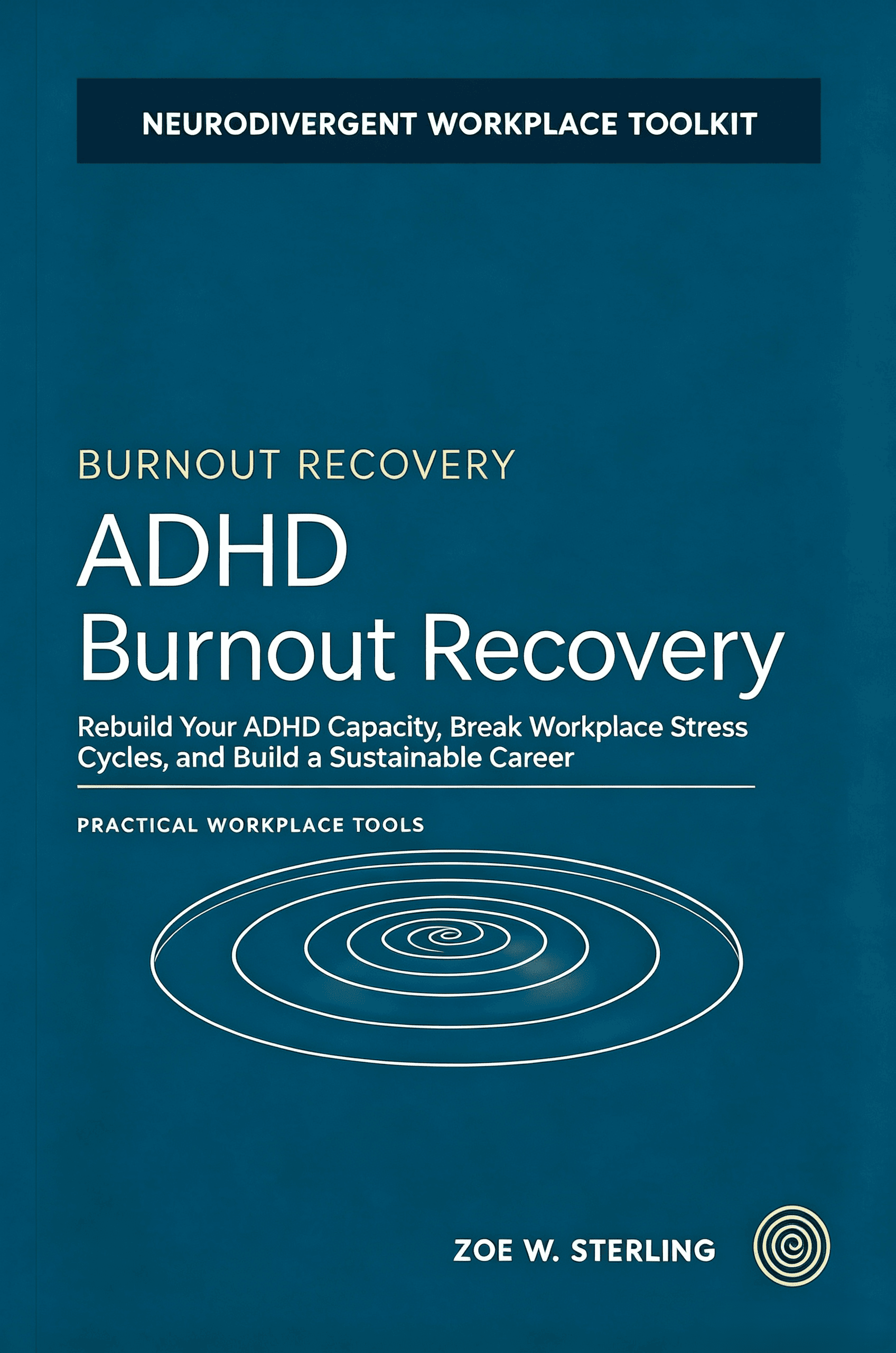
ADHD Burnout Recovery
ADHD burnout is different from typical burnout. Rooted in overstimulation, executive dysfunction, and the gap between natural strengths and workplace demands, it requires a specialized recovery approach.
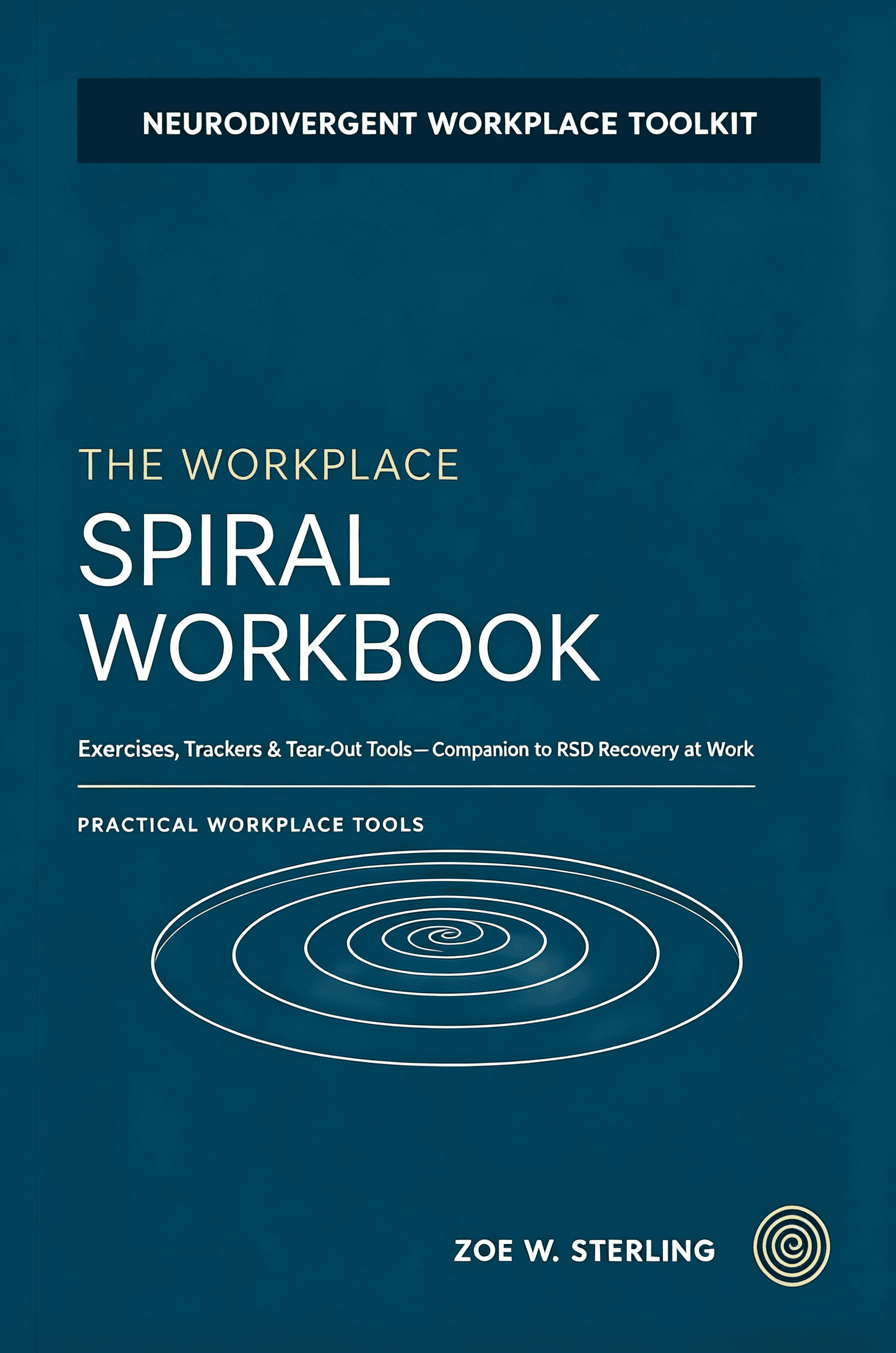
The Workplace Spiral Workbook
This interactive workbook is the companion to Zoe Sterling's Workplace Spiral assessment. Readers identify their spiral type, track their workplace patterns, and practice rewiring strategies to break free from unhealthy cycles.
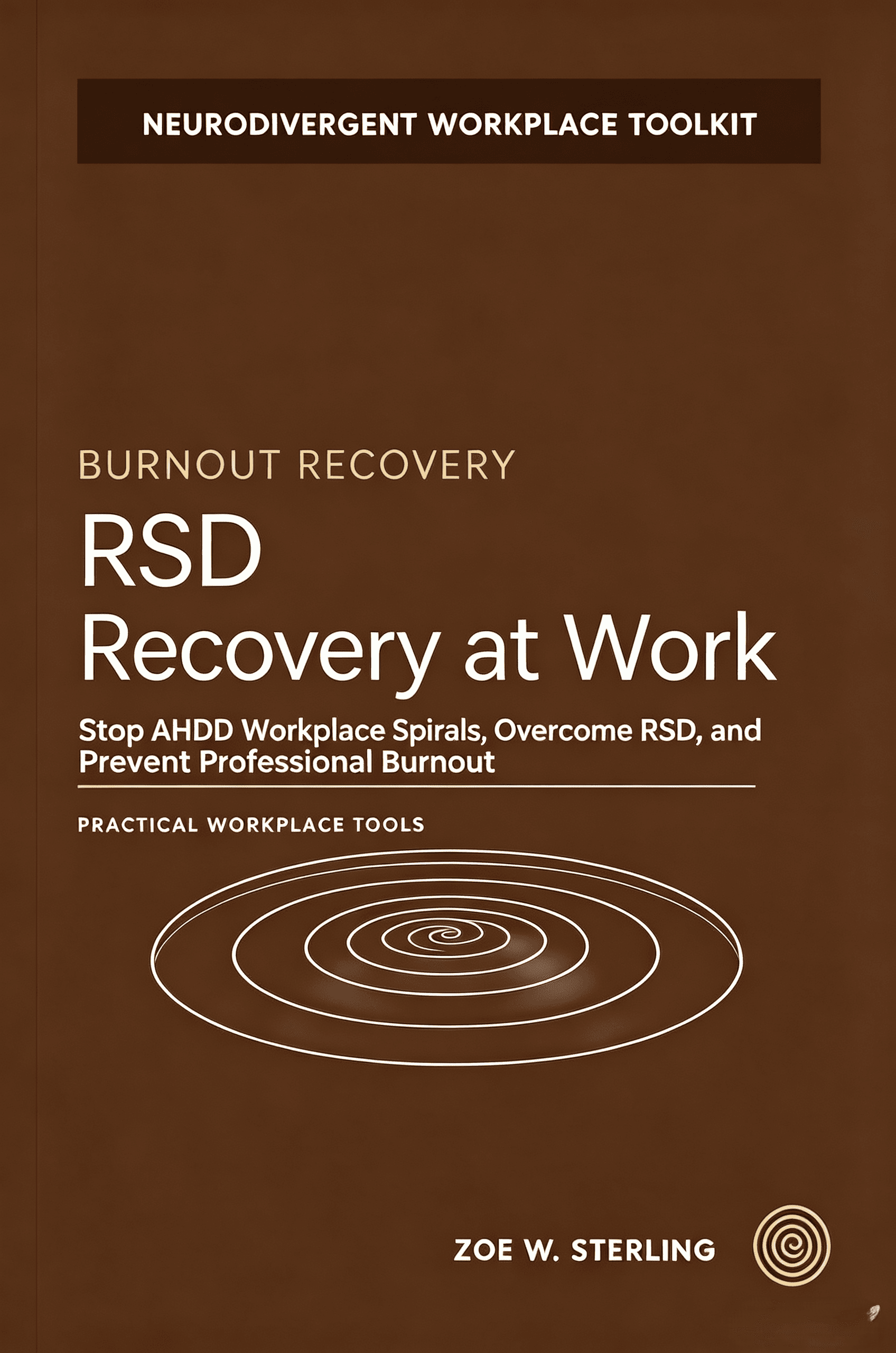
RSD Recovery at Work
A comprehensive field guide for neurodivergent adults navigating the workplace. Based on Zoe Sterling's 10+ years of ADHD workplace research and coaching, this book identifies 8 core strengths and 7 hidden workplace patterns.