定義
ADHD Career Navigation
The process of managing a career as a neurodivergent professional, including navigating interviews, performance reviews, promotions, and workplace dynamics. ADHD career navigation requires strategic planning to account for RSD triggers, executive function challenges, and neurodivergent strengths that may not be recognized in neurotypical workplace systems.
核心要點
你需要了解的要点
- 1Interviews trigger RSD due to social pressure and judgment: preparation and accommodations are key
- 2Performance reviews should be structured to reduce RSD triggers (written first, one topic at a time)
- 3Self-advocacy is challenging but necessary: document accomplishments and find allies
- 4Disclosure is a personal choice; if you disclose, frame it around neurodivergent strengths
- 5Promotion-seeking requires translating neurodivergent strengths into neurotypical language
Interview Success for ADHD Professionals
Interviews are a perfect storm of ADHD triggers: social performance, time pressure, RSD, and sensory overload. But with the right preparation, you can turn your neurodivergent brain into a competitive advantage.
The ADHD Interview Preparation Framework:
- Phase 1 : Research (30 min): Study the company's products, recent news, and culture. Identify 2-3 specific points that connect to your strengths.
- Phase 2 : Story Building: Prepare 3-5 STAR (Situation, Task, Action, Result) stories that demonstrate your core strengths. Quantify results whenever possible.
- Phase 3 : Practice: Rehearse your stories out loud. Video record yourself if possible to identify areas for improvement. Focus on clarity and brevity.
- Phase 4 : Logistics Prep: Lay out your outfit, plan your route, and prepare your materials the night before. This eliminates morning decision fatigue.
- Phase 5 : Interview Day: Eat a protein-rich breakfast (stabilizes dopamine), bring a water bottle and small fidget tool, arrive 10 minutes early to acclimate, and use the 24-hour post-interview processing window to reflect before sending a thank-you note.
Performance Reviews Without RSD Triggers
Performance reviews are the most dreaded workplace event for ADHD professionals, and for good reason: they trigger RSD, require self-advocacy, and often feel like a test you didn't study for. Here's how to transform them:
- Pre-review: Request written feedback 48 hours before the discussion. Process it privately, journaling your reactions before the meeting.
- During the review: Focus on listening, not defending. Ask clarifying questions before responding. Request one specific area of focus per meeting.
- Post-review: Take 24 hours to process before discussing further. Write a response acknowledging the feedback and outlining your action plan.
- Proactive approach: Don't wait for annual reviews. Request monthly check-ins to discuss your progress, challenges, and goals. This reduces the intensity of formal reviews.
Positioning for Promotion
ADHD professionals often under-advocate for themselves due to RSD, impostor syndrome, and difficulty with neurotypical office politics. These strategies level the playing field:
- Document continuously: Keep a running log of your accomplishments, projects, and wins. Be specific and quantify when possible.
- Frame your strengths: Translate neurodivergent strengths into neurotypical language. "I notice patterns others miss" → "I identified a 15% process improvement opportunity."
- Identify stretch assignments: Seek projects that play to your strengths (innovation, pattern recognition, complex problem-solving) and expose you to senior stakeholders.
- Build alliances: Identify sponsors who can advocate for your work and career development. Share your career goals with them explicitly.
- Practice self-advocacy: Start small: share your accomplishments in team meetings, propose process improvements, and volunteer for visible projects.
Long-Term Career Sustainability
A sustainable career for ADHD professionals requires alignment between your neurodivergent strengths and your job responsibilities. Regularly assess:
- Strengths alignment: What percentage of your time is spent on tasks that align with your neurodivergent strengths?
- Energy management: Are you able to maintain your energy without chronic burnout?
- Growth trajectory: Are you developing skills that will serve you long-term?
- Cultural fit: Does your workplace culture support neurodivergent working styles?
- Personal fulfillment: Does your work feel meaningful and aligned with your values?
常見問題
How do I prepare for an interview with ADHD?
ADHD interview success requires strategic preparation: 1) Research the company thoroughly (30 min), 2) Prepare 3-5 specific examples of your work using the STAR method, 3) Practice your answers out loud (video record if possible), 4) Plan your interview outfit and route the night before to reduce morning stress, 5) Prepare questions for the interviewer that demonstrate your strategic thinking, 6) Consider requesting accommodations (e.g., written questions, extended time) if appropriate.
How do I handle performance reviews without triggering RSD?
Performance reviews are the #1 RSD trigger for ADHD professionals. Use this framework: 1) Request written feedback in advance so you can process privately, 2) Separate the review into two meetings: one for the manager to share, one for you to discuss, 3) Ask for one specific area of focus per meeting, 4) Process the feedback in writing before discussing verbally, 5) Remind yourself that feedback is about your work, not your worth.
How do I position myself for promotion with ADHD?
ADHD professionals often struggle with self-advocacy due to RSD and impostor syndrome. Strategies: 1) Document your accomplishments continuously (quantify where possible), 2) Communicate your career goals to your manager proactively, 3) Identify stretch assignments that play to your neurodivergent strengths (pattern recognition, innovation, big-picture thinking), 4) Find allies who can advocate for you, 5) Practice framing your achievements in neurotypical language (impact, scale, business value).
Should I disclose my ADHD to my employer during the hiring process?
This is a personal decision with no right answer. Factors to consider: 1) Legal protection: Disclosing may protect your rights under disability legislation, 2) Accommodation access: You need to disclose to request accommodations, 3) Stigma risk: Some employers may have unconscious bias against neurodivergent candidates, 4) Cultural fit: Research the company's stance on neurodiversity. If you disclose, frame it around strengths: 'I have ADHD, which means I bring strong pattern recognition, creative problem-solving, and intense focus to complex challenges.'
官方資源與參考資料
來自可信組織的循證資訊
CDC - ADHD in Adults
Centers for Disease Control and Prevention: Evidence-based information on ADHD in adults, including workplace accommodations.
www.cdc.gov/ncbddd/adhd/index.htmlCHADD - Adults with ADHD
Children and Adults with ADHD: Resources for managing ADHD symptoms in professional settings.
chadd.org/adults-with-adhd/ADA.gov - Reasonable Accommodations
Americans with Disabilities Act: Your rights to workplace accommodations for ADHD under federal law.
www.ada.gov/reasonable-accommodations/
這些資源僅供教育目的提供,不構成醫療建議。
参考文献
本文引用的同行评审研究与权威来源
- [1]Kooij, J.J.S. et al., "ADHD in the Workplace: Executive Dysfunction and Job Performance", Journal of Occupational and Organizational Psychology, 2023 DOI: 10.1002/joop.12438
- [2]Skirrow, C. & Asherson, P., "Rejection-Sensitive Dysphoria in ADHD: Prevalence, Mechanisms, and Treatment", Current Psychiatry Reports, 2022 DOI: 10.1007/s11920-022-01347-0
- [3]Barkley, R.A., "Attention-Deficit/Hyperactivity Disorder: A Handbook for Diagnosis and Treatment (4th ed.)", Guilford Press, 2019 Link
- [4]O'Neill, M. et al., "The Impact of Workplace Stigma on Mental Health Outcomes in Neurodivergent Employees", Journal of Consulting and Clinical Psychology, 2023 DOI: 10.1037/ccp0000812
- [5]Doyle, J. & Patel, R., "Neurodiversity as a Competitive Advantage in the Workplace", Harvard Business Review, 2024 Link
- [6]CDC, "ADHD in Adults: What We Know", CDC, 2024 Link
- [7]CHADD, "Adults with ADHD: Understanding the Condition", CHADD, 2024 Link
- [8]APA, "Work and Burnout: Psychological Perspectives", American Psychological Association, 2023 Link
本文由我們的編輯委員會審閱,以確保科學準確性與實用性。
獲取更多 ADHD 職場策略
加入超過 10,000 位神經多樣性專業人士。每週五收到一個實用工具、一個案例研究和一個工作紙。
免費訂閱 →下一步閱讀
繼續您的學習之旅
📖相關文章
📚推薦書籍
深入閱讀我們專家撰寫的指南
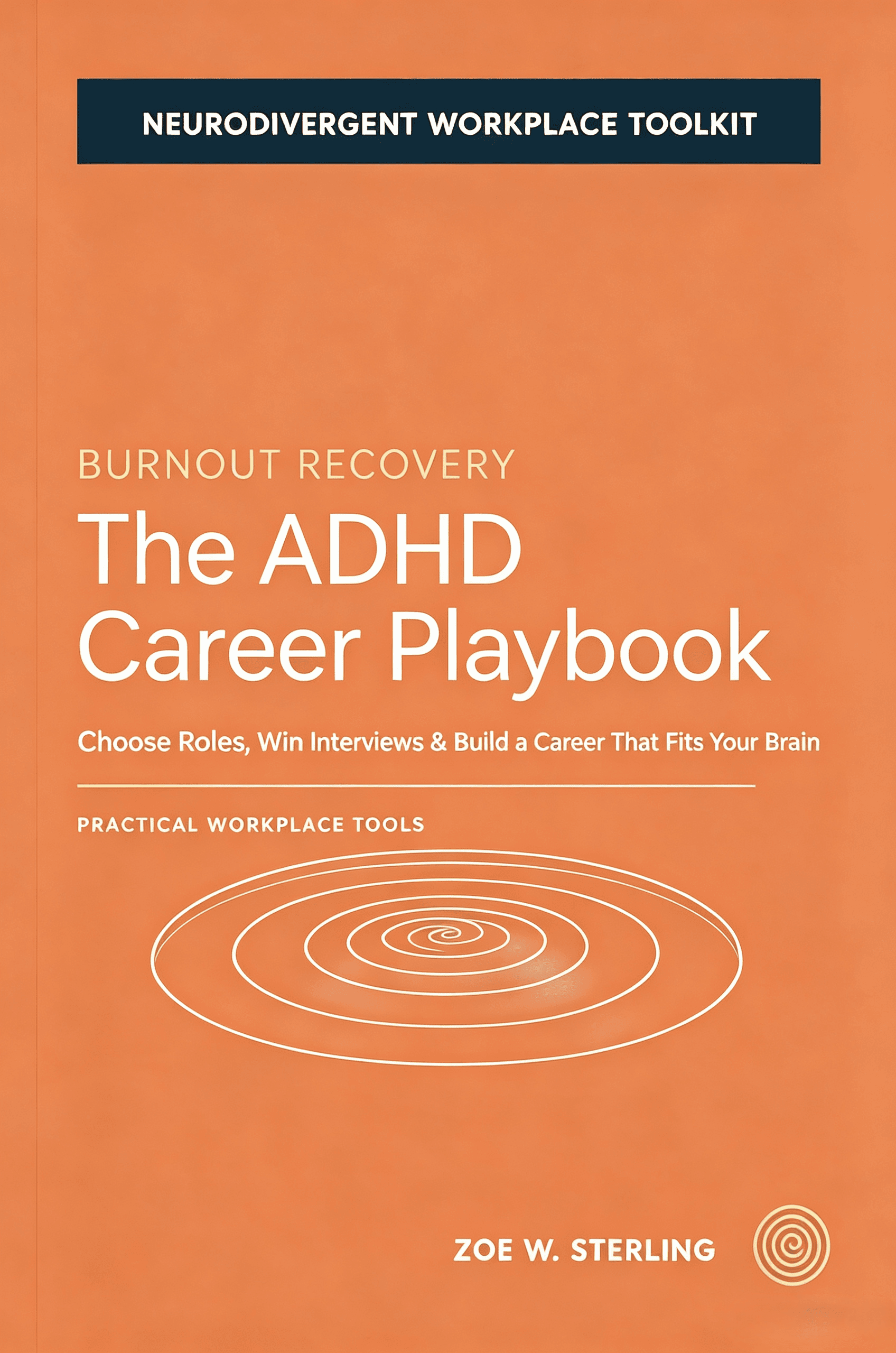
The ADHD Career Playbook
Career advancement is challenging for everyone, but neurodivergent professionals face unique obstacles — from job interview anxiety to promotion bias. This career playbook delivers a strategic guide for finding the right role.
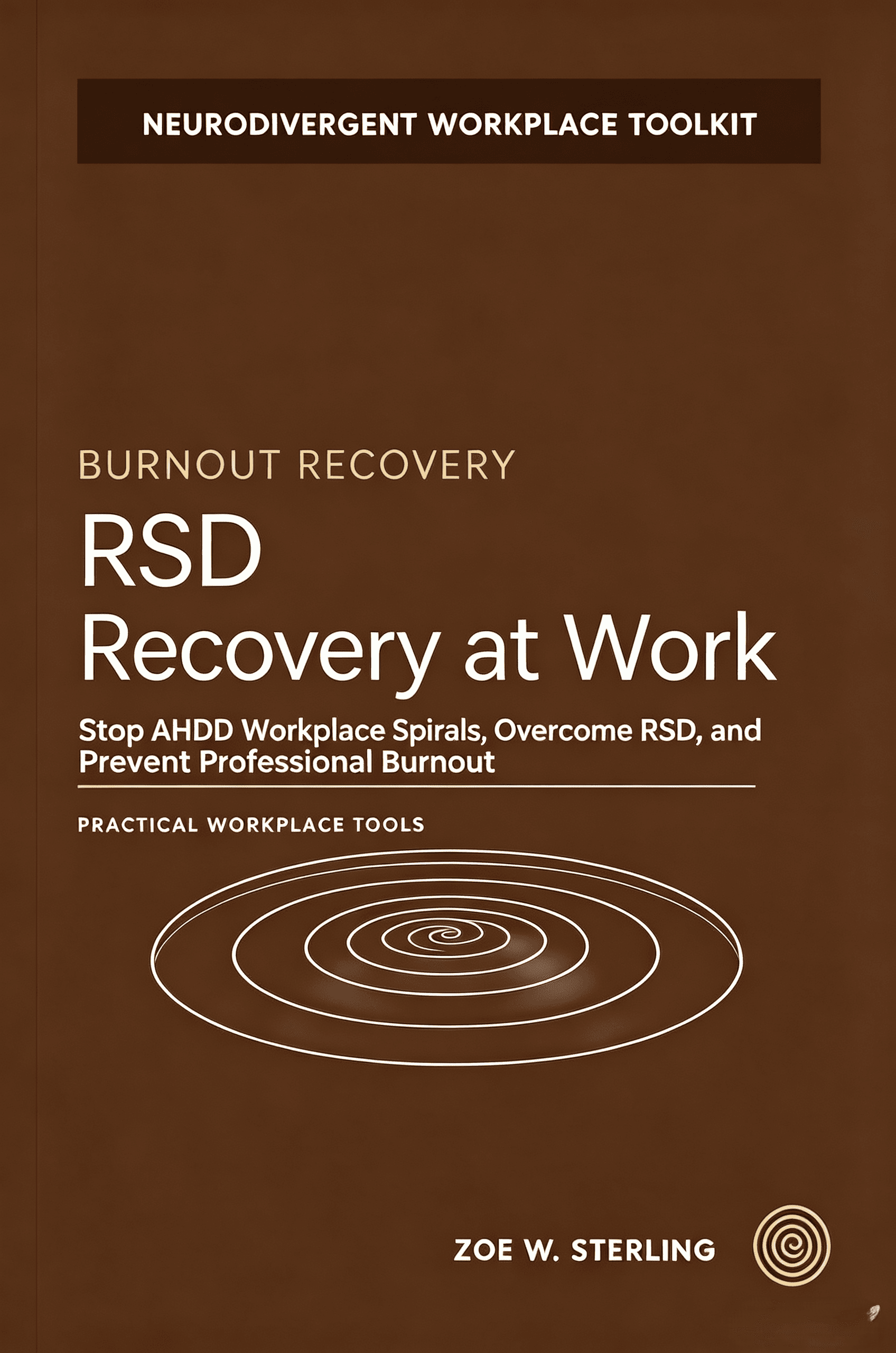
RSD Recovery at Work
A comprehensive field guide for neurodivergent adults navigating the workplace. Based on Zoe Sterling's 10+ years of ADHD workplace research and coaching, this book identifies 8 core strengths and 7 hidden workplace patterns.
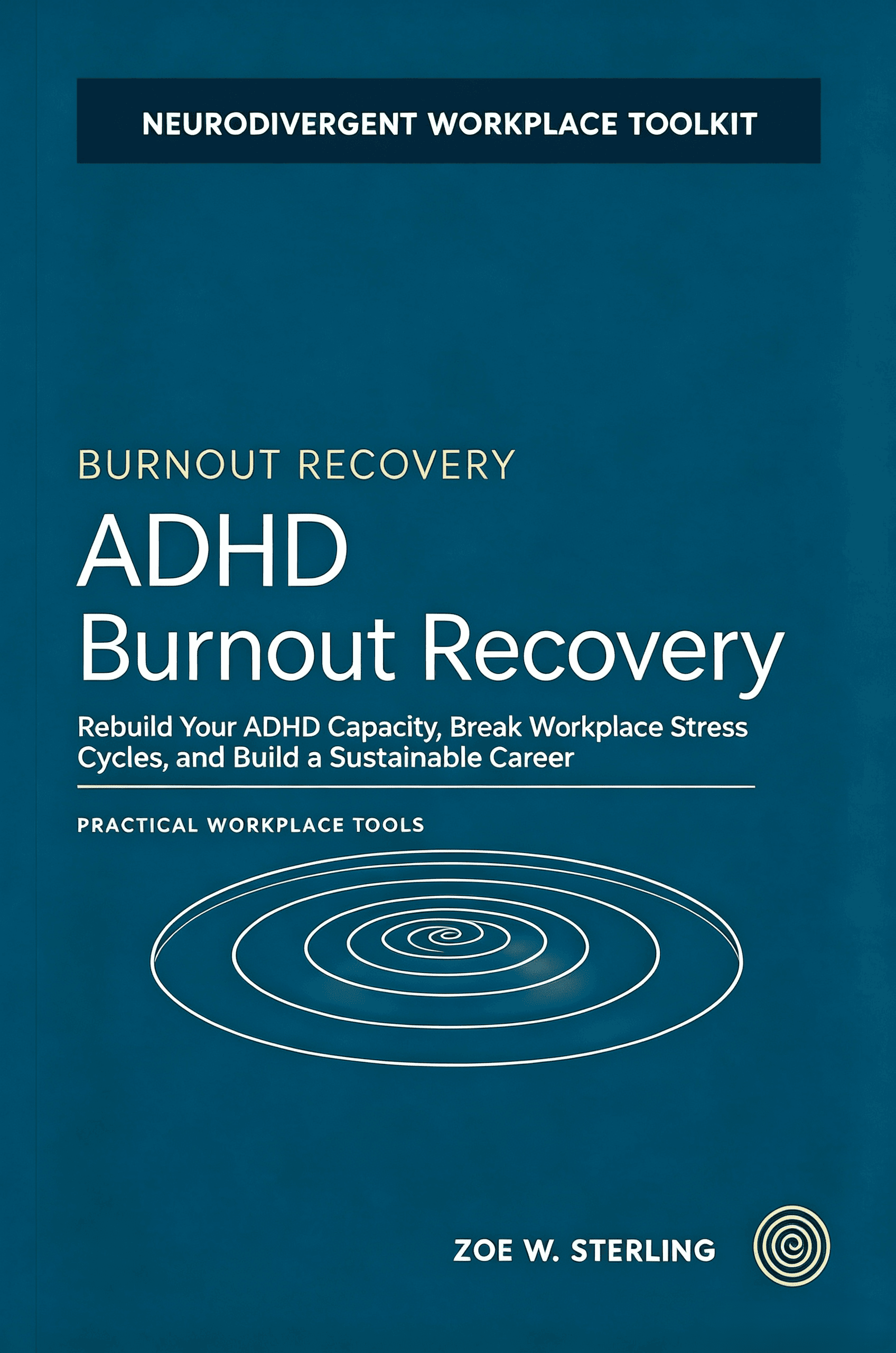
ADHD Burnout Recovery
ADHD burnout is different from typical burnout. Rooted in overstimulation, executive dysfunction, and the gap between natural strengths and workplace demands, it requires a specialized recovery approach.