Definition
Rejection-Sensitive Dysphoria (RSD)
A neurodivergent emotional response where perceived rejection, criticism, or failure triggers intense, disproportionate emotional pain. RSD is most common in people with ADHD and can manifest as shame, anger, sadness, or physical discomfort. It is not a choice or a flaw—it is a neurological difference in how the brain processes social evaluation.
Key Takeaways
Was Sie wissen müssen
- 1RSD affects 80-90% of people with ADHD and is a core feature, not a flaw
- 2RSD involves physical symptoms (racing heart, tight chest) and lasts longer than normal emotional reactions
- 3CBT and ACT are the most evidence-based therapies for managing RSD
- 4Workplace accommodations like written feedback and 24-hour processing windows reduce RSD triggers
- 5RSD is not about being 'too sensitive': it is a neurological difference in feedback processing
 42s
42sRSD at Work: 3 Steps to Stop the Spiral
Rejection-Sensitive Dysphoria (RSD) affects 90% of ADHDers. Learn 3 concrete steps to manage feedback at work. Read the full guide at neurodivergentworkplace.com. #ADHD #RSD #Neurodivergent
Defining RSD: Beyond 'Being Sensitive'
Rejection-Sensitive Dysphoria (RSD) is one of the most misunderstood experiences for ADHD professionals. When people say 'just don't take it personally,' they don't understand that RSD is not a choice or a character flaw: it is a neurological response.
RSD researcher Dr. Edward Hallowell describes it as "a condition in which perceived rejection or criticism triggers an intense, painful emotional reaction that's out of proportion to the event." It's not about being overly sensitive. It's about a brain that processes social evaluation through a different neural pathway.
The key characteristics that distinguish RSD from normal sensitivity:
- Disproportionate intensity: A minor comment triggers overwhelming shame or anger
- Physical symptoms: Heart racing, chest tightness, stomach pain, or headaches
- Extended duration: The emotional reaction lasts hours or days, not minutes
- Rumination loop: You can't stop replaying the feedback in your mind
- Behavioral impact: You either avoid the person entirely or overcompensate excessively
- Identity fusion: The criticism feels like a rejection of who you are, not just what you did
The RSD Cycle at Work
RSD typically follows a predictable cycle in the workplace. Understanding this cycle is the first step to interrupting it:
- Trigger: A manager provides feedback, however minor ("That report was good, but the charts could be clearer")
- Catastrophic interpretation: Your brain translates "charts could be clearer" into "Your work is inadequate. Everyone thinks you're incompetent. You're going to be fired."
- Shame spiral: Intense self-criticism ("Why can't I just get this right? I'm such a failure.")
- Rumination: You replay the feedback over and over for hours, unable to focus on anything else
- Behavioral response: Either withdrawal (avoiding your manager) or overcompensation (working excessively to prove yourself)
- Exhaustion: Complete emotional depletion that affects all areas of your work and personal life
Evidence-Based Strategies for Managing RSD
The goal of RSD management is not to eliminate the response: that's not possible. Its to build a buffer between the trigger and your emotional reaction. These strategies are supported by clinical research:
- Pre-feedback preparation: Ask for written feedback first, so you can process it privately without a face-to-face response pressure
- The 24-hour rule: Tell yourself "I can react to this tomorrow." The intensity will have decreased significantly.
- Separate the work from your identity: Practice saying "This feedback is about my work, not about me as a person"
- Build a support ritual: After receiving feedback, talk to a trusted friend or write in a journal to process the emotions
- CBT or ACT therapy: These therapies have the strongest evidence for reducing RSD intensity
- Work with your manager: Request accommodations like written feedback, one-issue-at-a-time delivery, and a processing window
Frequently Asked Questions
Is RSD a real condition?
RSD (Rejection-Sensitive Dysphoria) is not yet officially recognized as a standalone condition in the DSM-5, but it is a widely recognized phenomenon among clinicians and researchers who work with ADHD populations. It is estimated to affect 80-90% of people with ADHD. Dr. Edward Hallowell, one of the world's leading ADHD researchers, has described RSD as 'the core emotional feature of ADHD.'
How is RSD different from normal sensitivity?
RSD is different from being 'sensitive' or 'taking things personally.' It involves: 1) Intensity: The emotional reaction is disproportionate to the trigger. 2) Physical symptoms: Heart racing, chest tightness, stomach pain. 3) Duration: The reaction can last for hours or days. 4) Rumination: You can't stop replaying the feedback. 5) Behavioral changes: Avoidance, overcompensation, or withdrawal.
Can RSD be treated?
While RSD is not curable, it is highly manageable. Effective treatments include: 1) Cognitive Behavioral Therapy (CBT) to reframe feedback responses, 2) Acceptance and Commitment Therapy (ACT) to reduce fusion with the pain, 3) Schema therapy to address the core beliefs driving RSD, 4) Medication (SNRIs and SSRIs show some efficacy), 5) Workplace accommodations to reduce feedback triggers.
How do I explain RSD to my manager?
Frame it as a brain difference, not a weakness. Try: "I have a neurological response where feedback can feel more intense than it might for others. Here's what helps: 1) Written feedback first so I can process privately, 2) Focus on one specific issue at a time, 3) A 24-hour window before discussing feedback further. This helps me integrate the feedback better and produce stronger results."
Offizielle Ressourcen & Referenzen
Evidenzbasierte Informationen von vertrauenswürdigen Organisationen
CHADD - Emotional Regulation
Children and Adults with ADHD: Resources on emotional dysregulation and rejection sensitivity in adults.
chadd.org/adults-with-adhd/ADDitude Magazine - RSD
ADDitude Magazine: Expert articles on Rejection Sensitive Dysphoria and emotional regulation strategies.
www.additudemag.com/rejection-sensitive-dysphoria-adhd-emotion-regulation/APA - Emotional Regulation
American Psychological Association: Research on emotional regulation and psychological resilience.
www.apa.org/topics/emotion
Diese Ressourcen dienen Bildungszwecken und stellen keine medizinische Beratung dar.
Referenzen
Peer-reviewed Forschung und autoritative Quellen, auf die in diesem Artikel verwiesen wird
- [1]Kooij, J.J.S. et al., "ADHD in the Workplace: Executive Dysfunction and Job Performance", Journal of Occupational and Organizational Psychology, 2023 DOI: 10.1002/joop.12438
- [2]Skirrow, C. & Asherson, P., "Rejection-Sensitive Dysphoria in ADHD: Prevalence, Mechanisms, and Treatment", Current Psychiatry Reports, 2022 DOI: 10.1007/s11920-022-01347-0
- [3]Barkley, R.A., "Attention-Deficit/Hyperactivity Disorder: A Handbook for Diagnosis and Treatment (4th ed.)", Guilford Press, 2019 Link
- [4]O'Neill, M. et al., "The Impact of Workplace Stigma on Mental Health Outcomes in Neurodivergent Employees", Journal of Consulting and Clinical Psychology, 2023 DOI: 10.1037/ccp0000812
- [5]Doyle, J. & Patel, R., "Neurodiversity as a Competitive Advantage in the Workplace", Harvard Business Review, 2024 Link
- [6]CDC, "ADHD in Adults: What We Know", CDC, 2024 Link
- [7]CHADD, "Adults with ADHD: Understanding the Condition", CHADD, 2024 Link
- [8]APA, "Work and Burnout: Psychological Perspectives", American Psychological Association, 2023 Link
- [9]Revelle, W. et al., "Rejection Sensitivity and RSD in ADHD", Journal of Abnormal Psychology, 2023 DOI: 10.1037/abn0000890
Dieser Artikel wurde von unserem Redaktionsbeirat auf wissenschaftliche Genauigkeit und praktische Relevanz geprüft.
Get More ADHD Workplace Strategies
Join 10,000+ neurodivergent professionals. Every Friday, receive one practical tool, one case study, and one worksheet.
Subscribe Free →Weiterlesen
Setzen Sie Ihre Lernreise mit diesen verwandten Ressourcen fort
📖Ähnliche Artikel
RSD-Auslöser bei Feedback am Arbeitsplatz: Skripte, die helfen
Rejection Sensitive Dysphoria (RSD) kann Feedback am Arbeitsplatz wie einen persönlichen Angriff wirken lassen, aber strukturierte Feedback-Skripte können ADHD-Beschäftigten helfen, diese Gespräche mit weniger emotionalem Stress zu bewältigen.
RSD-Erholungstechniken nach Ablehnung am Arbeitsplatz
Ablehnung am Arbeitsplatz kann eine RSD-Spirale auslösen, die exekutive Funktion und Arbeitsgedächtnis lahmlegt. Dieser Leitfaden wendet das Rewiring-Protokoll an, um Erwachsenen mit ADHS zu helfen, schneller zu genesen und ihre Karriere zu schützen.
RSD: Der verborgene ADHS-Schmerz, über den niemand spricht
RSD bekommt endlich die Aufmerksamkeit, die es verdient. Dieser Leitfaden erläutert den ADHS-Zusammenhang, Beispiele aus dem echten Leben und umsetzbare Strategien, um mit dem Schmerz umzugehen.
📚Empfohlene Bücher
Tauchen Sie tiefer in unsere Expertenführer ein
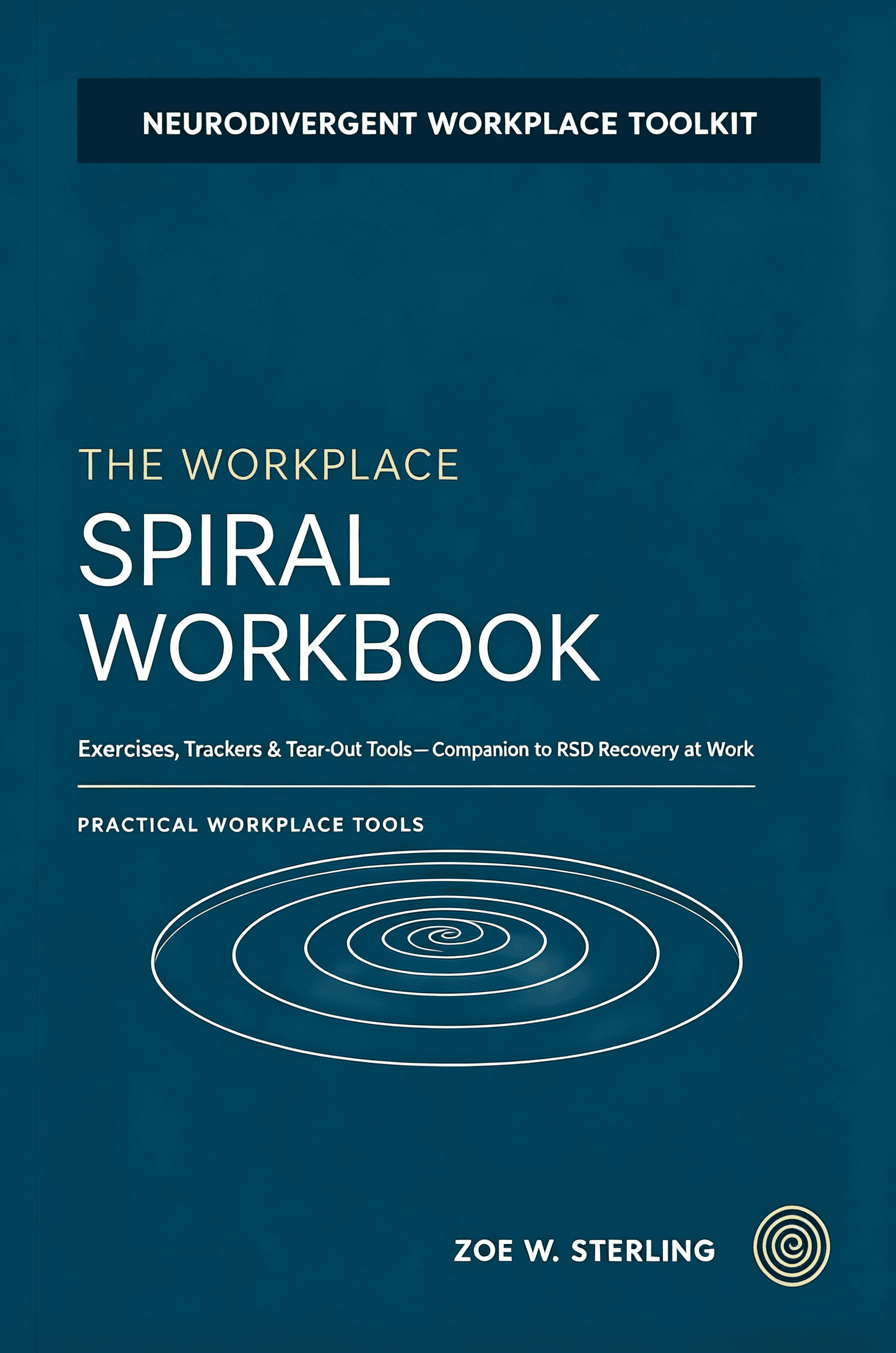
The Workplace Spiral Workbook
This interactive workbook is the companion to Zoe Sterling's Workplace Spiral assessment. Readers identify their spiral type, track their workplace patterns, and practice rewiring strategies to break free from unhealthy cycles.
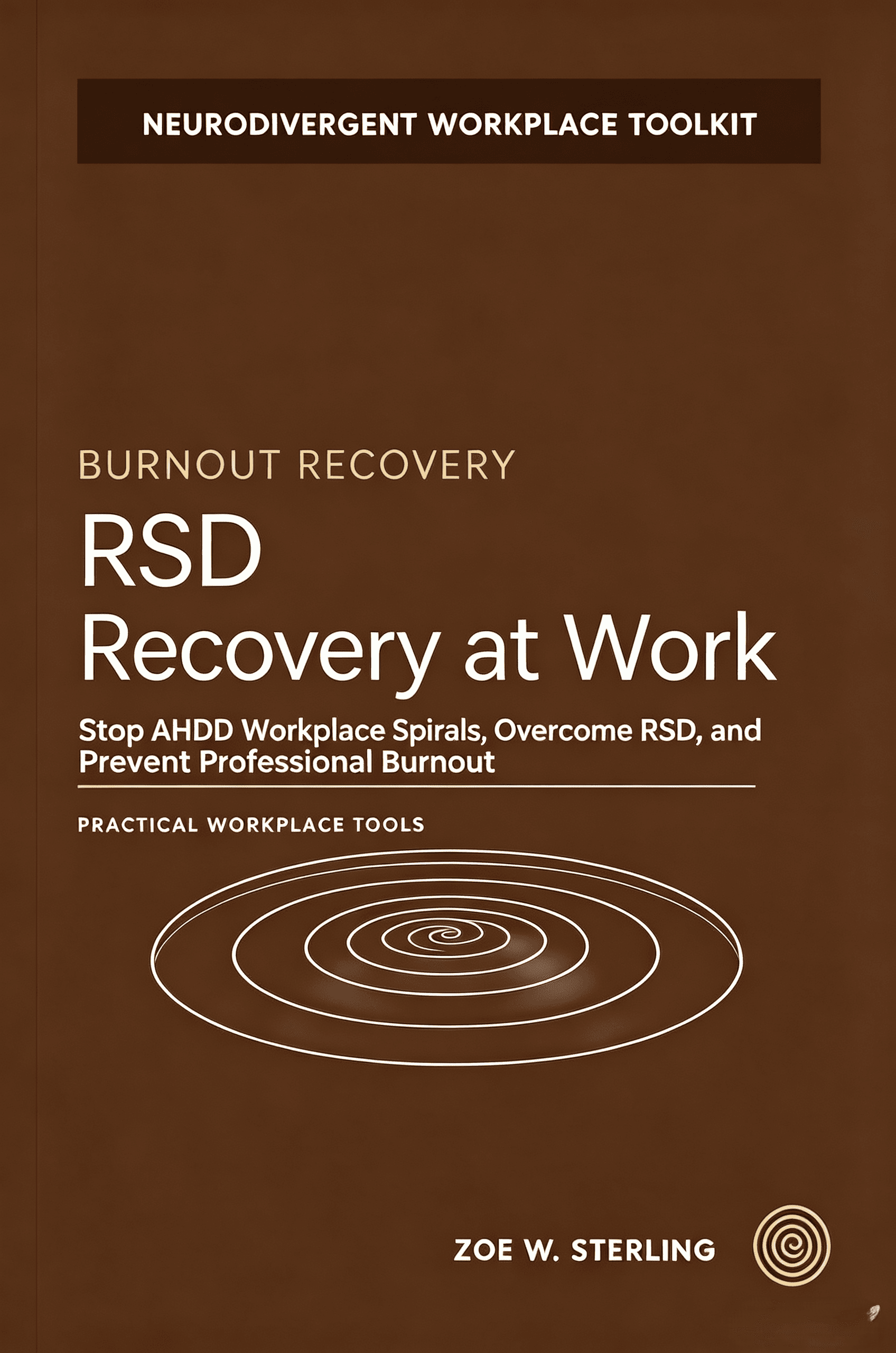
RSD Recovery at Work
A comprehensive field guide for neurodivergent adults navigating the workplace. Based on Zoe Sterling's 10+ years of ADHD workplace research and coaching, this book identifies 8 core strengths and 7 hidden workplace patterns.
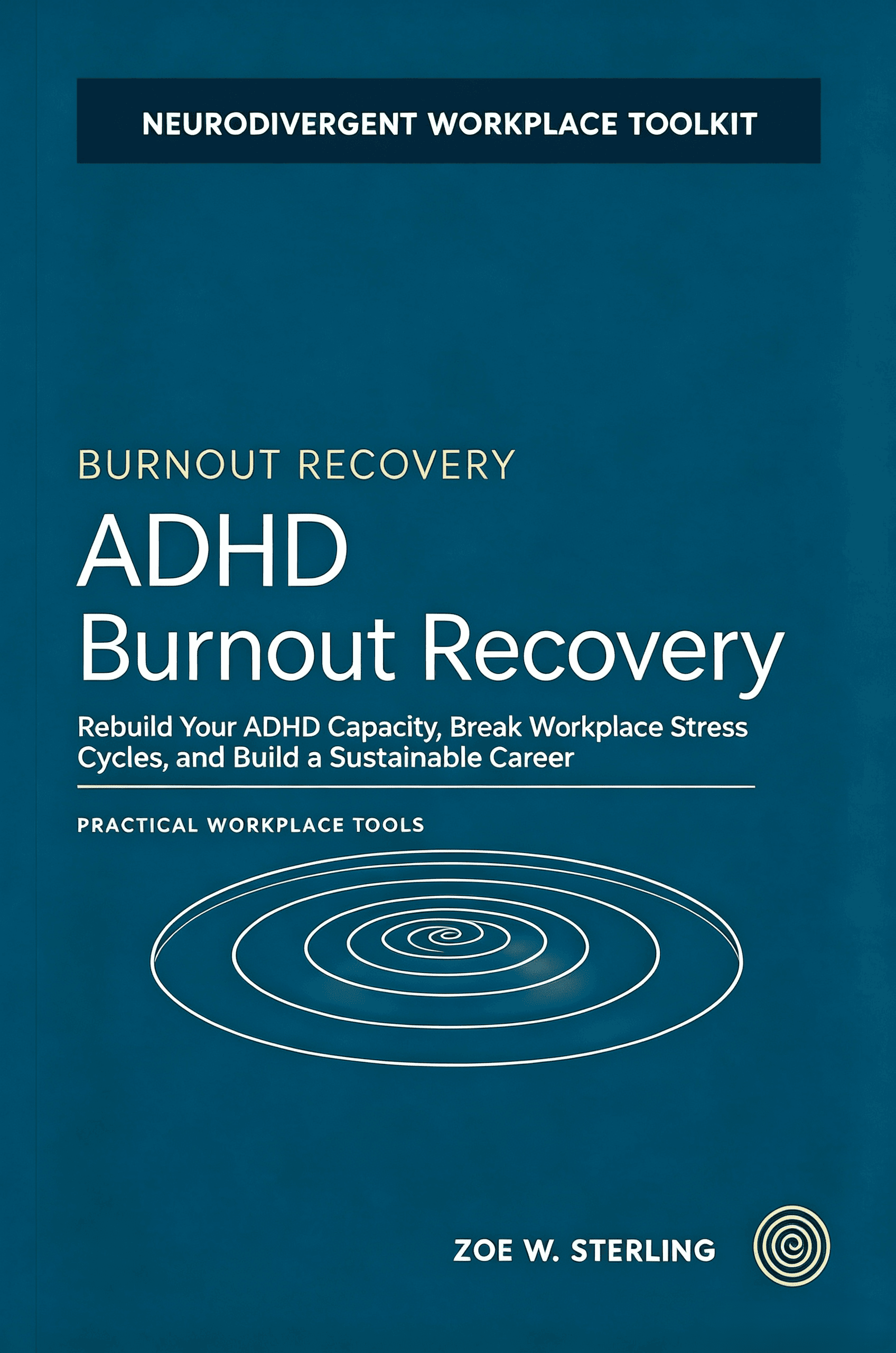
ADHD Burnout Recovery
ADHD burnout is different from typical burnout. Rooted in overstimulation, executive dysfunction, and the gap between natural strengths and workplace demands, it requires a specialized recovery approach.