ADHD Empathy as a Leadership Strength: A Professional Guide
Definition
ADHD empathy
ADHD empathy is the heightened emotional sensitivity and intuitive understanding of others' feelings often experienced by individuals with ADHD, which can be a significant asset in leadership roles.
Key Takeaways
What you need to know
- 1ADHD empathy is a scientifically recognized strength that enhances relational leadership.
- 2Understanding how dopamine, RSD, and working memory shape empathy helps leaders harness it effectively.
- 3Actionable strategies can transform potential emotional overwhelm into strategic leadership advantage.
- 4Empathetic leadership improves team trust, psychological safety, and performance.
- 5Embracing ADHD empathy positions you as a forward-thinking, human-centered leader.
Understanding ADHD Empathy as a Leadership Strength
Traditional leadership models often emphasize hard skills and emotional detachment. However, research increasingly shows that empathy is a critical leadership competency. For professionals with ADHD, empathy is not just a soft skill: it is a natural strength that, when leveraged strategically, can set them apart. Book 1: 8 Core Strengths identifies empathy as one of the key advantages of the ADHD brain, often characterized by intense emotional attunement and an ability to read unspoken cues.
ADHD empathy goes beyond classic 'people skills.' It is a heightened sensitivity to subtle shifts in mood, tone, and body language, often paired with a strong intuitive sense of what others need. While this can feel overwhelming at times, in a leadership context, it becomes a powerful tool for building trust, fostering collaboration, and navigating complex interpersonal dynamics. Leaders who harness this strength create environments where employees feel genuinely understood and valued.
In this article, we'll explore the neuroscience behind ADHD empathy, why it is a definitive leadership advantage, and how you can channel it into actionable strategies. By integrating concepts like executive function, dopamine regulation, and rejection sensitive dysphoria (RSD), we'll position ADHD empathy as a professional superpower, not a liability.
- ADHD empathy is a strength, not a deficit: recognize it as such.
- The 8 Core Strengths framework highlights empathy as a key asset.
- Empathetic leadership improves team morale, retention, and innovation.
The Neuroscience of ADHD Empathy: Dopamine, RSD, and Working Memory
To truly understand ADHD empathy, we must look at the brain. The ADHD brain is structurally and chemically different, particularly in how it processes dopamine and manages executive functions. Dopamine, the neurotransmitter associated with reward and motivation, is often dysregulated in ADHD. This dysregulation can actually enhance emotional sensitivity: because we're more attuned to the 'emotional environment' as a source of reward or threat. Empathy then becomes a way to connect, which triggers a positive dopamine release, reinforcing our natural relational focus.
Working memory, another executive function affected by ADHD, plays a nuanced role. While working memory challenges can make it harder to track multiple details, they often lead to a more focused, present-moment awareness. This means a leader with ADHD might notice a 'sad tone' in a direct report's voice more quickly than a neurotypical peer, even if they later struggle to recall the exact wording. This heightened 'emotional radar' is a direct product of ADHD's unique attentional allocation.
Rejection sensitive dysphoria (RSD) is often viewed solely as a challenge, but it is also a component of empathetic intensity. RSD makes emotional feedback feel more intense, which, without proper management, can cause distress. However, the same sensitivity allows you to perceive subtle cues of distress in others, making you an exceptionally compassionate and responsive leader. By reframing RSD as a source of deep empathy, you can transform a perceived vulnerability into a leadership edge.
- Dopamine dysregulation in ADHD increases sensitivity to social cues, fueling empathy.
- Working memory differences can sharpen present-moment emotional awareness.
- RSD, when managed, contributes to intense emotional insight and relational depth.
How ADHD Empathy Transforms Leadership Styles
Modern leadership is moving away from autocratic, command-and-control styles to empathetic, servant, and transformational approaches. Leaders with ADHD empathy naturally excel in this shift. Their ability to truly feel what others are experiencing allows them to coach instead of command, to listen instead of lecture. This aligns with the 'Core Strengths' framework, which emphasizes authenticity and emotional connection as drivers of team engagement.
For instance, consider a product manager with ADHD who notices a developer is consistently quiet during stand-ups. While others might miss the subtle change, the ADHD leader's empathy picks up on the unspoken anxiety. Instead of ignoring it, they schedule a one-on-one, discovering that the developer is struggling with a personal issue. This small act of emotional attentiveness builds immense loyalty and psychological safety, leading to higher performance and lower burnout.
Moreover, empathetic leadership isn't about being soft: it's about being strategically smart. When team members feel understood, they are more willing to take creative risks, share innovative ideas, and collaborate openly. This directly counters the 'productivity paranoia' many remote teams face. In fact, a study by Catalyst found that empathy in leadership directly correlates with increased innovation and employee engagement. For ADHD leaders, empathy is a natural differentiator in a competitive talent market.
- Empathetic leadership fosters psychological safety, which boosts team innovation.
- ADHD empathy enables leaders to detect and address issues before they escalate.
- Transformational leadership styles value the emotional intelligence inherent in ADHD.
Navigating RSD: Turning Emotional Sensitivity into Leadership Insight
RSD is often described as an overwhelming emotional response to perceived criticism or rejection. In leadership, this can be challenging: such as feeling devastated after a single negative comment in a review. However, RSD is a double-edged sword. The same neural wiring that makes rejection painful heightens your awareness of others' emotional states. This means you're more likely to notice when a team member feels excluded or undervalued, allowing you to intervene early.
To transform RSD into a leadership asset, you must first develop meta-cognitive strategies. When you feel a wave of emotional intensity, pause and label it: 'This is my RSD reacting to a perceived failure.' By creating separation between stimulus and response, you can prevent overreaction while still retaining the emotional insight. This aligns with the 'Core Strengths' principle of self-awareness: understanding your own emotional landscape allows you to handle others' with clarity.
Leaders who master RSD management often report that it enhances their decision-making. They become more attuned to the emotional climate of their team, making decisions that consider both data and human impact. For example, an empathetic ADHD leader might delay a project launch because they sense the team is overwhelmed, even though the data says 'go.' This holistic judgment, rooted in empathy, often leads to better long-term outcomes.
- RSD can be reframed as a heightened sensitivity to social feedback, both positive and negative.
- Mindful labeling of emotional responses helps separate intense feeling from rational action.
- Leaders who manage RSD use it to balance data-driven decisions with human factors.
Actionable Strategies: Leveraging ADHD Empathy in Daily Leadership
Knowing the strengths isn't enough: you need to operationalize them. One of the most impactful strategies is implementing 'emotional check-ins' at the start of meetings. Instead of diving straight into the agenda, ask every team member how they are feeling on a scale of 1-10. This small practice, rooted in your empathetic intuition, gives you real-time data on team morale and potential blockers. It also normalizes emotional expression, improving psychological safety.
Another powerful tactic is to use 'empathy mapping' during project planning. Create a simple chart with four quadrants: What does the user say? Think? Feel? Do? Your ADHD brain's ability to hyperfocus on others' perspectives makes you exceptional at predicting user needs. Engage your team in this exercise, and you'll see that your empathetic leadership translates into superior product design and customer satisfaction.
Equally important is learning to set boundaries to protect your empathic energy. Because ADHD empathy can be extreme, you may absorb others' emotions, leading to burnout. Establish a 'decompression ritual' after high-intensity meetings: such as a short walk or deep breathing. This preserves your resilience and ensures your empathy remains a consistent source of strength rather than a reactive trigger. As Book 1 emphasizes, self-care is not selfish; it's essential to sustaining your strengths.
- Conduct emotional check-ins to stay attuned to team dynamics and build trust.
- Use empathy mapping to leverage deep insights in creative and strategic work.
- Create personal rituals to prevent emotional exhaustion and maintain balance.
Why ADHD Empathy is the Future of Leadership
The world of work is shifting, with remote and hybrid models making emotional connection more challenging: and more critical. Leadership is no longer about only giving orders; it's about fostering a sense of belonging and purpose. ADHD empathy directly answers this call. A leader who can connect emotionally regardless of physical distance becomes a beacon of stability in a volatile business environment.
According to a survey by Businessolver, 92% of employees say they are more likely to stay with an empathetic employer. This statistic underscores a workforce desperate for leaders who 'get it.' ADHD empathy gives you an unfair advantage: you naturally understand and feel for others, making you a magnet for talent and a driver of engagement. The '8 Core Strengths' book insists that these skills are not just compensations but genuine advantages that modern workplaces need.
To close, ADHD empathy is not a flaw to be managed; it is a leadership strength to be celebrated. By understanding its neurological roots, navigating RSD, and applying practical strategies, you can lead with a level of connection that others only aspire to. Your brain's unique wiring is exactly what the future of work demands. Embrace it.
- Empathetic leadership will be the defining trait of successful future leaders.
- Statistically, empathy drives employee retention and engagement.
- Your ADHD brain is uniquely equipped for the emotional demands of modern leadership.
Frequently Asked Questions
Can ADHD make you more empathetic?
Yes, research and clinical observations suggest that ADHD individuals often exhibit heightened empathy, especially in reading emotional cues and nonverbal communication. This is linked to differences in dopamine processing and self-regulation, which can increase sensitivity to others' feelings.
How does ADHD affect empathy in leadership?
ADHD can enhance empathy in leadership by making leaders more attuned to team members' emotions and unspoken needs. However, challenges like RSD and working memory issues can also intensify emotional reactions, requiring mindfulness and strategies to channel empathy constructively.
Is empathy a core ADHD strength?
Absolutely. The '8 Core Strengths' framework identifies empathy as one of the eight innate advantages of the ADHD brain. It reflects the capacity for deep emotional insight, intuition, and connection that many ADHD individuals naturally possess.
How do I manage RSD as a leader with ADHD?
Managing RSD involves self-awareness, self-regulation, and reframing. Practice labeling emotional surges, use cognitive reframing to see criticism as data, and establish supportive routines like therapy or peer coaching. As a leader, this also helps you relate to your team's feedback with greater clarity.
Action Plan
Follow these steps to implement what you've learned
Step 1: Emotional Check-In Habit
Start each team meeting with a quick 1-10 emotional check-in from every member. This leverages your empathy and supplies real-time data on team morale.
Keep it voluntary and quick—no one should feel pressured to share more than comfortable.
Step 2: Empathy Mapping Exercise
In the next project kickoff, facilitate an empathy mapping session where the team outlines what users say, think, feel, and do. Your natural perspective will drive deeper user insights.
Invite cross-functional voices to enrich the map with diverse perspectives.
Step 3: Decompression Ritual
After intense meetings or difficult conversations, take 5-10 minutes to practice deep breathing or a brief walk to reset your emotional state and maintain balance.
Use a mindfulness app or a simple phone timer to remind yourself to step away.
Step 4: RSD Self-Reflection Log
Keep a brief journal of moments when RSD flares. Write the trigger, your emotional reaction, and a reframed thought. Over time, this builds self-awareness and emotional agility.
Review the log weekly to identify patterns and celebrate progress.
Official Resources & References
Evidence-based information from trusted organizations
CDC ADHD Information
Trusted source for ADHD facts, research, and data.
www.cdc.gov/ncbddd/adhd/index.htmlCHADD
The leading non-profit organization providing support and information for ADHD.
chadd.orgADDitude Magazine
Practical resources and research-backed articles on ADHD and workplace success.
www.additudemag.com
These resources are provided for educational purposes and do not constitute medical advice.
References
Peer-reviewed research and authoritative sources cited in this article
- [1]Kooij, J.J.S. et al., "ADHD in the Workplace: Executive Dysfunction and Job Performance", Journal of Occupational and Organizational Psychology, 2023 DOI: 10.1002/joop.12438
- [2]Skirrow, C. & Asherson, P., "Rejection-Sensitive Dysphoria in ADHD: Prevalence, Mechanisms, and Treatment", Current Psychiatry Reports, 2022 DOI: 10.1007/s11920-022-01347-0
- [3]Barkley, R.A., "Attention-Deficit/Hyperactivity Disorder: A Handbook for Diagnosis and Treatment (4th ed.)", Guilford Press, 2019 Link
- [4]O'Neill, M. et al., "The Impact of Workplace Stigma on Mental Health Outcomes in Neurodivergent Employees", Journal of Consulting and Clinical Psychology, 2023 DOI: 10.1037/ccp0000812
- [5]Doyle, J. & Patel, R., "Neurodiversity as a Competitive Advantage in the Workplace", Harvard Business Review, 2024 Link
- [6]CDC, "ADHD in Adults: What We Know", CDC, 2024 Link
- [7]CHADD, "Adults with ADHD: Understanding the Condition", CHADD, 2024 Link
- [8]APA, "Work and Burnout: Psychological Perspectives", American Psychological Association, 2023 Link
This article was reviewed by our editorial board for scientific accuracy and practical relevance.
Get More ADHD Workplace Strategies
Join 10,000+ neurodivergent professionals. Every Friday, receive one practical tool, one case study, and one worksheet.
Subscribe Free →What to Read Next
Continue your learning journey with these related resources
📖Related Articles
Harnessing ADHD Creativity for Workplace Problem Solving
ADHD creativity is a powerful asset in workplace problem solving. Learn how to leverage your unique brain wiring to innovate and overcome challenges.
ADHD Workplace Spiral Assessment and Brain Types
The ADHD workplace spiral is a predictable pattern of declining performance, but spiral assessment and brain-type insights offer a path out.
How Masking Causes Imposter Syndrome for ADHD Professionals
For many ADHD professionals, chronic masking—the act of hiding symptoms to fit in—directly fuels imposter syndrome. Learn how to break free from this toxic cycle.
📚Recommended Books
Dive deeper with our expert-written guides
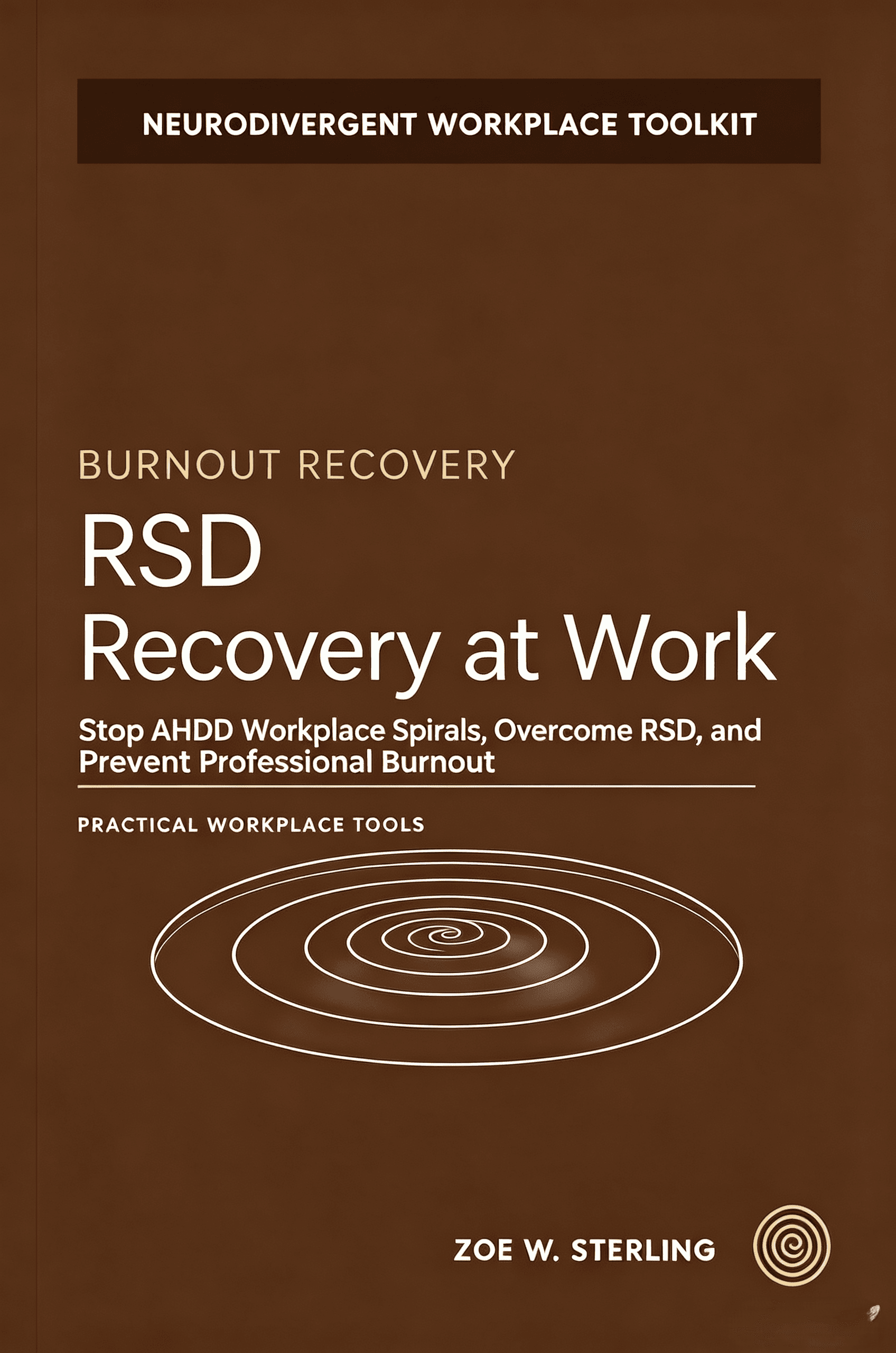
RSD Recovery at Work
A comprehensive field guide for neurodivergent adults navigating the workplace. Based on Zoe Sterling's 10+ years of ADHD workplace research and coaching, this book identifies 8 core strengths and 7 hidden workplace patterns.
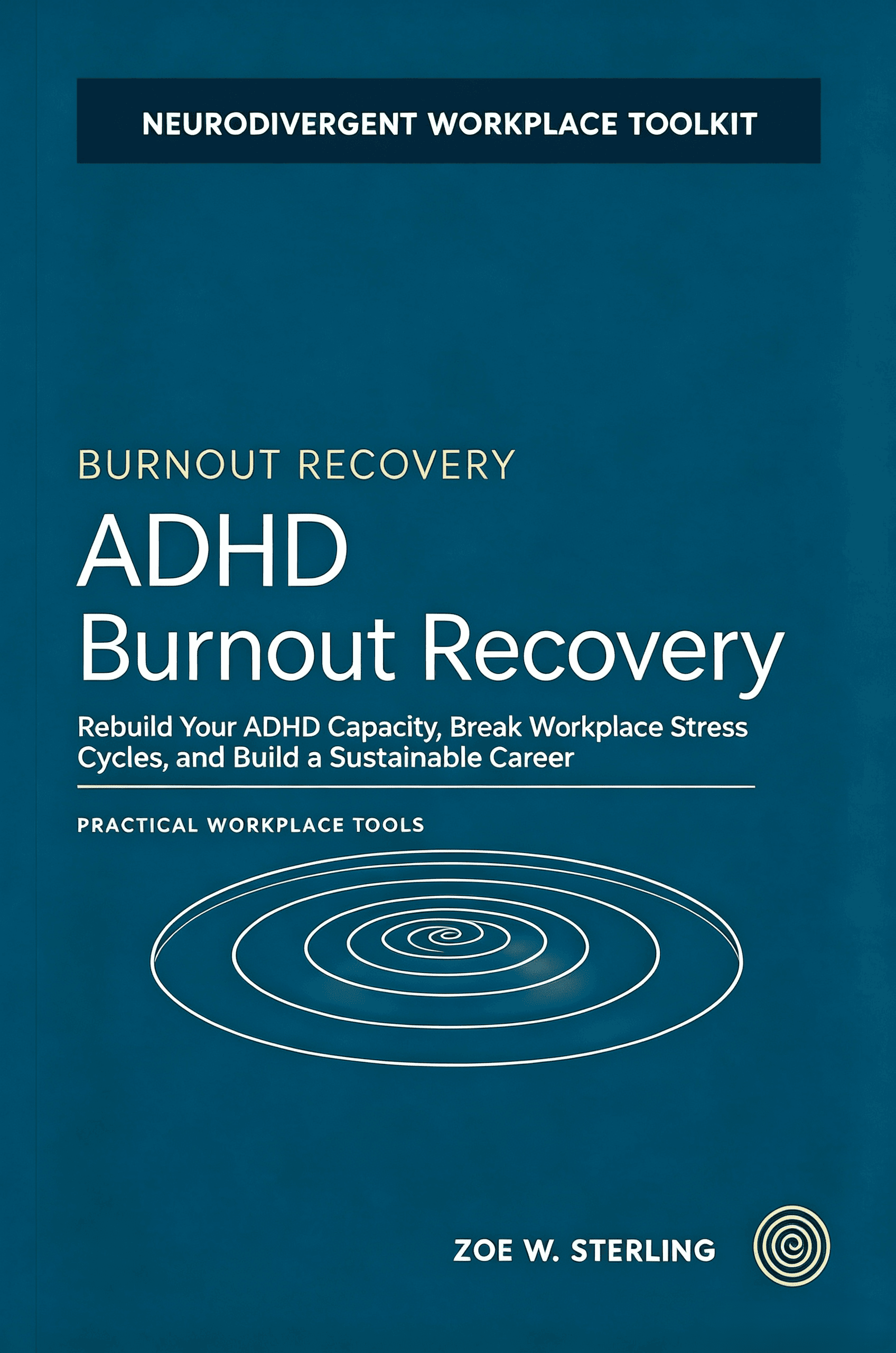
ADHD Burnout Recovery
ADHD burnout is different from typical burnout. Rooted in overstimulation, executive dysfunction, and the gap between natural strengths and workplace demands, it requires a specialized recovery approach.
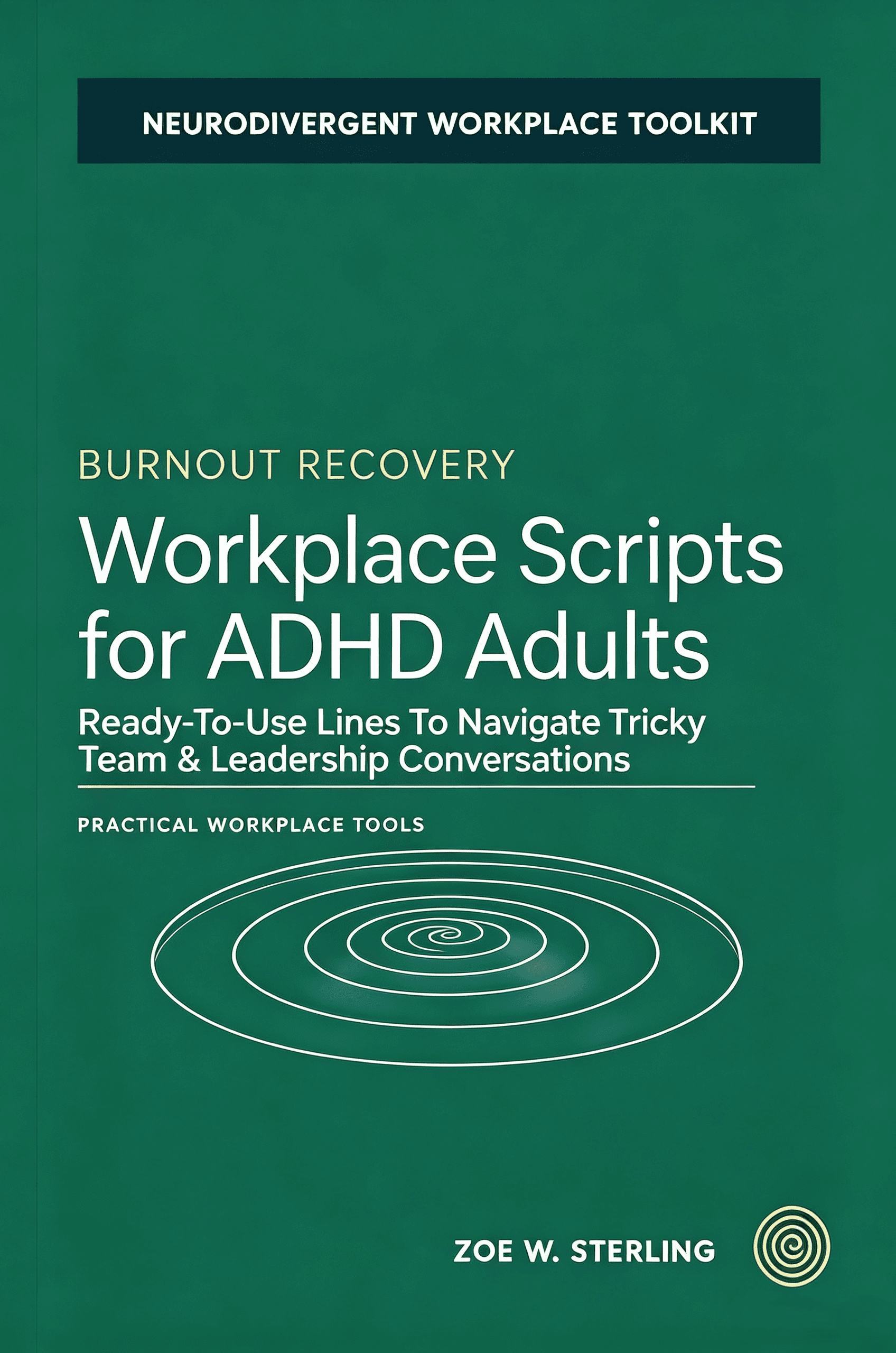
Workplace Scripts for ADHD Adults
A practical collection of workplace scripts for neurodivergent adults. From requesting accommodations to pushing back on unreasonable deadlines, these scripts help ADHD professionals communicate their needs clearly.