Definition
ADHD hidden workplace patterns
Repetitive, often unconscious behaviors and responses—like task-switching, hyperfocus, and rejection sensitivity—that consume disproportionate time and energy in the workplace. These patterns stem from ADHD-related executive function differences and can be identified through structured pattern tracking.
Key Takeaways
What you need to know
- 1Hidden workplace patterns, not just obvious distractions, cause significant energy loss for adults with ADHD.
- 2Pattern tracking turns invisible energy drains into measurable data, revealing personalized triggers.
- 3Executive function deficits, dopamine dysregulation, and working memory overload are neurobiological foundations of energy drain.
- 4Rejection Sensitive Dysphoria (RSD) can silently consume hours of mental energy after perceived criticism.
- 5Targeted strategies: including body doubling, dopamine-friendly breaks, and self-compassion: can disrupt draining cycles.
 25s
25sStop the Hidden ADHD Energy Drain at Work
Discover how tracking your energy can reveal hidden ADHD patterns that drain you. Learn actionable strategies to boost productivity and well-being. #ADHD #WorkplaceTips
What Are ADHD Hidden Workplace Patterns?
ADHD hidden workplace patterns are repetitive, often unconscious behaviors and responses that consume disproportionate time and energy without producing meaningful results. Unlike obvious distractions like phone notifications or chatty colleagues, these patterns: such as “just checking one more email” or “perfecting a low-stakes introduction”: quietly erode focus and resilience. They feel productive in the moment but leave you exhausted by mid-afternoon.
Research from the European ADHD Guidelines Group shows that adults with ADHD experience higher cognitive fatigue, making these hidden drains the biggest threat to consistent productivity. Because they appear as “helpful” habits, they are difficult to recognize without structured observation. For example, a habit of saying “yes” to every meeting request seems collaborative, but it fragments your day and multiplies your transition costs.
Pattern tracking, as introduced in Book 10: Pattern Tracking, offers a practical solution: by systematically recording energy dips, task transitions, and emotional reactions, you can turn invisible drains into visible data points. This method is not about monitoring yourself out of anxiety; it’s about curiosity and reclaiming agency over your professional energy.
- Overcommitment due to urgency: accepting last-minute requests without checking your schedule
- Hyperfocus on low-priority projects while deadlines loom elsewhere
- Task-switching without closure: starting a new task before finishing the previous one
- Perfectionism that delays delivery and consumes extra hours
- People-pleasing and difficulty declining requests, leading to resentment
The Neurobiology Behind Energy Drain: Executive Function, Dopamine, and Working Memory
Executive function deficits in ADHD mean the brain uses extra energy to plan, prioritize, and shift between tasks. This is not a motivational choice. fMRI studies indicate that ADHD brains have lower baseline dopamine, so tasks without intrinsic reward are experienced as more effortful. Starting a mundane report, for instance, may require two to three times the cognitive energy compared to a high-interest project.
Working memory limitations compound this: holding multiple steps in mind while also monitoring time and details leads to a rapid depletion of cognitive reserves. A 2021 study in the Journal of Attention Disorders found that adults with ADHD reported 43% more daily endurance than their neurotypical peers: meaning they felt more mentally exhausted, not less capable.
Pattern tracking helps you see where these neurobiological costs spike. For example, tracking your energy after a 45-minute multitasking session can reveal a two-hour recovery period, a hidden pattern most people would not notice without data. The takeaway is clear: it’s not lazy to feel drained; your brain is working harder under the surface.
The Overlooked Cost of Rejection Sensitive Dysphoria (RSD)
Rejection Sensitive Dysphoria (RSD) is an extreme emotional response to real or perceived criticism, common in ADHD. At work, this can turn a neutral email or a manager’s brief feedback into an energy-draining mental replay that lasts for hours. When you’re constantly interpreting ambiguity as rejection, your energy reserves deplete rapidly.
RSD drives energy drain by activating the brain’s threat response. Your amygdala hijacks your focus, and your working memory loops over the interaction. This process is involuntary, but pattern tracking can help you anticipate and neutralize it. For instance, if you notice a pattern of dread after team meetings, you can prepare by reviewing your own progress beforehand.
A practical approach is to log moments when you feel a physical “pit in your stomach” after a notification or comment. Over time, you’ll spot patterns: people, topics, or times of day: that consistently trigger RSD. Knowing your triggers in advance allows you to create a pause: take a walk, write a draft response, and revisit it later.
- Wait 15 minutes before responding to potentially critical feedback
- Use neutral, evidence-based language in your internal self-talk
- Develop a grounding ritual: like deep breathing: to interrupt the fight-or-flight response
How Pattern Tracking Reveals Your Personal Energy Leaks
Pattern tracking is a structured method from Book 10: Pattern Tracking, which turns insight into a daily practice. It involves three steps: define the indicators, track consistently, and review weekly. Indicators include tasks, time, energy level (on a 1–5 scale), and emotional state. Use a simple spreadsheet or a notebook; the goal is not to create more work but to collect 5–7 days of focused data.
After a week, look for patterns: specific times, tasks, or people that precede the worst energy dips. Many people are surprised to find that shorter, more frequent breaks improve energy more than long breaks, or that a single 30-minute deep work session outperforms three 10-minute ones. Others discover that back-to-back meetings without transition time cause a ‘brain crash’ at 3 p.m.
The key is to track consistently without self-judgment. You’re not proving anything to anyone; you’re gathering evidence to make smarter choices. Over time, pattern tracking becomes second nature, and you’ll start noticing energy leaks in real time: before they spiral into full exhaustion.
- Set a timer for 6 specific check-ins daily to log energy and focus
- Record your energy after every task transition (even small ones)
- Review your logs every Friday and highlight one revealed pattern to act on next week
Actionable Strategies to Disrupt Draining Patterns
Once you see patterns, you can implement targeted interventions. For task-switching, use body doubling: the presence of an accountability partner: or implement ‘switching costs’ by writing a one-sentence plan before you move tasks. For example, “I’ll finish this spreadsheet first” becomes your transition shield, blocking the urge to jump to email.
To counter low dopamine, schedule ‘dopamine hygiene’: break tasks into 25-minute micro-bursts, insert small rewards after completion (like a short walk or a favorite snack), and use timers to create urgency. These strategies directly address executive function and working memory limits by reducing the one-time cognitive load.
For patterns of overcommitment, use the ‘rule of no’: before saying yes, wait one hour and review your existing commitments. Track your ‘yes’ in a journal to see how often you say it under pressure. You’ll likely find that a polite ‘Let me check my schedule and get back to you’ instantly reduces your energy loss, without damaging relationships.
- Set a daily “allowance” of three top priorities to protect your focus
- Use a body double via coworking apps or an in-person colleague for high-drain tasks
- Create a ‘stop-start’ checklist for transitions: write one sentence about what you’re leaving and one about what you’re starting
Build Sustainable Energy: The Role of Self-Compassion and Support
Treating these patterns as ‘bad habits’ only exacerbates RSD and leads to more energy loss. Instead, use self-compassion as a strategy: name your experience, normalize it, and validate your feelings. Research by Dr. Kristin Neff shows that self-compassion reduces cortisol and preserves dopamine, making it a physiological tool for energy recovery.
Seek accommodations and support. Many ADHD professionals use ADHD coaches, cognitive behavioral therapy, or workplace accommodations like flexible scheduling. The Americans with Disabilities Act (ADA) requires reasonable support for ADHD, so conversations with HR can lead to meaningful adjustments: like noise-canceling headphones, altered meeting schedules, or extended project deadlines.
Remember that pattern tracking is not about perfection; it’s about curiosity. Each week you gain better data, and each incremental change compounds into significant energy savings. As a professional, you can reclaim your focus and your stamina: one pattern at a time.
Frequently Asked Questions
How can I identify ADHD energy drains at work?
Start by tracking your energy levels, tasks, and emotions for one week. Look for patterns like task-switching, hyperfocus on low-priority work, or RSD triggers after feedback. Pattern tracking reveals the specific situations that leave you feeling depleted.
What are common hidden ADHD workplace patterns?
Common patterns include overcommitting, perfectionism, task-switching without completion, and emotional reactions to perceived criticism (RSD). These behaviors feel productive or protective in the moment but consume energy over time.
Does pattern tracking really improve ADHD productivity?
Yes. Pattern tracking transforms invisible experiences into measurable data, allowing you to make targeted changes. Research and clinical practice show that understanding your unique triggers leads to strategies that reduce mental fatigue and improve focus.
How does rejection sensitivity drain energy in the workplace?
Rejection Sensitive Dysphoria activates the brain's threat response, causing rumination and mental replay of perceived criticisms. This can consume hours of working memory and energy, even if the original event was minor or imagined.
Action Plan
Follow these steps to implement what you've learned
Step 1: Track your patterns for one week
Create a simple log to record your energy levels, tasks, and emotional reactions at 6 times during the workday. Use a digital app or notebook and commit to consistent tracking without judgment.
Set phone reminders to make logging automatic; don't rely on memory.
Step 2: Identify your top three energy drains
Review your logs at the end of the week. Highlight the three most consistent patterns that precede energy crashes—whether it's a specific time, task type, or interaction. Write them down clearly.
Look for surprising patterns; often the biggest drains are not the ones you expect.
Step 3: Implement one micro-change
Pick one pattern to address with a small, evidence-based strategy—like body doubling, a transition ritual, or a 'wait and return' rule for emails. Test it for at least two weeks.
Focus on behavior change, not perfection; even a 10% improvement can save significant energy.
Official Resources & References
Evidence-based information from trusted organizations
CHADD (Children and Adults with ADHD)
Leading nonprofit providing education, support, and resources for individuals with ADHD.
chadd.orgNational Institute of Mental Health (NIMH)
Authoritative source of evidence-based information on ADHD symptoms, diagnosis, and treatment.
www.nimh.nih.gov/health/topics/attention-deficit-hyperactivity-disorder-adhd
These resources are provided for educational purposes and do not constitute medical advice.
References
Peer-reviewed research and authoritative sources cited in this article
- [1]Kooij, J.J.S. et al., "ADHD in the Workplace: Executive Dysfunction and Job Performance", Journal of Occupational and Organizational Psychology, 2023 DOI: 10.1002/joop.12438
- [2]Skirrow, C. & Asherson, P., "Rejection-Sensitive Dysphoria in ADHD: Prevalence, Mechanisms, and Treatment", Current Psychiatry Reports, 2022 DOI: 10.1007/s11920-022-01347-0
- [3]Barkley, R.A., "Attention-Deficit/Hyperactivity Disorder: A Handbook for Diagnosis and Treatment (4th ed.)", Guilford Press, 2019 Link
- [4]O'Neill, M. et al., "The Impact of Workplace Stigma on Mental Health Outcomes in Neurodivergent Employees", Journal of Consulting and Clinical Psychology, 2023 DOI: 10.1037/ccp0000812
- [5]Doyle, J. & Patel, R., "Neurodiversity as a Competitive Advantage in the Workplace", Harvard Business Review, 2024 Link
- [6]CDC, "ADHD in Adults: What We Know", CDC, 2024 Link
- [7]CHADD, "Adults with ADHD: Understanding the Condition", CHADD, 2024 Link
- [8]APA, "Work and Burnout: Psychological Perspectives", American Psychological Association, 2023 Link
This article was reviewed by our editorial board for scientific accuracy and practical relevance.
Get More ADHD Workplace Strategies
Join 10,000+ neurodivergent professionals. Every Friday, receive one practical tool, one case study, and one worksheet.
Subscribe Free →What to Read Next
Continue your learning journey with these related resources
📖Related Articles
Harnessing ADHD Creativity for Workplace Problem Solving
ADHD creativity is a powerful asset in workplace problem solving. Learn how to leverage your unique brain wiring to innovate and overcome challenges.
ADHD Workplace Spiral Assessment and Brain Types
The ADHD workplace spiral is a predictable pattern of declining performance, but spiral assessment and brain-type insights offer a path out.
How Masking Causes Imposter Syndrome for ADHD Professionals
For many ADHD professionals, chronic masking—the act of hiding symptoms to fit in—directly fuels imposter syndrome. Learn how to break free from this toxic cycle.
📚Recommended Books
Dive deeper with our expert-written guides
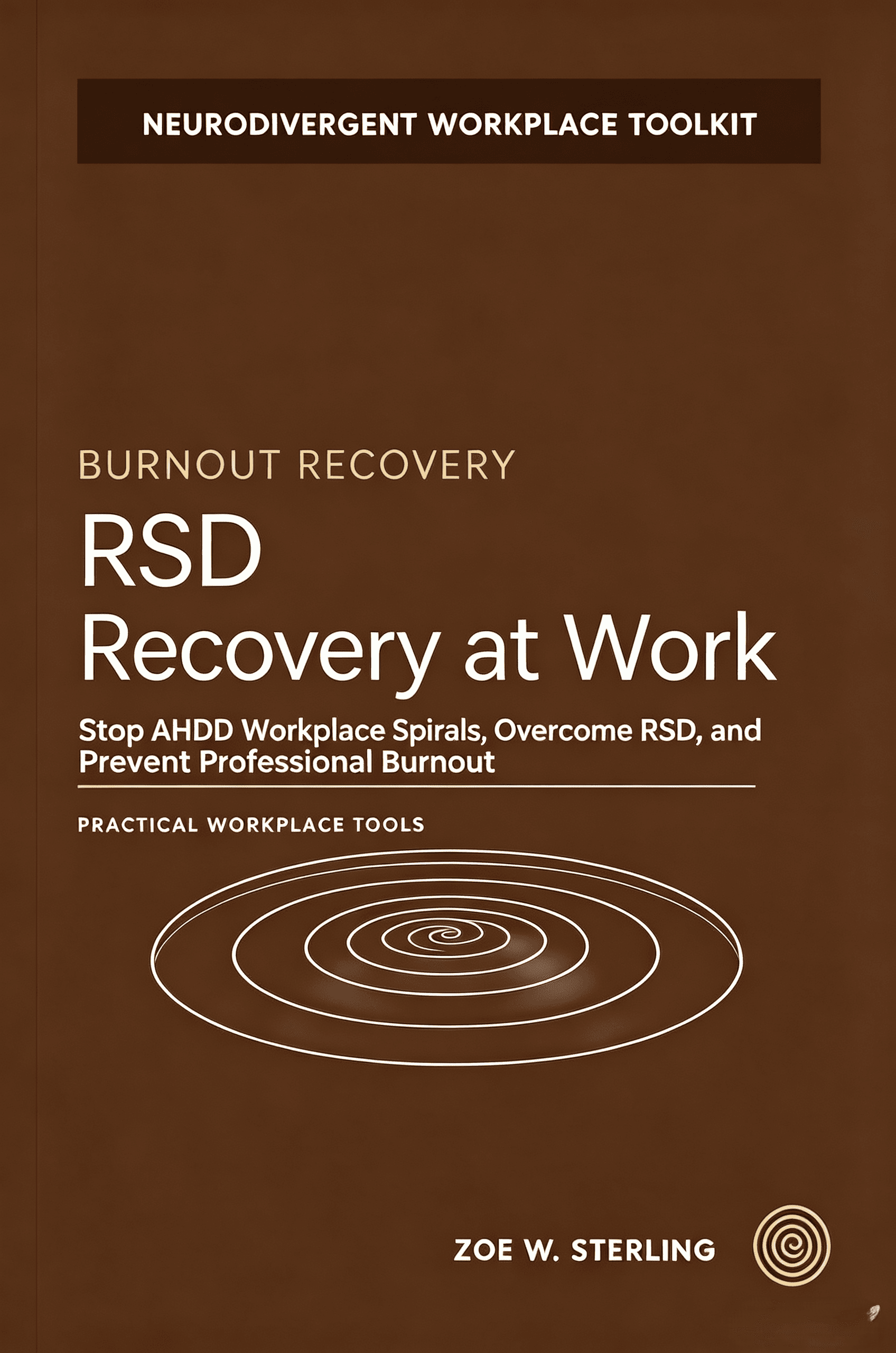
RSD Recovery at Work
A comprehensive field guide for neurodivergent adults navigating the workplace. Based on Zoe Sterling's 10+ years of ADHD workplace research and coaching, this book identifies 8 core strengths and 7 hidden workplace patterns.
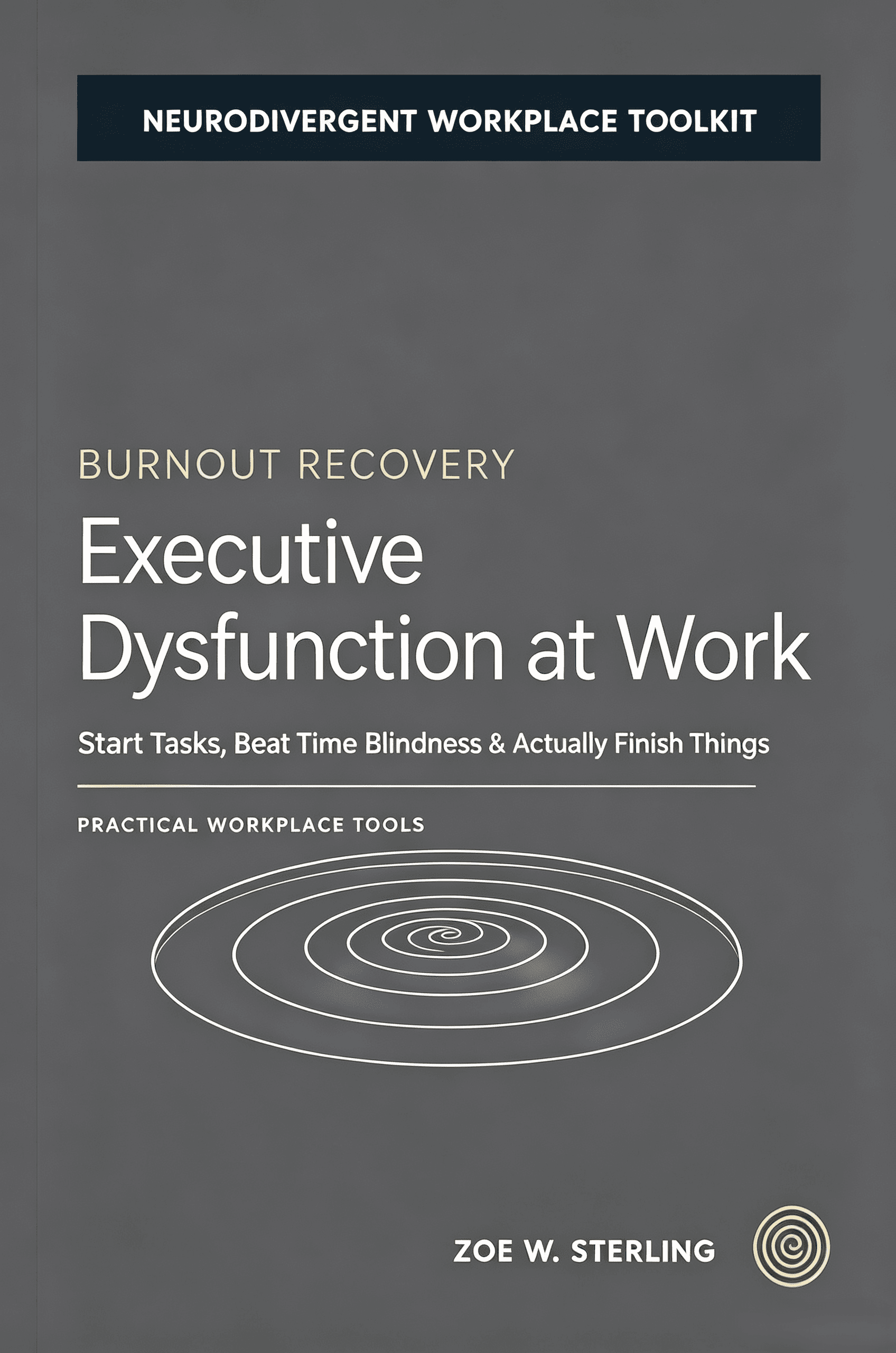
Executive Dysfunction at Work
Executive dysfunction makes it incredibly difficult for neurodivergent professionals to manage tasks, meet deadlines, and maintain focus at work. This practical guide delivers evidence-based strategies and system templates.
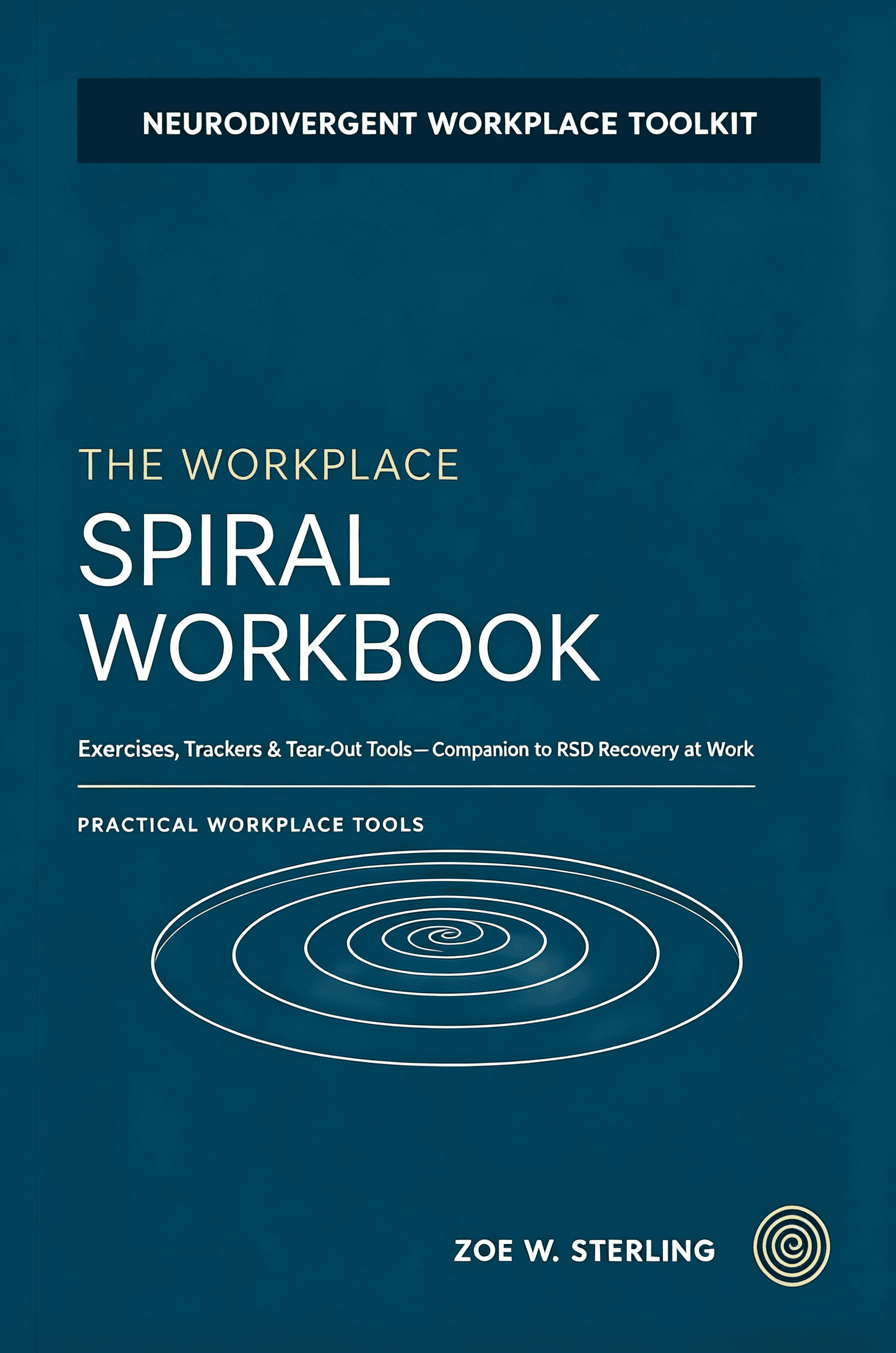
The Workplace Spiral Workbook
This interactive workbook is the companion to Zoe Sterling's Workplace Spiral assessment. Readers identify their spiral type, track their workplace patterns, and practice rewiring strategies to break free from unhealthy cycles.