Definition
Rejection Sensitive Dysphoria (RSD)
RSD is an intense emotional response to perceived or actual rejection, criticism, or failure, commonly experienced by individuals with ADHD. It is not a formal diagnosis but a term used to describe the overwhelming emotional pain that can be triggered by workplace feedback, including performance reviews.
Key Takeaways
What you need to know
- 1RSD is a neurological reaction rooted in ADHD's impact on emotional regulation, not a personal flaw.
- 2Self-advocacy is a learnable skill that helps you request accommodations and prepare for reviews.
- 3Preparation using working memory tools reduces cognitive load and limits RSD's impact.
- 4In-the-moment grounding techniques can de-escalate the stress response during the review.
- 5Following up after the review with written takeaways and accommodation requests boosts resilience.
 38s
38sHow to Survive Performance Reviews with RSD
Performance reviews trigger RSD in ADHD. Learn self-advocacy strategies to prepare and feel empowered. Get practical tips for managing rejection sensitivity at work.
Understanding RSD and Performance Reviews
Rejection Sensitive Dysphoria (RSD) is an intense, often overwhelming emotional reaction to perceived or actual criticism, rejection, or failure, commonly experienced by individuals with ADHD. Research suggests that RSD is linked to differences in brain wiring that impair emotional regulation, making the feedback in performance reviews feel: both physiologically and psychologically: like a direct threat to one's sense of safety and worth.
For many employees with ADHD, performance reviews are a uniquely high-stakes event. The formal structure, the evaluative language, and the one-on-one delivery can trigger a cascade of negative thoughts, racing heart, and a distorted interpretation of even neutral or positive comments. This response is not a sign of weakness but a neurological reaction rooted in ADHD's impact on emotional arousal, working memory, and dopamine regulation.
- Signs of RSD during reviews include persistent rumination, tearfulness, defensiveness, or complete shutdown.
- Recognizing these signs as symptoms can help you distance yourself from the emotion and plan coping strategies.
The Role of Executive Function and Working Memory in RSD
Performance reviews demand exactly the skills that executive function deficits make difficult: sustaining attention, organizing thoughts, inhibiting impulsive reactions, and recalling past successes. When working memory is taxed by emotional distress, it becomes nearly impossible to process the feedback in real time, leading to misinterpretations and a freeze response.
Dopamine, the neurotransmitter that powers motivation and reward, is also central. In ADHD, dopamine signaling is irregular, and feedback perception relies on it heavily. When RSD is triggered, the brain enters a state of low dopamine and high stress, making it crucial to prepare the brain with self-advocacy strategies that restore balance.
- Use written lists and summaries to offload working memory demands during the review.
- Practice positive self-talk to gently boost dopamine before the conversation begins.
Self-Advocacy as an Antidote
One of the most powerful tools in overcoming RSD during performance reviews is self-advocacy. Book 3: Self-Advocacy emphasizes that self-advocacy is the ability to recognize your own strengths and needs, and to communicate them clearly and respectfully. For employees with ADHD, this means understanding how your brain works and being able to request accommodations that set you up for success.
Instead of hoping that the review will go well, self-advocacy invites you to take an active role. You can ask for the questions or agenda in advance, request a stress-reducing environment, or ask for feedback in written form so you can process it later. These are not special privileges; they are professional accommodations that help you perform at your best.
- Example: 'For future reviews, could we share the agenda a week in advance?'
- Self-advocacy also means knowing when to say, 'I need a moment to think about that.'
Preparing for the Review: Strategies to Manage RSD in Advance
Start by writing down everything you want to emphasize about your performance. Use your working memory to your advantage by keeping a running list of accomplishments, challenges, and feedback you've received throughout the year. This list will serve as your anchor during the review, reducing the cognitive load and minimizing the chance of RSD hijacking your memory.
Schedule a 'self-advocacy prep' session 48 hours before the review. In this session, practice what you will say if you feel emotional, use positive self-talk, and remind yourself that feedback is information about performance, not a verdict on your worth. Prepare a list of specific questions you can ask to clarify the feedback and give yourself time to respond.
- Identify your RSD triggers and note which ones are most likely to appear in a review.
- Prepare a 'safety phrase' for yourself, such as 'I am capable and continuously improving.'
- Bring a comfort object like a water bottle or a small stress ball to anchor you physically.
During the Review: In-the-Moment Tactics
When RSD hits, your nervous system is in fight-or-flight. Grounding techniques: like pressing your feet into the floor, taking a slow breath, or looking around the room to notice colors: can help de-escalate the amygdala's alarm and bring your prefrontal cortex back online. Use these techniques discreetly, without drawing attention to yourself.
If you feel yourself spiraling, ask for a brief pause. Say, 'I want to make sure I fully understand this feedback. Could we take a two-minute break so I can collect my thoughts?' This is an act of self-advocacy, not weakness. It allows you to regulate your emotions and return to the conversation with a clearer mind.
- Take notes during the review, as this gives your working memory a break and helps later.
- Ask clarifying questions like, 'What would success look like for this goal?'
After the Review: Processing Feedback and Self-Advocacy Follow-Up
Immediately after the review, your emotions may still be overwhelming. Avoid re-reading the feedback or analyzing every word until you've given your nervous system time to settle. Sleep on it, exercise, or do something that brings you joy to replenish your dopamine levels. Only then should you review the notes you took and separate the emotion from the facts.
Follow up with a thank-you email that includes your takeaways and any accommodations you'd like to request. For example, you might say, 'I appreciated your feedback on my project. To ensure I meet the goals you outlined, could we schedule a weekly check-in?' This reinforces your commitment to growth and proactively addresses RSD-related challenges.
- Write a summary of the key points the manager shared, and your planned action steps.
- If RSD caused you to miss information, request a written copy of the review notes.
Building Long-Term Resilience Against RSD
Overcoming RSD in performance reviews is not a one-time fix but a gradual process of building self-awareness and self-compassion. Work with a therapist or coach who specializes in ADHD, and join support groups where you can share experiences. The more you practice self-advocacy, the more automatic it becomes.
Consider asking your manager for feedback in a less formal, more frequent cadence. This reduces the intensity of any single review. When feedback is a regular part of your work life, RSD's power is diminished because you have more context and less novelty to fear.
- Track your progress over time to notice patterns and celebrate small wins.
- Educate your manager about ADHD and RSD if you feel safe doing so: this is a key self-advocacy action.
Frequently Asked Questions
How do I handle RSD during a performance review?
Practice grounding techniques, ask for a break if you feel overwhelmed, and focus on taking notes to offload working memory. Afterward, process the feedback when you are calm, and follow up with a written summary to clarify your understanding.
What reasonable accommodations can I request for performance reviews with ADHD?
You can request the agenda in advance, ask to receive feedback in written form, schedule the review at a less stressful time, or bring a support person. These are reasonable accommodations under many workplace policies if they are related to your ADHD diagnosis.
Can RSD prevent me from getting promoted?
RSD itself does not prevent promotion, but it can make you avoid feedback or appear overly emotional. By using self-advocacy to manage your responses and communicate your needs, you can improve your performance and demonstrate professionalism.
Does RSD go away with medication?
Medication for ADHD may help regulate dopamine and reduce the intensity of emotional responses, but RSD often requires additional strategies like therapy, self-advocacy, and stress management. Combining medication with behavioral techniques is usually most effective.
Action Plan
Follow these steps to implement what you've learned
Step 1: Prepare a self-advocacy journal
Keep a running record of your achievements, feedback received, and challenges overcome. Review it before your performance review to anchor your memory and build confidence.
Set a reminder to add a few bullet points every week.
Step 2: Request review accommodations
Email your manager before the review to ask for the agenda or specific areas of discussion. You can also request feedback in writing or a quieter meeting location.
Use a template like: 'Hi [Name], to help me prepare for my review, could you share the questions in advance?'
Step 3: Practice in-the-moment grounding
Build a 'grounding toolkit' with techniques like deep breathing, noticing five objects in the room, or squeezing a stress ball. Practice these daily so they feel automatic during the review.
Use a physical cue, like touching your thumb and forefinger together, to signal yourself to ground.
Step 4: Follow up after the review
Send a thank-you email summarizing your key takeaways, the next steps, and any accommodation requests. This clarifies your understanding and shows your commitment to growth.
Wait at least 24 hours to process your emotions before sending the email.
Official Resources & References
Evidence-based information from trusted organizations
CHADD
Children and Adults with Attention-Deficit/Hyperactivity Disorder offers expert resources on ADHD including RSD and workplace rights.
chadd.orgADDA
Attention Deficit Disorder Association provides webinars, coaching directories, and tools for adults with ADHD to thrive in the workplace.
adda.orgJob Accommodation Network (JAN)
JAN provides free guidance on workplace accommodations, including those relevant to ADHD and emotional regulation.
askjan.org
These resources are provided for educational purposes and do not constitute medical advice.
References
Peer-reviewed research and authoritative sources cited in this article
- [1]Kooij, J.J.S. et al., "ADHD in the Workplace: Executive Dysfunction and Job Performance", Journal of Occupational and Organizational Psychology, 2023 DOI: 10.1002/joop.12438
- [2]Skirrow, C. & Asherson, P., "Rejection-Sensitive Dysphoria in ADHD: Prevalence, Mechanisms, and Treatment", Current Psychiatry Reports, 2022 DOI: 10.1007/s11920-022-01347-0
- [3]Barkley, R.A., "Attention-Deficit/Hyperactivity Disorder: A Handbook for Diagnosis and Treatment (4th ed.)", Guilford Press, 2019 Link
- [4]O'Neill, M. et al., "The Impact of Workplace Stigma on Mental Health Outcomes in Neurodivergent Employees", Journal of Consulting and Clinical Psychology, 2023 DOI: 10.1037/ccp0000812
- [5]Doyle, J. & Patel, R., "Neurodiversity as a Competitive Advantage in the Workplace", Harvard Business Review, 2024 Link
- [6]CDC, "ADHD in Adults: What We Know", CDC, 2024 Link
- [7]CHADD, "Adults with ADHD: Understanding the Condition", CHADD, 2024 Link
- [8]APA, "Work and Burnout: Psychological Perspectives", American Psychological Association, 2023 Link
- [9]Revelle, W. et al., "Rejection Sensitivity and RSD in ADHD", Journal of Abnormal Psychology, 2023 DOI: 10.1037/abn0000890
This article was reviewed by our editorial board for scientific accuracy and practical relevance.
Get More ADHD Workplace Strategies
Join 10,000+ neurodivergent professionals. Every Friday, receive one practical tool, one case study, and one worksheet.
Subscribe Free →What to Read Next
Continue your learning journey with these related resources
📖Related Articles
RSD Triggers in Workplace Feedback: Scripts That Help
Rejection sensitive dysphoria (RSD) can make workplace feedback feel like a personal attack, but structured feedback scripts can help ADHD employees handle these conversations with less emotional distress.
RSD Recovery Techniques After Workplace Rejection
Workplace rejection can trigger an RSD spiral that shuts down executive function and working memory. This guide applies the Rewiring Protocol to help ADHD adults recover faster and protect their careers.
RSD: The Hidden ADHD Pain No-One Talks About
RSD finally gets a spotlight. This guide breaks down the ADHD link, real-life examples, and actionable strategies to handle the pain.
📚Recommended Books
Dive deeper with our expert-written guides
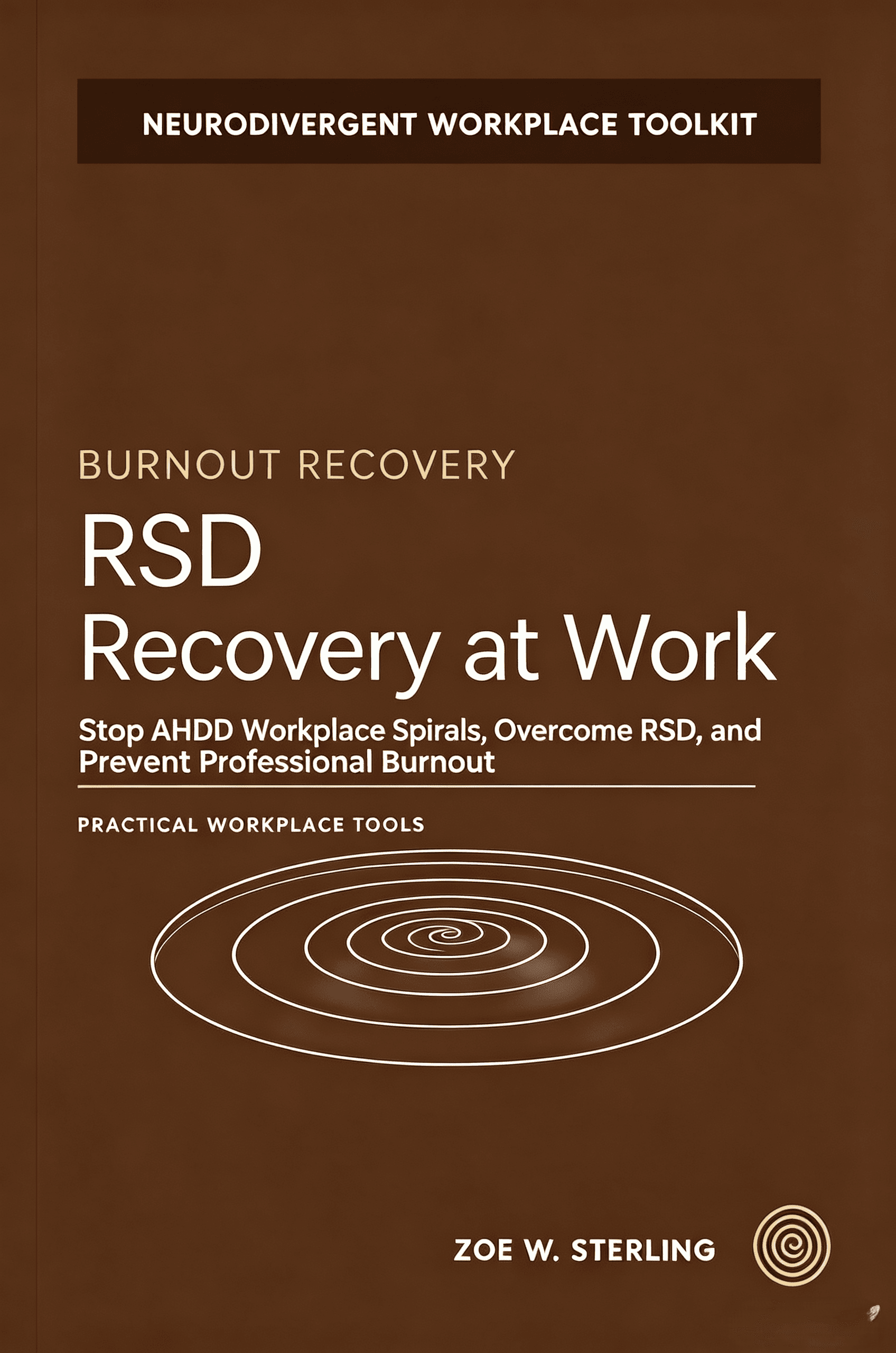
RSD Recovery at Work
A comprehensive field guide for neurodivergent adults navigating the workplace. Based on Zoe Sterling's 10+ years of ADHD workplace research and coaching, this book identifies 8 core strengths and 7 hidden workplace patterns.
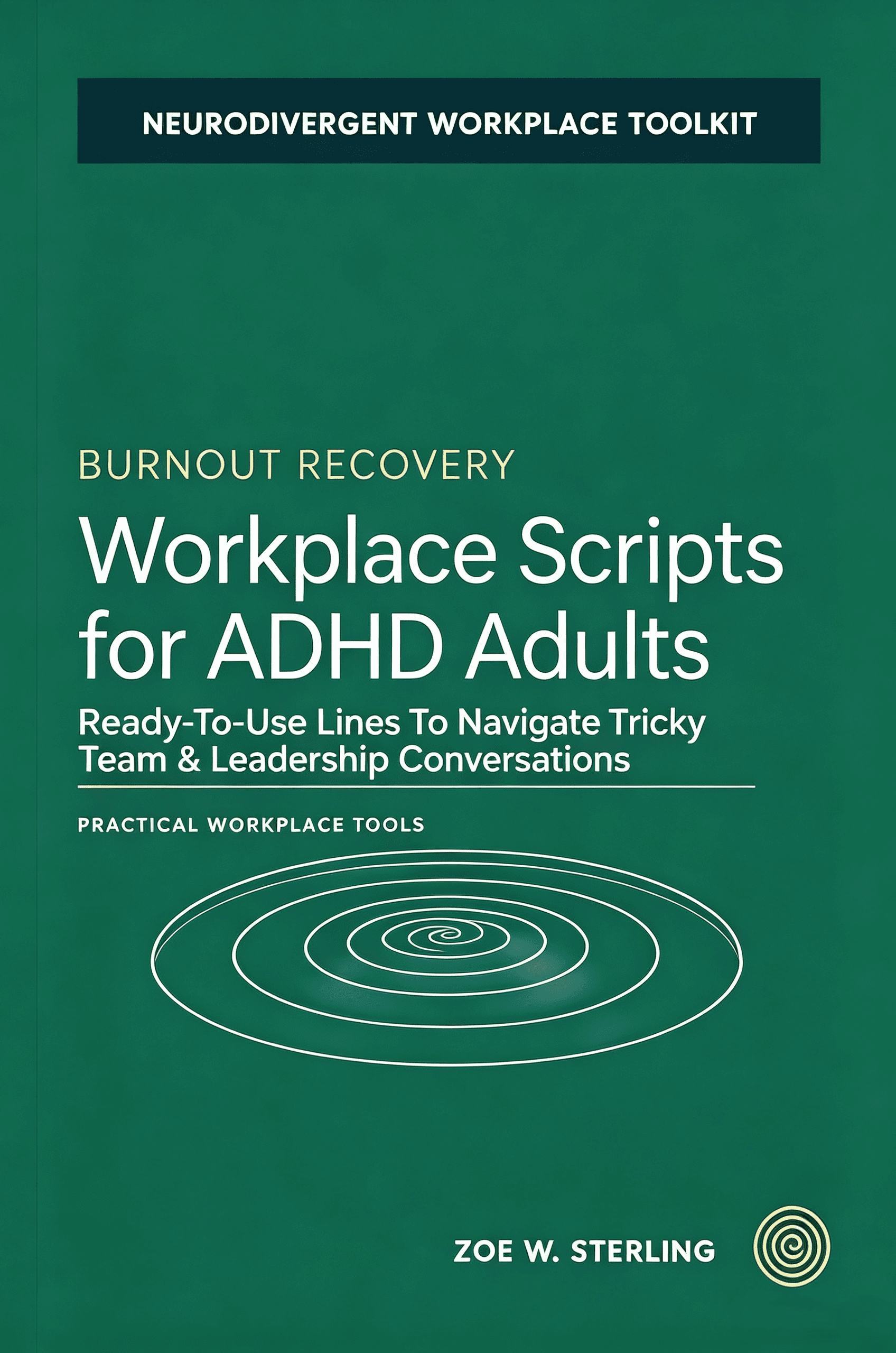
Workplace Scripts for ADHD Adults
A practical collection of workplace scripts for neurodivergent adults. From requesting accommodations to pushing back on unreasonable deadlines, these scripts help ADHD professionals communicate their needs clearly.
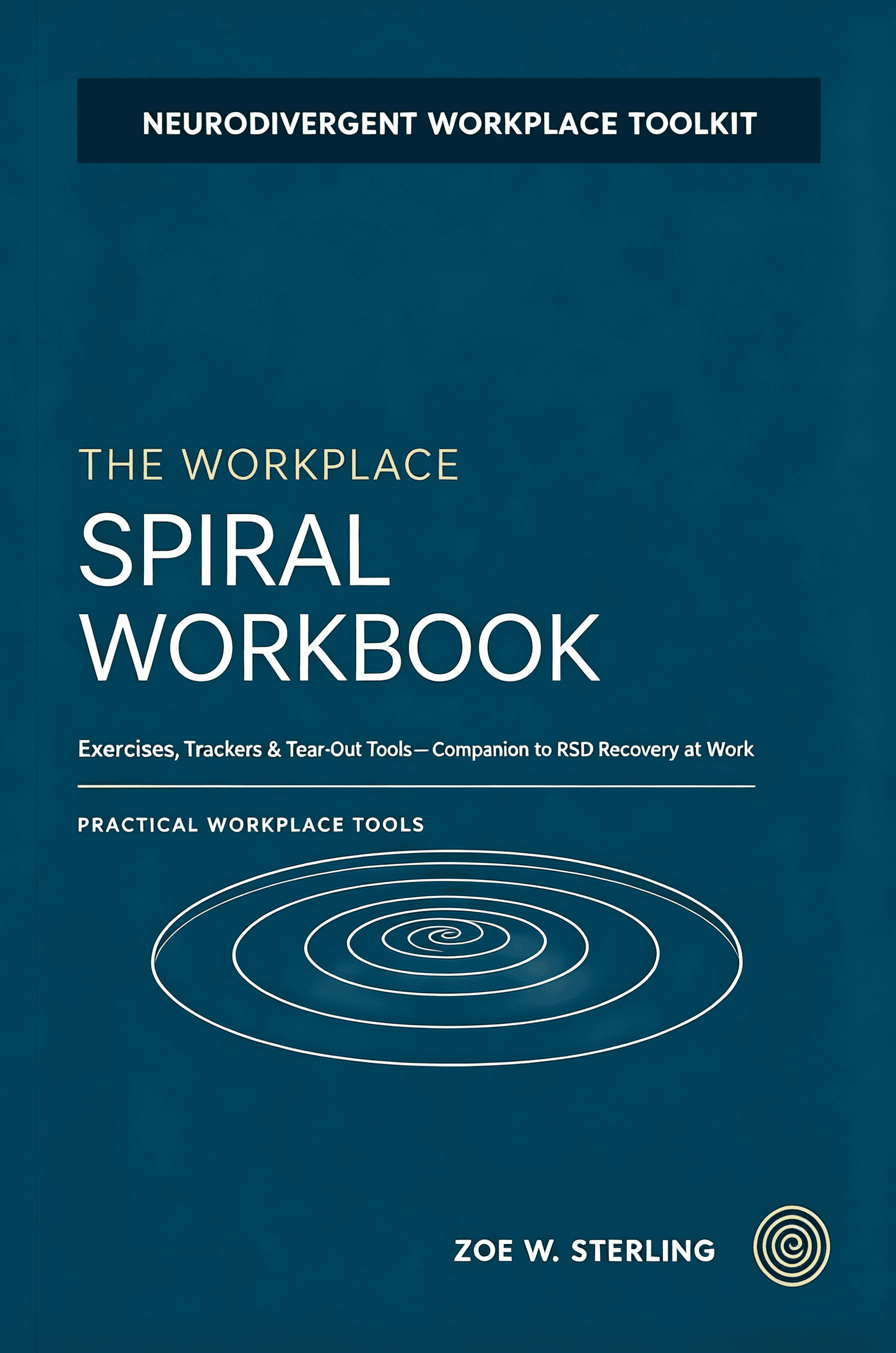
The Workplace Spiral Workbook
This interactive workbook is the companion to Zoe Sterling's Workplace Spiral assessment. Readers identify their spiral type, track their workplace patterns, and practice rewiring strategies to break free from unhealthy cycles.