Definition
Rejection Sensitive Dysphoria (RSD)
Rejection sensitive dysphoria (RSD) is an intense, overwhelming emotional and physical response to perceived or actual rejection, criticism, or failure. In ADHD, RSD is linked to differences in dopamine signaling and executive function, making workplace rejection feel like a threat to survival rather than a normal setback.
Key Takeaways
What you need to know
- 1RSD recovery after workplace rejection begins with physiological regulation, because dopamine drops and stress hormones impair the prefrontal cortex.
- 2The Book 10 Rewiring Protocol uses four phases — Stabilize, Separate, Rewire, Re-engage — to shorten RSD recovery and rebuild executive function.
- 3External scaffolds such as scripts, checklists, and a wins file protect working memory when RSD makes internal recall unreliable.
- 4Long-term protection includes if-then plans, workplace accommodations, and professional support that targets both ADHD and trauma responses.
 32s
RSD Recovery After Workplace Rejection
ADHD adults: recover from workplace rejection with RSD recovery techniques. Stabilize, separate, rewire, re-engage using the Rewiring Protocol. Full guide at neurodivergentworkplace.com.
What Is RSD Recovery After Workplace Rejection?
Rejection sensitive dysphoria (RSD) is an intense emotional and physical response to perceived or actual rejection, criticism, or failure that is disproportionately painful and can hijack an ADHD brain within seconds. Research shows that many adults with ADHD experience RSD not as simple sadness but as a full-body threat response, often accompanied by shame, rage, or shutdown. After workplace rejection — a missed promotion, critical feedback, being excluded from a meeting — RSD recovery is the deliberate process of regulating that threat response, restoring dopamine balance, and rebuilding executive function so you can respond rather than react.
Book 10: Rewiring Protocol frames RSD recovery as a neuroplasticity practice, not a willpower test. The protocol teaches that repeated rejection experiences strengthen neural pathways linking workplace cues to danger, while targeted recovery techniques weaken those pathways and build new ones. In practical terms, recovery means interrupting the stress cycle, giving your prefrontal cortex time to come back online, and using external scaffolds to support working memory until your nervous system settles.
- RSD is a nervous-system event, not a character flaw.
- Dopamine drops after rejection can feel like withdrawal.
- Executive function and working memory are temporarily offline during RSD.
Why Workplace Rejection Hits ADHD Brains Harder
ADHD involves differences in dopamine signaling and executive function that make rejection especially destabilizing. Dopamine is not just a pleasure chemical; it drives motivation, reward prediction, and the ability to shift attention after a setback. When workplace rejection occurs, the brain's reward prediction error is high: you expected recognition, got criticism, and dopamine availability can plummet. For ADHD brains already operating with lower baseline dopamine tone, that drop can trigger an RSD spiral marked by rumination, impulsivity, or emotional shutdown.
Working memory also plays a role. Research shows that acute stress reduces working memory capacity, which means the exact moment you need to remember your accomplishments, your support network, or your coping plan is the moment your brain struggles to retrieve them. Without a written or external memory aid, the rejection story becomes the only narrative available. Book 10: Rewiring Protocol calls this the 'rejection lock' — a loop where emotional pain, impaired working memory, and dopamine depletion reinforce each other.
This is why generic advice like 'just don't take it personally' fails. It asks a dysregulated prefrontal cortex to do heavy cognitive work without addressing the underlying neurochemistry. Effective RSD recovery techniques after workplace rejection therefore target three levels: physiological regulation, cognitive reframing, and environmental scaffolding.
- Dopamine drop intensifies perceived rejection.
- Stress shrinks working memory just when you need it.
- Rejection lock = emotion + memory + dopamine loop.
The Rewiring Protocol: A 4-Phase RSD Recovery Framework
The Rewiring Protocol in Book 10 offers a structured RSD recovery sequence for workplace rejection. Phase 1, Stabilize, focuses on lowering physiological arousal through breath, movement, or temperature change. Phase 2, Separate, helps you distinguish the rejection event from your identity and from catastrophic predictions. Phase 3, Rewire, uses targeted cognitive and behavioral repetitions to build new associations with workplace feedback. Phase 4, Re-engage, supports a graded return to work tasks, communication, and self-advocacy.
Each phase is designed to work with ADHD neurology rather than against it. Stabilize is brief — 90 seconds to 5 minutes — because dopamine and adrenaline shifts happen fast. Separate uses concrete language and written notes to compensate for working memory gaps. Rewire relies on spaced repetition and novelty to engage dopamine. Re-engage uses implementation intentions — if-then plans — to reduce executive function load.
- Stabilize: regulate the body first.
- Separate: label facts vs. RSD interpretations.
- Rewire: repeat new responses until automatic.
- Re-engage: return to work in small, planned steps.
Immediate RSD Recovery Techniques After Workplace Rejection
Immediate techniques target the first 30 minutes after workplace rejection, when RSD is most likely to drive impulsive emails, tearful exits, or shutdown. A 90-second dopamine reset can be as simple as cold water on the wrists, paced breathing with a longer exhale, or 20 jumping jacks. These actions do not solve the problem, but they create a neurological window in which your prefrontal cortex can regain control. Book 10: Rewiring Protocol emphasizes that regulation must precede reasoning.
Next, externalize the rejection to protect working memory. Write three columns: what happened, what I made it mean, and what else could be true. For example, 'My manager said the report needed more detail' becomes 'I am incompetent' in an RSD interpretation, while 'The report needed more detail and my manager may be rushed' is an alternative. This technique, sometimes called cognitive defusion or fact-checking, reduces the emotional charge enough to allow problem-solving.
Finally, use bilateral movement or grounding to interrupt rumination. Walking while listening to music, tapping alternate knees, or holding a cold object can reduce the repetitive thought loop. The goal is not to suppress emotion but to prevent the RSD surge from consolidating into a long-term belief about your worth or competence.
- 90-second dopamine reset: cold, breath, movement.
- Three-column fact-check: event, interpretation, alternatives.
- Bilateral grounding: walk, tap, temperature.
Rebuilding Executive Function and Working Memory After Rejection
After the immediate surge passes, RSD recovery shifts to rebuilding executive function. Workplace rejection can leave you with decision fatigue, poor task initiation, and a tendency to avoid anything associated with the person or project. To counter this, break re-engagement into micro-tasks that require less working memory. Instead of 'fix the project,' choose 'open the document and read one paragraph.' Each completed micro-task provides a small dopamine return, which helps restore motivation.
External scaffolds are essential. Use checklists, calendar reminders, body doubling, and written scripts for conversations. If you need to respond to the person who rejected you, draft a template: 'Thank you for the feedback. I will review it and follow up by Friday.' This reduces the executive function demand of composing an emotionally neutral reply in real time. Book 10: Rewiring Protocol recommends pairing each work task with a sensory or reward cue — a specific playlist, a favorite tea, a two-minute stretch — to re-associate work with safety and predictability.
Working memory training alone is not enough; context matters. Rebuild memory confidence by reviewing evidence of your competence in a 'wins file' or brag document. When RSD says you are failing, the wins file provides competing data. Research shows that retrieving positive autobiographical memories can reduce stress reactivity, and for ADHD adults, making that retrieval external and automatic is more reliable than trying to remember under pressure.
- Micro-tasks restore dopamine and task initiation.
- Scripts and templates reduce executive function load.
- Keep a wins file to counter RSD memory bias.
Long-Term RSD Recovery and Workplace Prevention
Long-term RSD recovery after workplace rejection involves building a nervous system that is less vulnerable to rejection lock. This includes regular sleep, protein-rich meals, movement, and ADHD treatment optimized with a clinician. It also includes cognitive work: identifying your RSD triggers, such as vague feedback, public criticism, or being left out of meetings, and creating if-then plans for each. For example, 'If I receive vague criticism, then I will ask for one specific example before responding.'
Workplace accommodations can reduce recurrence. Request written feedback, advance notice of performance reviews, and a brief pause before responding to critical emails. These are not special favors; they are executive function supports that align with ADHD neurology. Book 10: Rewiring Protocol also encourages a 'rejection recovery routine' — a predetermined set of actions you take after any workplace rejection, so you do not have to invent a coping plan while dysregulated.
Finally, consider therapy modalities that target RSD and trauma responses, such as CBT, DBT, EMDR, or ADHD coaching. Research shows that combining medication, skills training, and psychological support produces better outcomes than any single approach. The goal is not to become immune to rejection but to shorten recovery time and protect your career, relationships, and self-concept.
- Build if-then plans for known triggers.
- Ask for written feedback and response pauses.
- Use a predetermined rejection recovery routine.
Frequently Asked Questions
How do you recover from RSD after workplace rejection?
Start by regulating your body with a 90-second dopamine reset, such as cold water or paced breathing, then externalize the event in a three-column fact-check. After the surge passes, use micro-tasks, scripts, and a wins file to rebuild executive function and working memory.
What are the best RSD recovery techniques for ADHD?
The strongest techniques combine physiological regulation, cognitive defusion, and environmental scaffolding. The Book 10 Rewiring Protocol organizes these into four phases: Stabilize, Separate, Rewire, and Re-engage, which helps shorten the RSD spiral and restore prefrontal cortex control.
Can RSD cause physical symptoms after rejection?
Yes. RSD can trigger a full-body threat response, including chest tightness, nausea, crying, rage, or shutdown. These physical symptoms reflect dopamine drops and stress hormone surges, not weakness, and they respond best to body-based regulation before reasoning or problem-solving.
How long does RSD last after workplace rejection?
The acute RSD surge often lasts minutes to hours, but the emotional hangover can linger for days if rumination and avoidance take over. Using immediate regulation plus a written recovery routine can shorten the cycle and prevent a temporary rejection from becoming a long-term belief.
Action Plan
Follow these steps to implement what you've learned
Step 1: Create a 90-second regulation menu
Write down three body-based actions you can do immediately after rejection: cold water on wrists, 10 slow exhales, or 20 jumping jacks.
Practice them before you need them so they become automatic.
Step 2: Build a three-column fact-check template
Use columns for the event, your RSD interpretation, and at least two alternative explanations. Keep it in your phone or notebook.
Do not skip the alternatives column; it is where cognitive defusion happens.
Step 3: Start or update a wins file
Collect emails, positive feedback, completed projects, and compliments in one document. Review it when RSD says you are failing.
Add one item per week to keep retrieval easy under stress.
Step 4: Write if-then plans for your top three triggers
Identify recurring workplace triggers and create specific if-then responses, such as asking for one concrete example before replying.
Rehearse each plan out loud once to strengthen the new association.
Official Resources & References
Evidence-based information from trusted organizations
CDC
Trusted public health information on ADHD and mental health.
cdc.govCHADD
Resources, support, and evidence-based information for ADHD adults and families.
chadd.orgADDitude
Practical articles and expert guidance on ADHD, RSD, and emotional regulation.
www.additudemag.com
These resources are provided for educational purposes and do not constitute medical advice.
This article was reviewed by our editorial board for scientific accuracy and practical relevance.
Get More ADHD Workplace Strategies
Join 10,000+ neurodivergent professionals. Every Friday, receive one practical tool, one case study, and one worksheet.
Subscribe Free →What to Read Next
Continue your learning journey with these related resources
📖Related Articles
RSD Triggers in Workplace Feedback: Scripts That Help
Rejection sensitive dysphoria (RSD) can make workplace feedback feel like a personal attack, but structured feedback scripts can help ADHD employees handle these conversations with less emotional distress.
RSD: The Hidden ADHD Pain No-One Talks About
RSD finally gets a spotlight. This guide breaks down the ADHD link, real-life examples, and actionable strategies to handle the pain.
Ever Felt Destroyed by Harmless Feedback? It Could Be RSD
Harmless feedback shouldn't wreck your day, but with ADHD, it can. Rejection sensitive dysphoria (RSD) is a common but misunderstood emotional response. Here's how to recognize it and take back control.
📚Recommended Books
Dive deeper with our expert-written guides
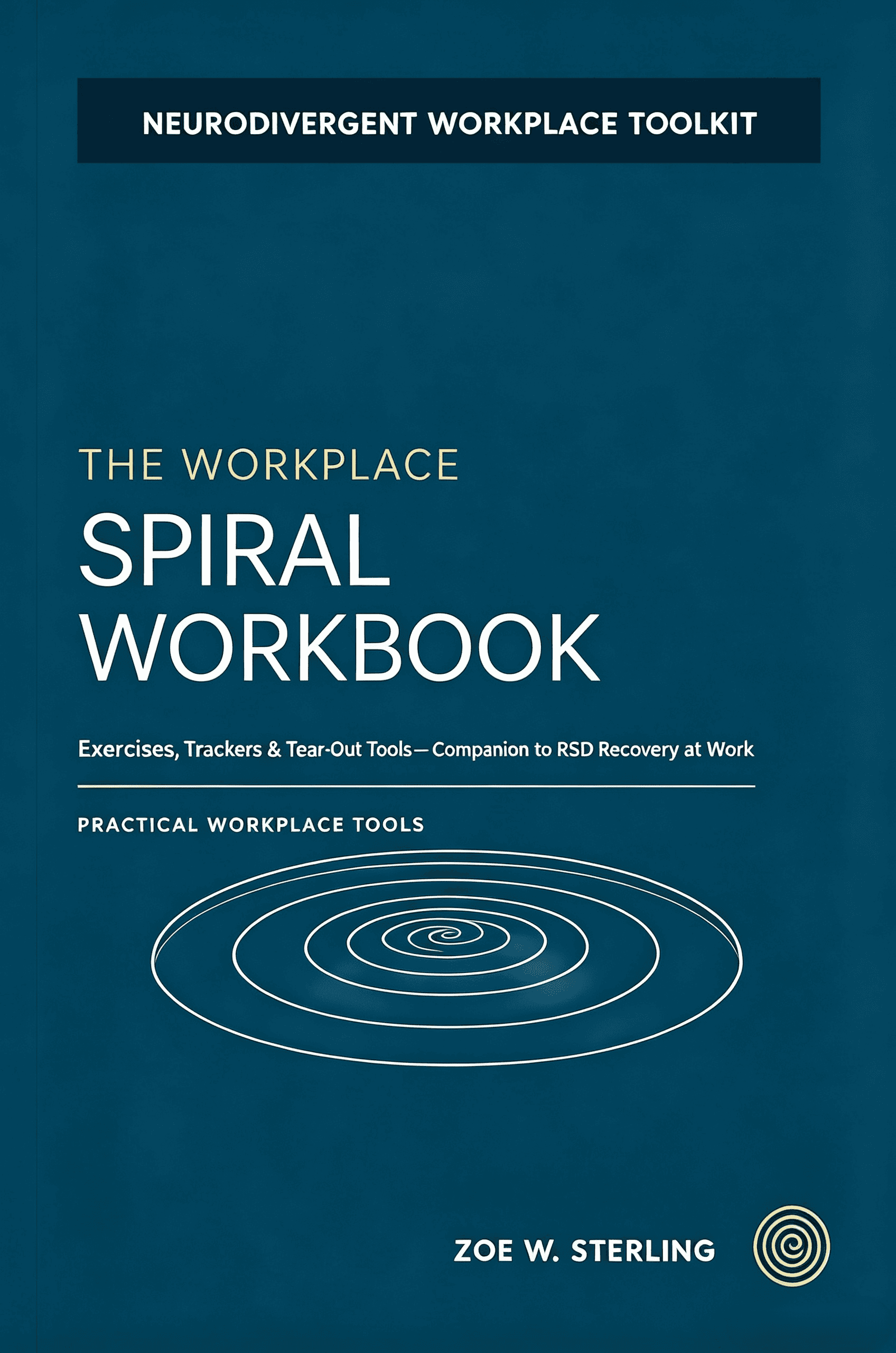
The Workplace Spiral Workbook
This interactive workbook is the companion to Zoe Sterling's Workplace Spiral assessment. Readers identify their spiral type, track their workplace patterns, and practice rewiring strategies to break free from unhealthy cycles.
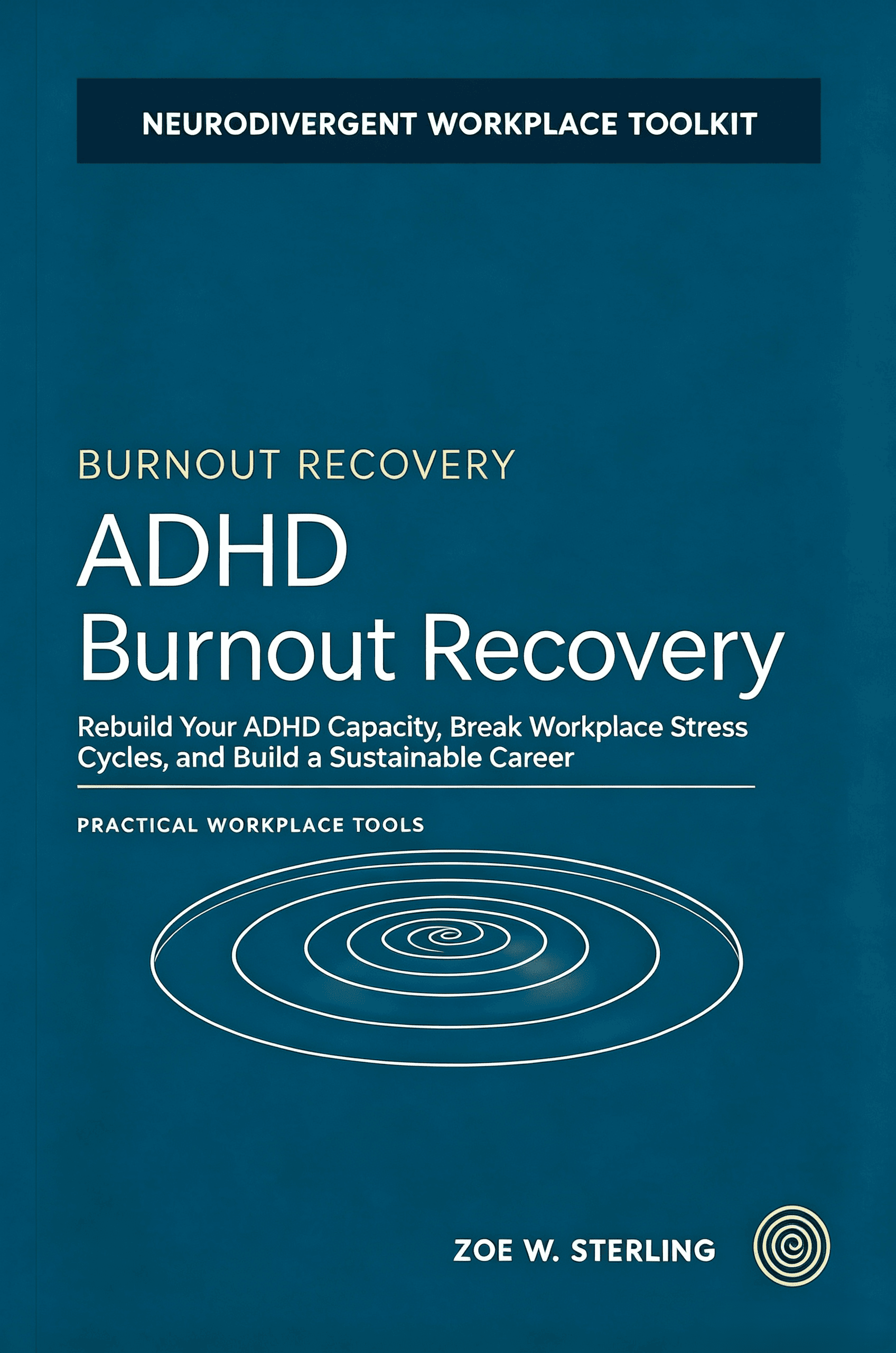
ADHD Burnout Recovery
ADHD burnout is different from typical burnout. Rooted in overstimulation, executive dysfunction, and the gap between natural strengths and workplace demands, it requires a specialized recovery approach.
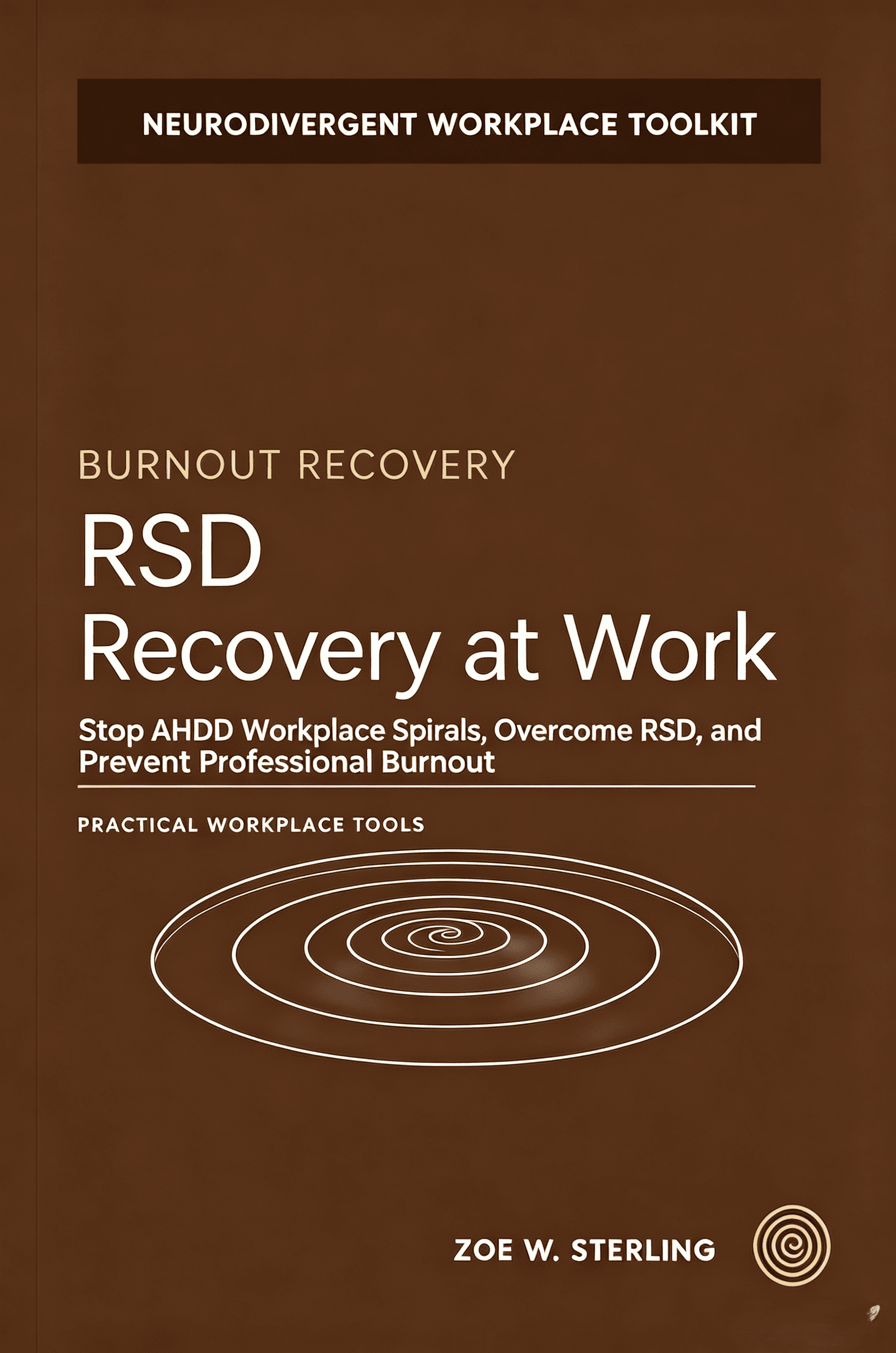
RSD Recovery at Work
A comprehensive field guide for neurodivergent adults navigating the workplace. Based on Zoe Sterling's 10+ years of ADHD workplace research and coaching, this book identifies 8 core strengths and 7 hidden workplace patterns.