ADHD Executive Dysfunction Strategies for Workplace Anxiety
Definition
ADHD executive dysfunction
ADHD executive dysfunction refers to difficulties in the brain's management system, including working memory, flexible thinking, and self-control. At work, this manifests as trouble prioritizing, starting tasks, managing time, and regulating emotions, which often leads to anxiety.
Key Takeaways
What you need to know
- 1ADHD executive dysfunction is a brain-based challenge, not a lack of effort or willpower.
- 2Workplace anxiety is often fueled by unmanaged executive function demands, creating a vicious cycle.
- 3Externalizing information and using visual tools reduces cognitive load and frees up mental resources.
- 4Strategies that address dopamine and emotional regulation can significantly improve task initiation and focus.
 45s
45s3 ADHD Executive Dysfunction Strategies for Work Anxiety
Struggling with ADHD executive dysfunction at work? Learn 3 evidence-based strategies to reduce anxiety and boost focus. #ADHD #workplace #neurodivergent
What Is ADHD Executive Dysfunction?
Research shows that ADHD is not just an attention disorder—it is a developmental impairment of the brain's executive system. The American Psychiatric Association outlines that these executive functions include working memory, cognitive flexibility, and inhibition, which are essential for planning, focusing, and managing daily work tasks.
For many adults with ADHD, executive dysfunction is the hidden culprit behind missed deadlines, impulsive decisions, and chronic disorganization. In the workplace, this translates into difficulty breaking down large projects, remembering instructions, and shifting between tasks—creating a perfect storm for anxiety and low performance.
When these skills are impaired, the brain experiences a higher cognitive load, and even simple tasks feel overwhelming. Understanding that this is neurological—not a character flaw—is the first step toward designing strategies that actually work.
- Working memory: Forgetting steps mid-task or losing track of priorities.
- Cognitive flexibility: Difficulty adapting to changes or new instructions.
- Inhibitory control: Acting impulsively or blurting out ideas immediately.
How Executive Dysfunction Fuels Workplace Anxiety
When executive dysfunction meets a demanding job, anxiety often follows. The constant fear of forgetting something important, missing a meeting, or failing to meet expectations triggers a stress response that further impairs executive function. It becomes a vicious cycle: anxiety reduces working memory capacity, which increases errors, which then boosts anxiety.
Rejection sensitive dysphoria (RSD) intensifies this cycle. RSD refers to the intense emotional pain triggered by perceived criticism or rejection. In the workplace, a simple email or a tense meeting can feel like a major threat, causing withdrawal or aggressive self-talk that derails focus for hours.
The prefrontal cortex, which relies on dopamine, is central to both motivation and emotional regulation. In ADHD brains, lower dopamine levels make routine tasks unrewarding, so procrastination and daydreaming become escapes from anxiety. Addressing both the environmental and neurochemical factors is essential for sustainable change.
Strategy 1: Externalize Your Executive Control
Your brain is not a reliable hard drive. Instead of trying to remember everything, shift that responsibility to visual, auditory, and digital tools. Externalizing executive function frees up working memory and slows down the anxiety spiral.
Keep a single project board—physical or digital—that lists every active task, deadline, and next action. Use color-coded labels for priority and energy level. For meetings or calls, keep a visible checklist of the key points you need to cover. The act of seeing information outside your head reduces cognitive load and makes it easier to re-orient when distracted.
The key is to build a 'second brain' that you trust. When you externalize, you stop running ticker tapes of worry in your head, which directly lowers workplace anxiety. Consistency matters more than perfection—choose one tool and use it daily.
- Use a digital kanban board (e.g., Trello, Asana) for project tracking.
- Create email templates for routine inquiries to reduce repetitive thinking.
- Place sticky notes with simple commands like 'Finish report' on your monitor.
Strategy 2: Break Tasks Into Micro-Steps
Task initiation is often the hardest part because the 'mountaintop' is too distant. Breaking a task into micro-steps (5- to 10-minute actions) makes the starting line feel attainable. For example, instead of 'Prepare quarterly presentation,' write: open slide deck, draft outline, insert last quarter's data.
Working memory deficits make it difficult to hold project structure in mind. By writing each micro-step down, you offload that mental stack. Then use a timer for 10 minutes with a single micro-step as the only goal. This reduces the fear of not finishing and builds momentum.
This strategy aligns with research on 'implementation intentions': when you specify when and where you will act, you are more likely to follow through. It also short-circuits anxiety by focusing on the immediate next action, not the entire project.
- Identify the first 3 actions of any task and write them down before starting.
- Use the '5-minute rule'—commit to just 5 minutes of a dreaded task.
- After each micro-step, check it off to give yourself a small dopamine boost.
Strategy 3: Use Time Management Anchors
Time blindness is a common executive challenge in ADHD. Using external anchors—visual clocks, timers, and body doubles—brings time into the present moment. A body double is simply another person who works alongside you, physically or virtually, which can dramatically improve focus and reduce anxiety.
Time blocking is another anchor. Assign specific periods to task categories, and set a kitchen timer or use a smartphone timer that counts up rather than down (this reduces the anxiety of watching time evaporate). Create a 'same time, same place' routine for deep work, such as every Tuesday at 10 AM.
The goal is not to create a rigid schedule but to create a secure structure. When time feels manageable, even under pressure, the brain can reallocate energy to problem-solving instead of panic. Consistency is key—experiment to find the anchors that calm your nervous system.
- Use a whiteboard with time intervals to visualize your day.
- Try virtual body-doubling platforms like Focusmate for connection.
- Set audible alerts at key transition times to avoid hyperfocus.
Strategy 4: Regulate Emotions and RSD at Work
Emotional regulation is an executive function, and it's often the most drained in the workplace. When you feel a wave of rejection or anxiety, practice a simple pause to engage your prefrontal cortex: stop, take a breath, and name the emotion without judgment.
Prepare 'scripts' for common triggers. If you receive harsh feedback, have a pre-planned response such as 'Let me take some time to process this and get back to you.' This gives you space to avoid an impulsive or self-critical reply. It also reduces the physical stress response that clouds working memory.
Self-compassion is not just a soft strategy—it lowers cortisol and helps the brain re-engage with rational thought. Remember that RSD is part of ADHD's genetic wiring, not a sign of weakness. Use this knowledge to separate fact from perception during moments of interpersonal tension.
- Place a calming mantra near your desk, like 'I can handle this one step at a time.'
- Run imaginary role-plays of stressful scenarios before they happen.
- Schedule short brain breaks to release emotional tension before it builds.
Strategy 5: Leverage Dopamine for Motivation
Your ADHD brain craves dopamine, and you can use that to your benefit. Purposefully build small rewards into your workflow. For instance, finish a high-effort task, then take a 10-minute walk to hear a favorite podcast. This positive reinforcement trains your brain to anticipate a 'chemical bonus.'
Turn mundane tasks into games by tracking streaks, competing with your own previous time, or listening to upbeat music that boosts focus. The goal is not to escape work but to make your brain's reward system work with you rather than against you.
Dopamine management also includes protecting your sleep and exercise, as both directly influence reward signaling. While strategies won't replace medication if it's needed, they create momentum. The more you experience success, the easier it becomes to activate effort, further reducing anxiety about your performance.
- Match low-interest tasks to high-interest activities you can pair with them.
- At the end of each completed task, write a 'win' in a visible log.
- Use energizing smells or snacks (gum, citrus, coffee) as olfactory cues.
Frequently Asked Questions
What is ADHD executive dysfunction?
ADHD executive dysfunction refers to the neurological challenges in organizing, planning, and regulating attention and emotions. It's a core feature of ADHD, impacting working memory, task initiation, and impulse control, which can significantly affect workplace performance.
How do you treat executive dysfunction at work?
Treatment combines external supports—like visual tools, time management anchors, and micro-step breakdowns—with emotional regulation strategies. Cognitive behavioral therapy, coaching, and medication can also help. In the workplace, reasonable accommodations and structured routines are highly effective.
Does ADHD cause anxiety at work?
Yes, unmanaged ADHD executive dysfunction often leads to chronic stress and anxiety. The fear of forgetting, failing, or being judged triggers a cycle of worry that further impairs cognitive function. Addressing executive skills and emotional triggers can break this cycle.
What are the best coping tools for ADHD at work?
Top tools include digital project boards, timers, body-doubling apps, and pre-planned scripts for emotional moments. Externalizing information reduces cognitive load, while scheduled breaks and rewards maintain motivation and calm.
Action Plan
Follow these steps to implement what you've learned
Step 1: Audit Your Executive Functions
For three days, document where you lose time, forget tasks, or feel most anxious. Note the specific situations and emotional responses.
Use a simple notepad or voice memo to capture patterns.
Step 2: Create Your External Brain
Choose one project management tool and migrate all current work tasks into it. Include deadlines, next actions, and priority tags.
Start with 3 tasks only to avoid overwhelm.
Step 3: Implement Micro-Step Kickoffs
Break your most dreaded weekly task into 5-minute steps. Schedule one micro-step in your calendar for tomorrow.
Set a 10-minute timebox and celebrate the completion.
Step 4: Build a Reward Schedule
Pair a daily chore with a dopamine booster, like a short playlist or walk. Use a visual 'win log' to track progress.
Make the reward immediate and consistent.
Official Resources & References
Evidence-based information from trusted organizations
CHADD
Children and Adults with Attention-Deficit/Hyperactivity Disorder - leading non-profit for ADHD education and support.
chadd.orgNIMH
National Institute of Mental Health - authoritative research and information on ADHD.
www.nimh.nih.gov/health/topics/attention-deficit-hyperactivity-disorder-adhdJob Accommodation Network
Free consultancy on workplace accommodations for ADHD and other conditions.
askjan.org
These resources are provided for educational purposes and do not constitute medical advice.
This article was reviewed by our editorial board for scientific accuracy and practical relevance.
Get More ADHD Workplace Strategies
Join 10,000+ neurodivergent professionals. Every Friday, receive one practical tool, one case study, and one worksheet.
Subscribe Free →What to Read Next
Continue your learning journey with these related resources
📖Related Articles
ADHD Workplace Overwhelm: Management Techniques
ADHD workplace overwhelm is a common challenge, but with the right techniques—like energy boundaries and executive function supports—you can regain control and reduce anxiety.
ADHD Sunday Dread & Monday Anxiety: Workplace Solutions
Sunday night dread is not laziness or poor discipline -- it is a predictable ADHD nervous-system response. Here is how to identify your triggers and build a Monday that does not hurt.
ADHD Presentation Anxiety: Pro Strategies for Professionals
Professionals with ADHD can master presentation anxiety with targeted strategies that address executive function, dopamine, RSD, and working memory.
📚Recommended Books
Dive deeper with our expert-written guides
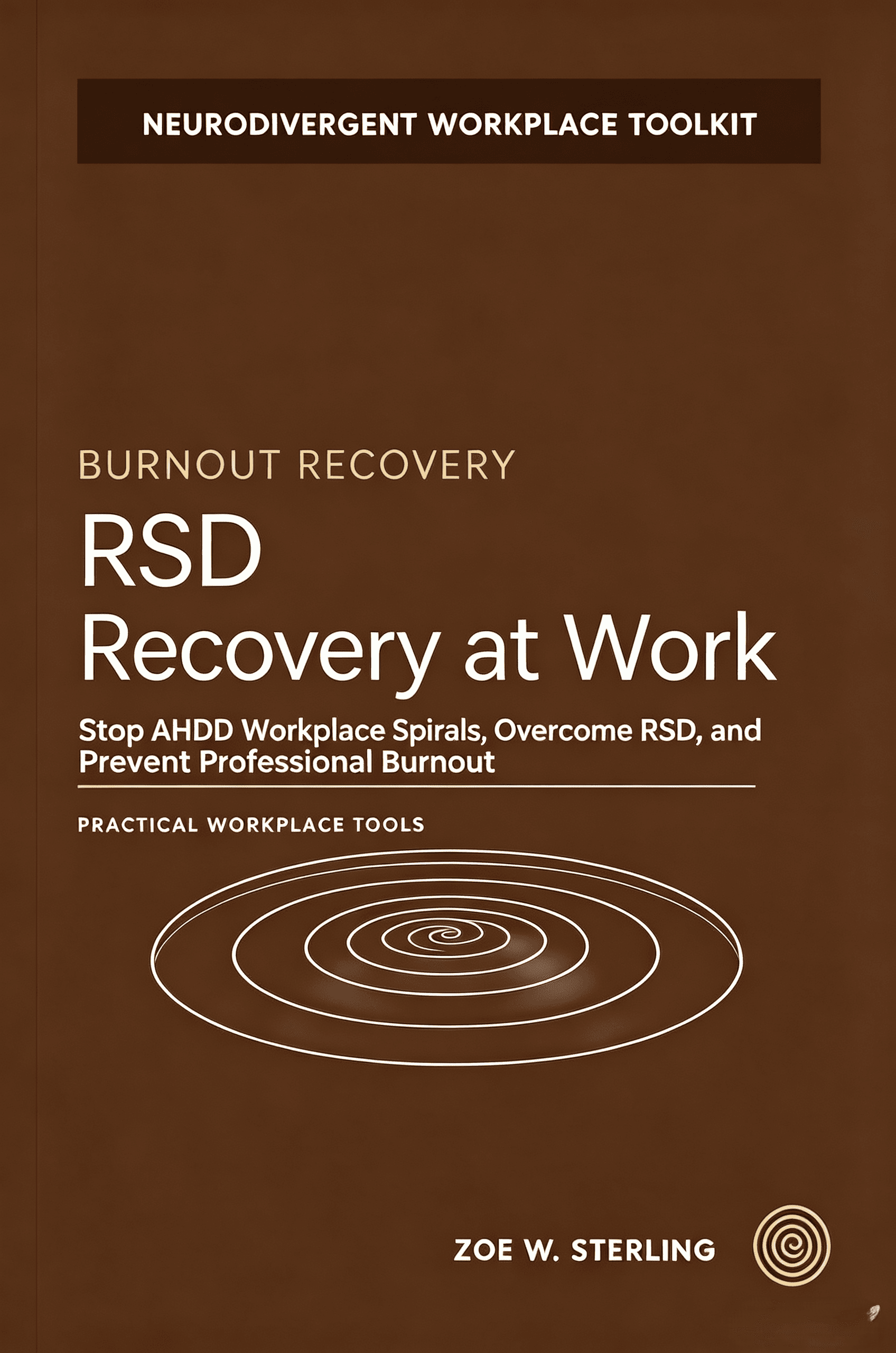
RSD Recovery at Work
A comprehensive field guide for neurodivergent adults navigating the workplace. Based on Zoe Sterling's 10+ years of ADHD workplace research and coaching, this book identifies 8 core strengths and 7 hidden workplace patterns.
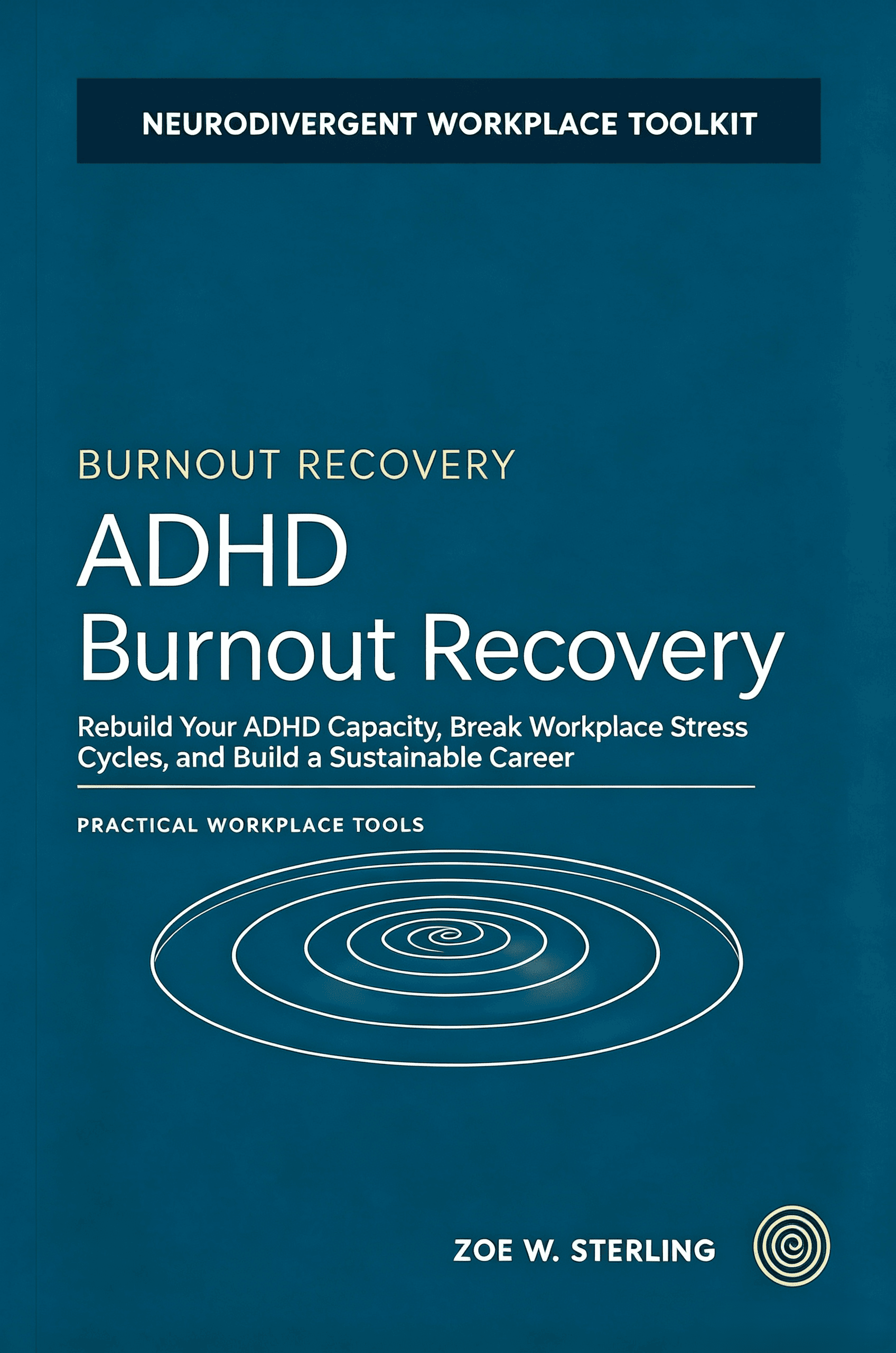
ADHD Burnout Recovery
ADHD burnout is different from typical burnout. Rooted in overstimulation, executive dysfunction, and the gap between natural strengths and workplace demands, it requires a specialized recovery approach.
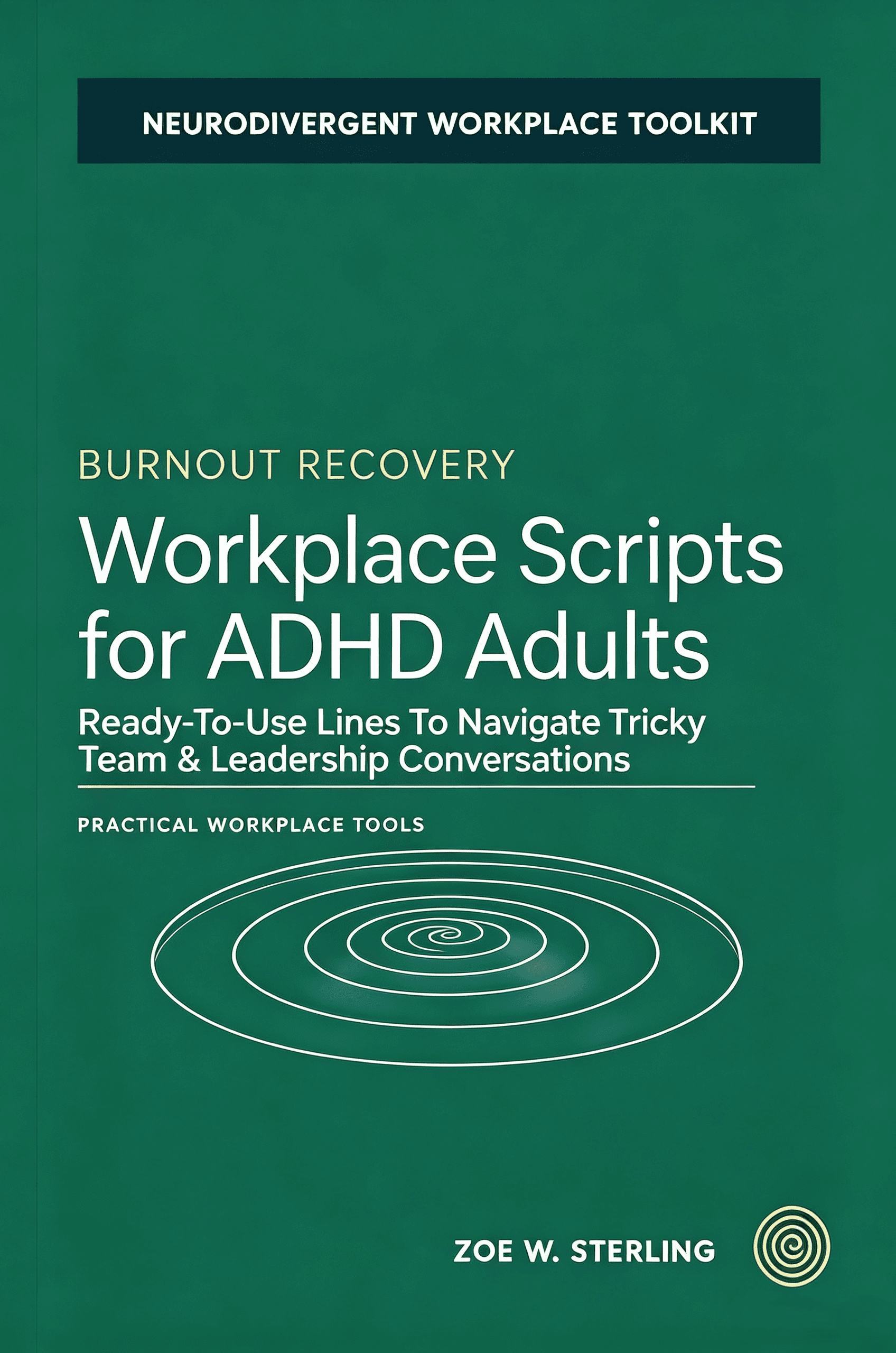
Workplace Scripts for ADHD Adults
A practical collection of workplace scripts for neurodivergent adults. From requesting accommodations to pushing back on unreasonable deadlines, these scripts help ADHD professionals communicate their needs clearly.