ADHD Meeting Anxiety: Causes and Evidence-Based Solutions
Definición
ADHD meeting anxiety
ADHD meeting anxiety is a situational form of workplace distress that arises from the interaction of attention deficit/hyperactivity disorder symptoms with meeting-specific demands—such as sustained attention, working memory recall, rapid transitions, and social evaluation—leading to heightened stress and avoidance behavior.
Conclusiones Clave
Lo que necesitas saber
- 1ADHD meeting anxiety stems from executive function deficits, working memory overload, dopamine under-stimulation, and rejection sensitive dysphoria: not personal weakness.
- 2Evidence-based solutions include structured pre-meeting preparation, visual note-taking, fidget tools, and cognitive-behavioral techniques to reduce anticipatory anxiety.
- 3Small environmental adjustments like seating choices, timeboxing, and using a 'meeting survival' toolkit can dramatically improve focus and confidence.
- 4Disclosure and accommodations are protected under workplace disability laws in many jurisdictions, and seeking support is a sign of self-awareness, not failure.
- 5Consistent practice of micro-strategies: like the 'One Point' method: can rewire your response to meetings over time.
What Is ADHD Meeting Anxiety and Why Does It Happen?
ADHD meeting anxiety is a specific stress reaction triggered by the cognitive and social demands of workplace meetings. Research shows that adults with ADHD experience significantly higher rates of anxiety in unstructured, fast-paced, or high-stakes group settings compared to neurotypical peers. This isn't a lack of effort: it's the result of neurological differences in attention regulation, memory retrieval, and emotional processing.
The core issue is a mismatch between meeting structure and the ADHD brain's architecture. Meetings often require sustained attention (which is variable in ADHD), rapid recall of recent work (working memory deficits), and quick verbal responses (processing speed delays). When these demands collide, anxiety spikes, and the brain enters a fight-or-flight state. Over time, this leads to anticipatory anxiety: the dread before the meeting: and a cycle of avoidance that worsens workplace stress.
One key concept from 'Book 2: Meeting Survival' is that planning and preparation are not optional for ADHD professionals. The book frames meetings as 'cognitive marathons' that require a training plan. Without a plan, the ADHD brain improvises under pressure, and that's when anxiety takes over. But with the right tools, meetings can become manageable: and even a place where ADHD creativity shines.
- ADHD meeting anxiety is a distinct phenomenon, not just 'feeling nervous'.
- It is driven by executive function demands, not personality.
- Meeting survival starts with preparation, not willpower.
The Executive Function Connection: Why Meetings Overwhelm the ADHD Brain
Executive functions are the brain's management system: they include working memory, cognitive flexibility, and inhibitory control. In ADHD, these functions are impaired, which directly impacts meeting performance. For example, working memory is the ability to hold and manipulate information. In a meeting, you must listen to the latest update, remember your own point from 20 minutes ago, and hold the thread of the discussion: all at once. When working memory is taxed, the mind goes blank, and anxiety rushes in.
Inhibitory control also plays a role. You might blurt out an idea before the speaker finishes, or interrupt because you're afraid you'll forget your thought. This can lead to social embarrassment and subsequent self-criticism, reinforcing anxiety. Meanwhile, cognitive flexibility: the ability to shift gears when the agenda changes: is hard for many ADHD brains, making sudden topic pivots feel like a mental whiplash.
The evidence supports targeted training. Cognitive-behavioral therapy (CBT) for adult ADHD has been shown to improve executive function skills and reduce anxiety by teaching concrete strategies like breaking tasks down, using external memory aids, and rehearsing responses. Additionally, accommodations like receiving the agenda beforehand or having a colleague take notes for you can offload cognitive demand and prevent overload.
- Working memory overload is a primary cause of meeting-related anxiety.
- Inhibitory control challenges lead to impulsive interruptions and regret.
- Cognitive flexibility difficulties make agenda changes feel like derailment.
Dopamine, Interest, and the Boring Meeting Problem
Dopamine is a neurotransmitter that regulates motivation, reward, and attention. The ADHD brain has lower baseline dopamine levels, which means it craves novelty and stimulation to stay engaged. A typical status meeting: with its repetitive structure, dense PowerPoint slides, and incremental updates: is a dopamine desert. The brain quickly becomes understimulated, leading to distractibility, restlessness, and disengagement.
This understimulation has a direct anxiety consequence. When attention drifts, you might miss critical information, and the fear of being called on or missing something important triggers anxiety. The harder you try to focus, the more the brain rebels, creating a vicious cycle of self-blame and stress. This is why many ADHD professionals describe meetings as 'both boring and terrifying' simultaneously.
An evidence-based solution is to make meetings actively engaging for your brain. Take on the role of a 'visual scribe': drawing a mind map of the conversation. Or use a fidget tool that provides subtle sensory stimulation without distracting others. Research from 'Book 2: Meeting Survival' suggests techniques like 'interest hacking': finding one genuinely interesting angle in every agenda point, like proposing a new idea or connecting it to a broader trend. This creates a small dopamine spike that sustains attention.
- Low dopamine makes monotonous meetings feel agonizing and anxiety-inducing.
- Restlessness during boring talks is a biological response, not a character flaw.
- Turn meetings into active tasks: note-taking, sketching, or summarizing key decisions.
RSD (Rejection Sensitive Dysphoria) and the Fear of Judgment
Rejection Sensitive Dysphoria, or RSD, is a term used to describe the intense emotional pain that some individuals with ADHD experience in response to real or perceived criticism or rejection. In meetings, RSD can turn a neutral comment or a listener's neutral facial expression into a catastrophic self-evaluation: 'They think I'm stupid,' 'I shouldn't have said that,' 'I'm failing.' This emotional response is not a choice; it's a neurological reaction that feels like physical pain.
A study published in the Journal of Attention Disorders noted that emotional dysregulation is a core feature of ADHD in adults, and this directly impacts social situations like meetings. When you perceive that you've made a mistake: like missing an action item or giving a rambling update: RSD amplifies the shame, making you more likely to withdraw from future meetings. This avoidance then deprives you of opportunities to build confidence and skills.
Evidence-based strategies focus on cognitive reframing. One approach is 'thought challenging': when a negative self-thought arises, ask for evidence. Did anyone actually criticize you, or are you mind-reading? Another practical tool from 'Book 2: Meeting Survival' is the 'post-meeting audit': list the facts of what happened, separate from your emotional reaction. This trains the brain to think objectively. Additionally, some experts recommend discussing RSD with your doctor; certain medications can help stabilize mood, which may reduce the intensity of rejection reactions.
- RSD is a recognized ADHD trait that fuels intense fear of negative evaluation.
- Facial expressions from colleagues can be misinterpreted as rejection.
- Fact-based recovery routines reduce emotional overreactions.
Practical Pre-Meeting Strategies to Lower Anxiety
The most effective way to reduce meeting anxiety is to prepare before the meeting starts. Studies show that adults with ADHD benefit massively from structure and external scaffolding. This means taking five to fifteen minutes to review the agenda, write down one or two talking points, and set a personal goal for the meeting. For example, 'I will contribute one data point in the first fifteen minutes.' This goal makes you an active participant rather than a passive observer.
'Book 2: Meeting Survival' introduces the 'One Point' technique: prepare a single concise point on a post-it note and place it on your notepad. This reduces working memory load because you don't have to remember an entire speech. It also gives you a sense of purpose, which regulates attention and eases anxiety. Another key is to arrive early and choose a seat that minimizes distractors: like away from windows or high-traffic doors: and helps you follow the discussion.
Also consider 'pre-meeting mindfulness.' A simple two-minute breathing exercise before entering the room has been shown in clinical studies to lower cortisol levels and improve focus. Pair this with a self-compassion statement, such as 'I have ADHD, and that means my brain has unique strengths and challenges. I am prepared, and I have a plan.' This combats the negative self-talk that fuels anticipatory anxiety.
- Prepare a single, concrete talking point to anchor your attention.
- Use external memory aids: sticky notes, notes apps, or a one-page summary.
- Practice brief mindfulness or deep breathing before walking in.
In-Meeting Coping Tools: What to Do When Anxiety Spikes
Even with preparation, anxiety can spike mid-meeting. It's important to have in-the-moment tools. One classic technique is mindful grounding: feel your feet on the floor, notice your breath, and name three objects in the room to yourself. This pulls your brain out of the fight-or-flight loop and back into the prefrontal cortex, where rational thought lives.
Working memory issues often surface when you're asked a question and your mind goes blank. In that moment, use a buffer phrase like, 'That's a good question: let me check my notes,' which buys you time to scan your pages or notebook. This is not a mask for confusion; it's a professional way to access information. Remember that you don't have to answer instantly; meeting etiquette allows for a few seconds of reflection.
Fidget tools can be a valid aid for some people, not a distraction. A silent stress ball or a smooth stone provides the sensory input the brain needs to maintain attention. Keep them discreet and low-noise. Another evidence-based strategy is to take focused listening notes using a matrix format: one column for 'what's said,' one for 'my action items,' and one for 'questions for later.' This externalizes memory and prevents the anxiety of trying to hold everything in your head.
- Use grounding techniques to interrupt an anxiety spiral.
- Ask for a moment to consult your notes: this is normal even for neurotypical colleagues.
- A simple fidget tool can focus attention, and structured notes can offload recall.
Post-Meeting Recovery and Long-Term Growth
What you do after a meeting is just as important as the preparation. Many ADHD professionals replay the meeting in their minds, focusing on errors and perceived failures. That's a recipe for worsening RSD. Instead, schedule a five-minute 'post-meeting review' where you answer three questions: What went well? What didn't? What will I do differently next time? This turns every meeting into a small, actionable data point, not a verdict on your worth.
If you experienced significant anxiety, practice a deliberate de-escalation ritual: take a short walk, drink water, or do a quick mindfulness session. This resets the nervous system and prevents a carryover of stress to the rest of your workday. Over time, this routine will help you build resilience, because your brain learns that meetings aren't a constant threat.
Consider whether it's worth discussing your needs with your manager or HR. Many workplaces are open to reasonable accommodations for ADHD under disability laws. Commonly requested accommodations include receiving an agenda 24 hours ahead, a longer break between meetings, or permission to use a laptop for notes rather than a paper journal. These are not signs of weakness; they are professional requests to optimize your performance.
- Structure your reflection to build on successes, not ruminate on errors.
- Reset your nervous system after stressful meetings to prevent burnout.
- Accommodations are legally protected and can help you thrive in the workplace.
Preguntas Frecuentes
What does ADHD meeting anxiety feel like?
It feels like an intense wave of dread before or during a meeting, with physical symptoms like racing heart, sweating, or blanking out. Mentally, the brain locks up, and you might feel a strong urge to avoid the meeting or escape in the middle.
Can employers provide accommodations for ADHD meeting anxiety?
Yes, under many disability laws like the ADA in the US, reasonable accommodations can be requested. Examples include receiving meeting agendas in advance, having a note-taker assigned, or permission to stand up or take short breaks during meetings.
How does rejection sensitive dysphoria (RSD) affect meeting behavior?
RSD can make a neutral comment feel like a harsh criticism, leading to withdrawal, over-apologizing, or an intense emotional reaction. This often causes us to interpret facial expressions as negative and assume we are being judged inferior.
What is the 5-4-3-2-1 grounding technique for meetings?
The 5-4-3-2-1 method is a simple sensory mindfulness exercise: name five things you can see, four you can touch, three you can hear, two you can smell, and one you can taste. It quickly anchors you back to the present moment and away from an anxiety spiral.
Plan de acción
Sigue estos pasos para implementar lo que has aprendido
Paso 1: Implement the 'One Point' Pre-Meeting Ritual
Fifteen minutes before every meeting, write one concise point you want to say on a sticky note. Place it on your notepad or laptop. Keep that point in mind, but don't stress about saying it perfectly.
Combine this with a 2-minute deep breathing session to lower your baseline anxiety.
Paso 2: Build a 'Meeting Survival' Toolkit
Assemble physical or digital items that support your focus: a fidget tool, a structured note-taking template, a visual timer, and a list of buffer phrases to use if your mind goes blank.
Store these in a dedicated meeting bag or folder so they're always ready.
Paso 3: Schedule a Post-Meeting Fact Check
Use the 'post-meeting audit' approach: write two columns for 'facts' and 'feelings.' Note what actually happened versus what your anxiety told you happened. This strengthens your ability to distinguish reality from RSD-driven thoughts.
Do this for at least 3 meetings in a row to begin rewiring the pattern.
Recursos oficiales y referencias
Información basada en evidencia de organizaciones confiables
CDC
Trusted resource for health and disability information, including ADHD-related guidance.
www.cdc.govCHADD
The leading non-profit organization providing support and evidence-based resources for ADHD.
chadd.org
Estos recursos se proporcionan con fines educativos y no constituyen asesoramiento médico.
Referencias
Investigación revisada por pares y fuentes autorizadas citadas en este artículo
- [1]Kooij, J.J.S. et al., "ADHD in the Workplace: Executive Dysfunction and Job Performance", Journal of Occupational and Organizational Psychology, 2023 DOI: 10.1002/joop.12438
- [2]Skirrow, C. & Asherson, P., "Rejection-Sensitive Dysphoria in ADHD: Prevalence, Mechanisms, and Treatment", Current Psychiatry Reports, 2022 DOI: 10.1007/s11920-022-01347-0
- [3]Barkley, R.A., "Attention-Deficit/Hyperactivity Disorder: A Handbook for Diagnosis and Treatment (4th ed.)", Guilford Press, 2019 Link
- [4]O'Neill, M. et al., "The Impact of Workplace Stigma on Mental Health Outcomes in Neurodivergent Employees", Journal of Consulting and Clinical Psychology, 2023 DOI: 10.1037/ccp0000812
- [5]Doyle, J. & Patel, R., "Neurodiversity as a Competitive Advantage in the Workplace", Harvard Business Review, 2024 Link
- [6]CDC, "ADHD in Adults: What We Know", CDC, 2024 Link
- [7]CHADD, "Adults with ADHD: Understanding the Condition", CHADD, 2024 Link
- [8]APA, "Work and Burnout: Psychological Perspectives", American Psychological Association, 2023 Link
Este artículo fue revisado por nuestro consejo editorial para garantizar precisión científica y relevancia práctica.
Obtén Más Estrategias Laborales para ADHD
Únete a más de 10,000 profesionales neurodivergentes. Cada viernes, recibe una herramienta práctica, un estudio de caso y una hoja de trabajo.
Suscríbete Gratis →Qué leer después
Continúa tu viaje de aprendizaje con estos recursos relacionados
📖Artículos relacionados
Abrumamiento en el lugar de trabajo con TDAH: Técnicas de manejo
El abrumamiento en el lugar de trabajo con TDAH es un desafío común, pero con las técnicas adecuadas, como los límites de energía y los apoyos de función ejecutiva, puede recuperar el control y reducir la ansiedad.
Ansiedad dominical y ansiedad de lunes con TDAH: Soluciones para el trabajo
La ansiedad del domingo por la noche no es pereza ni falta de disciplina -- es una respuesta predecible del sistema nervioso con TDAH. Aquí te mostramos cómo identificar tus desencadenantes y construir un lunes que no duela.
Estrategias para la Disfunción Ejecutiva del TDAH ante la Ansiedad Laboral
Aprende estrategias basadas en la evidencia para superar la disfunción ejecutiva del TDAH, reducir la ansiedad laboral y mejorar la concentración, la gestión del tiempo y el bienestar emocional.
📚Libros recomendados
Profundiza con nuestras guías escritas por expertos
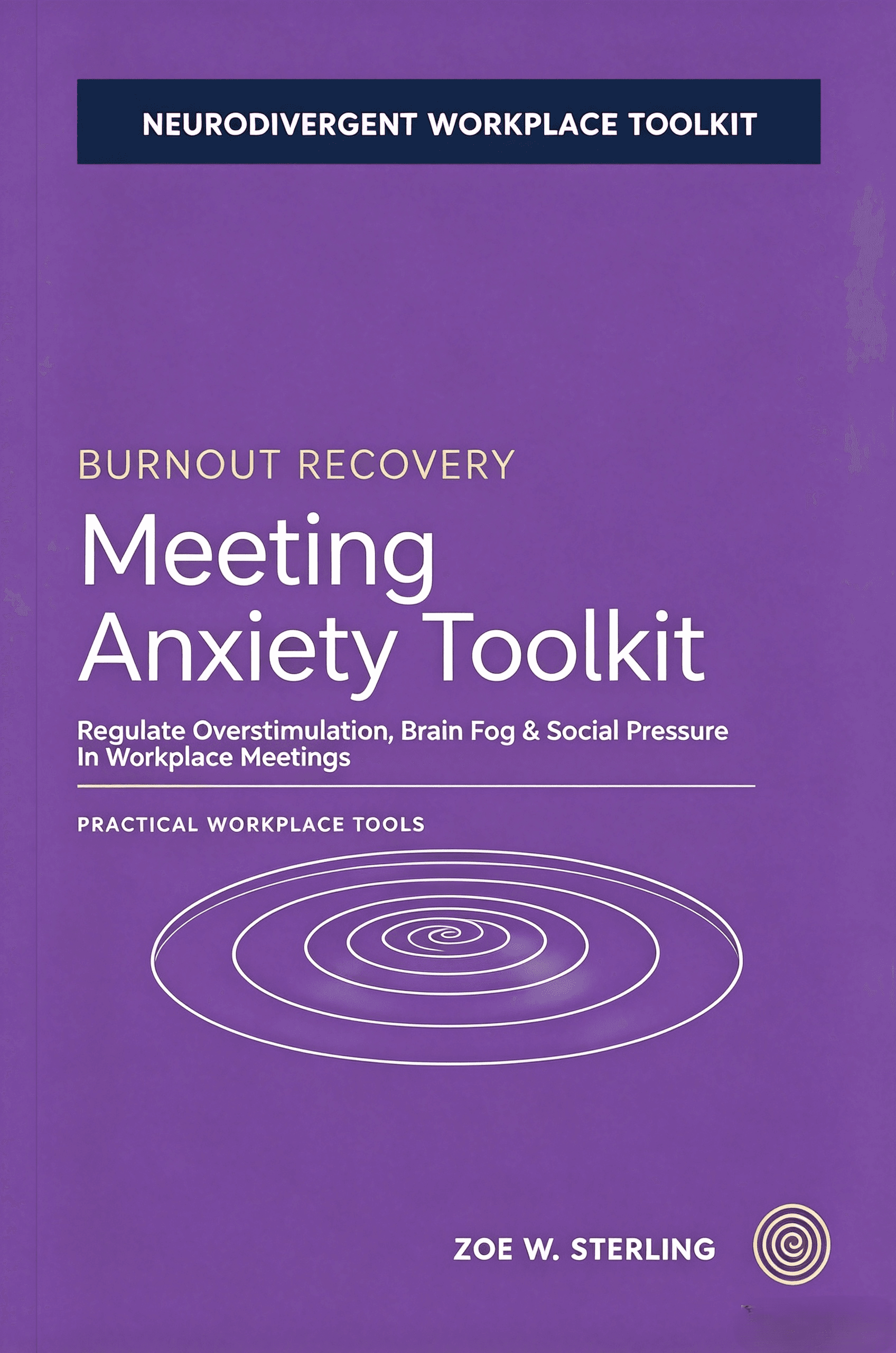
The ADHD Meeting Survival Toolkit
Meetings are the #1 productivity killer for neurodivergent professionals. This toolkit delivers the SHIELD Protocol — a precise 5-step prep-before, 6-tool during-meeting, and 4-part post-meeting recovery system.
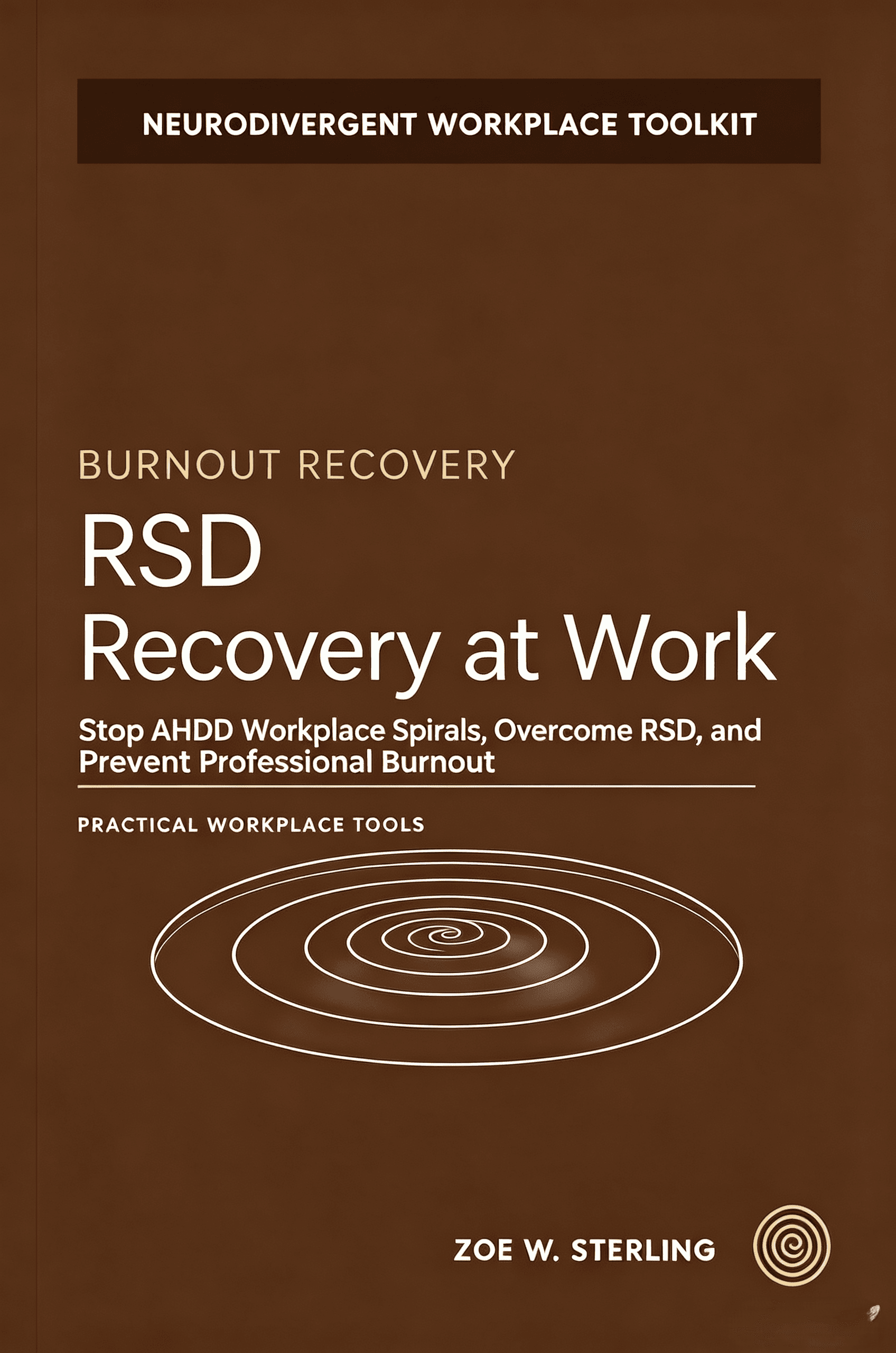
RSD Recovery at Work
A comprehensive field guide for neurodivergent adults navigating the workplace. Based on Zoe Sterling's 10+ years of ADHD workplace research and coaching, this book identifies 8 core strengths and 7 hidden workplace patterns.
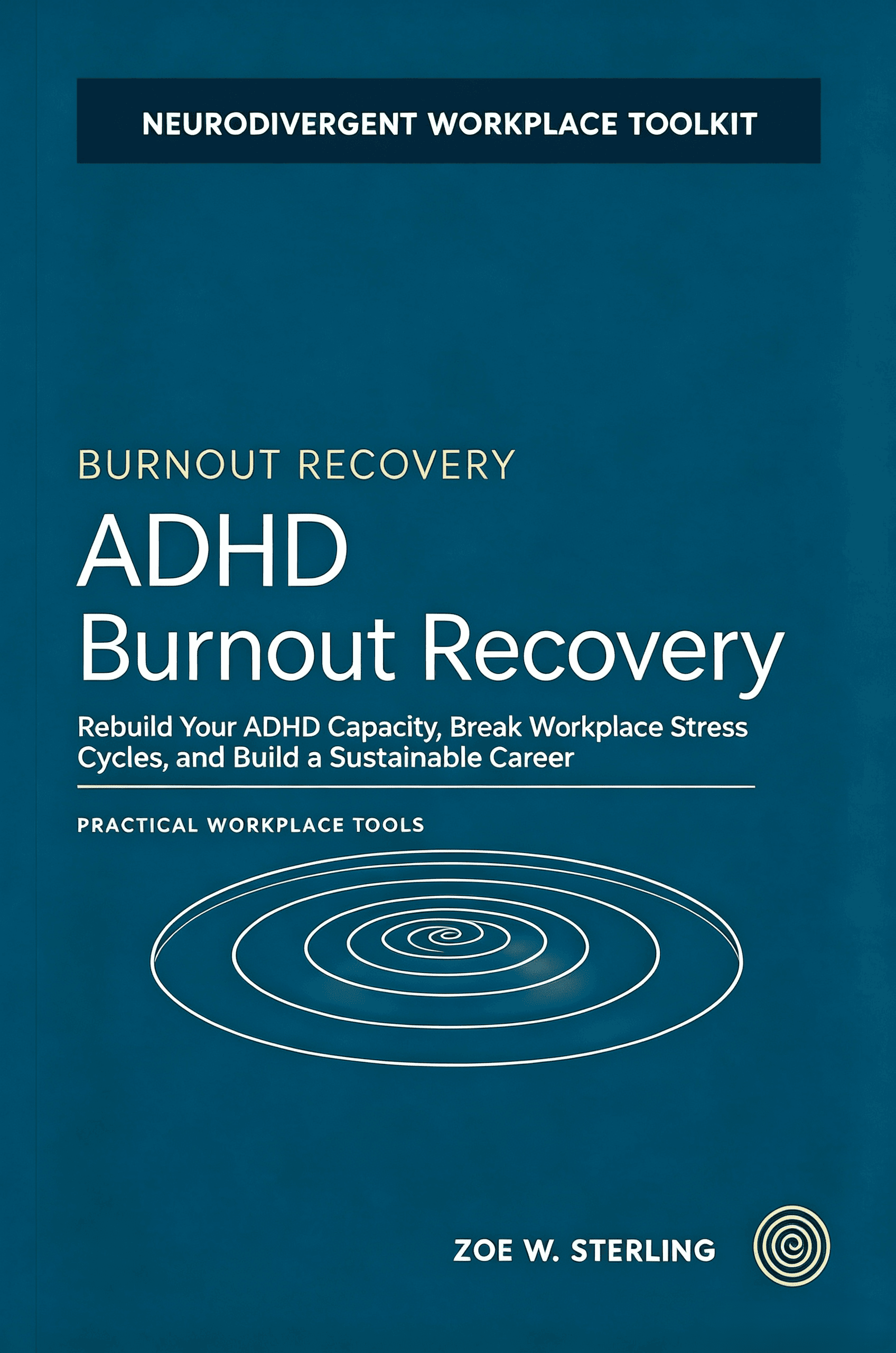
ADHD Burnout Recovery
ADHD burnout is different from typical burnout. Rooted in overstimulation, executive dysfunction, and the gap between natural strengths and workplace demands, it requires a specialized recovery approach.