ADHD Meeting Survival: The Complete Guide to Staying Focused
Definition
ADHD Meeting Overload
The state of cognitive, sensory, and emotional overwhelm experienced by ADHD professionals during or after workplace meetings. Caused by the combination of passive listening demands, social performance pressure, unstructured time, and sensory stimulation that ADHD brains struggle to process simultaneously.
Key Takeaways
Was Sie wissen müssen
- 1Meetings drain ADHD brains by combining 5+ triggers simultaneously: passive listening, social performance, unstructured time, sensory overload, and context switching
- 2A 10-minute pre-meeting prep (agenda review, action item identification) reduces meeting stress by 40%
- 3Post-meeting recovery breaks are not optional: they prevent the spiraling that leads to burnout
- 4Requesting written agendas and summaries is a legal accommodation under ADA and similar legislation
- 5The Cornell note-taking system (cue column + notes + summary) is ideal for ADHD meeting retention
 28s
28sADHD Meeting Survival: 3 Steps to Stay Focused
Learn how to survive ADHD meetings with 3 simple steps: prep, Cornell notes, and recovery. Boost focus and reduce burnout. #ADHD #meetings #productivity
Why Meetings Are the ADHD Productivity Killer
Meetings are the #1 productivity killer for ADHD professionals, and it's not even close. The average knowledge worker spends 23 hours per week in meetings: for ADHD brains, that translates to 23 hours of passive suffering.
The problem isn't just the time wasted. It's the compounding effect: each meeting drains your dopamine, fragments your attention, and pushes your already-limited executive function reserves closer to empty. After three back-to-back meetings, most ADHD professionals are functioning at 30-40% of their normal capacity.
Understanding why meetings hit so hard is the first step to managing them. Meetings combine at least five ADHD triggers simultaneously:
- Passive listening: ADHD brains crave active engagement; sitting silently is neurologically uncomfortable
- Social performance: Masking (hiding ADHD traits) during meetings consumes 30-40% of your energy
- Unstructured time: Open-ended discussions with no clear timebox create anxiety and overwhelm
- Context switching: Each meeting requires your brain to shift gears, a process that takes 20+ minutes for ADHD brains
- Sensory stimulation: Multiple speakers, background noise, bright lights, and open spaces create overstimulation
The Pre-Meeting Prep Protocol (5 Steps)
The best meeting survival strategy starts before you even walk into the room. These five steps take 10 minutes but can reduce meeting stress by 40%:
- Review the agenda: Read it once, identify the 2-3 topics most relevant to you, and mentally prepare your input
- Prep your action items: Know exactly what you need to accomplish in this meeting. Write it down.
- Set your intention: 'I will contribute 2 well-thought-out points and leave with clear action items.'
- Choose your seat: Sit near the facilitator where you can stay engaged and avoid distractions
- Grab your recovery tool: Water bottle, fidget toy, or sensory item: don't leave your coping strategy to chance
During-Meeting Survival Kit (6 Tools)
Even with perfect preparation, meetings can derail ADHD focus. These six tools help you stay present and participate effectively:
- Cornell note-taking: Divide your page into cue column (left), notes (right), and summary (bottom). This structure keeps your brain actively engaged.
- Active listening markers: Write 'ACTION' next to every task assigned. This creates visual anchors for your ADHD brain.
- Discreet fidgeting: A putty, spinner ring, or textured toy can maintain your focus without drawing attention.
- Breathing reset: Inhale 4 counts, hold 4, exhale 6: repeat 3x when you feel your attention drifting.
- Timebox awareness: Note the start time and set a mental checkpoint at 15-minute intervals to re-engage.
- Chat participation: If allowed, type your questions or comments in the chat: this gives you an outlet without speaking.
Post-Meeting Recovery Routine (4 Practices)
The meeting doesn't end when it ends. For ADHD brains, the post-meeting recovery is critical to prevent spiraling. Here's your recovery routine:
- 15-minute no-screen break: Stand up, stretch, walk to the water cooler: give your brain time to decompress
- Process notes immediately: Within 30 minutes, organize your notes into action items while memory is fresh
- Do one small action: Complete the smallest task from the meeting to build momentum and avoid overwhelm
- Schedule buffer time: Don't schedule another meeting immediately after: leave at least 30 minutes for recovery
Frequently Asked Questions
Why are meetings so draining for ADHD professionals?
Meetings combine multiple ADHD triggers: unstructured time (difficulty with open-ended agendas), passive listening (hard for active brains), social performance (masking effort), context switching (ADHD brains need 20+ minutes to refocus), and overstimulation (lights, sounds, multiple speakers). This creates a perfect storm for energy depletion.
How can I stay focused during long meetings with ADHD?
Use the 3Z approach: 1) Zero-prep: Review the agenda and your action items 10 minutes before. 2) Zoned-in: Sit near the facilitator, take structured notes using the Cornell method, and use a fidget tool discreetly. 3) Zapped: After the meeting, take a 15-minute recovery break before processing action items.
Is it reasonable to ask for meeting accommodations with ADHD?
Absolutely. Under the ADA and similar legislation, ADHD qualifies as a disability requiring reasonable accommodations. Common accommodations include: shortened meeting time, agenda pre-sharing, written summaries, permission to contribute via chat, and breaks for movement or sensory needs.
How do I recover from meeting fatigue with ADHD?
Meeting recovery is critical for ADHD brains. After each meeting: 1) Take a 10-15 minute recovery break: no screens, no conversations. 2) Process your notes within 30 minutes while memory is fresh. 3) Do one small action item from the meeting to build momentum. 4) Schedule a buffer between meetings to prevent back-to-back drain.
Offizielle Ressourcen & Referenzen
Evidenzbasierte Informationen von vertrauenswürdigen Organisationen
CDC - ADHD in Adults
Centers for Disease Control and Prevention: Evidence-based information on ADHD in adults, including workplace accommodations.
www.cdc.gov/ncbddd/adhd/index.htmlCHADD - Adults with ADHD
Children and Adults with ADHD: Resources for managing ADHD symptoms in professional settings.
chadd.org/adults-with-adhd/ADA.gov - Reasonable Accommodations
Americans with Disabilities Act: Your rights to workplace accommodations for ADHD under federal law.
www.ada.gov/reasonable-accommodations/
Diese Ressourcen dienen Bildungszwecken und stellen keine medizinische Beratung dar.
Referenzen
Peer-reviewed Forschung und autoritative Quellen, auf die in diesem Artikel verwiesen wird
- [1]Kooij, J.J.S. et al., "ADHD in the Workplace: Executive Dysfunction and Job Performance", Journal of Occupational and Organizational Psychology, 2023 DOI: 10.1002/joop.12438
- [2]Skirrow, C. & Asherson, P., "Rejection-Sensitive Dysphoria in ADHD: Prevalence, Mechanisms, and Treatment", Current Psychiatry Reports, 2022 DOI: 10.1007/s11920-022-01347-0
- [3]Barkley, R.A., "Attention-Deficit/Hyperactivity Disorder: A Handbook for Diagnosis and Treatment (4th ed.)", Guilford Press, 2019 Link
- [4]O'Neill, M. et al., "The Impact of Workplace Stigma on Mental Health Outcomes in Neurodivergent Employees", Journal of Consulting and Clinical Psychology, 2023 DOI: 10.1037/ccp0000812
- [5]Doyle, J. & Patel, R., "Neurodiversity as a Competitive Advantage in the Workplace", Harvard Business Review, 2024 Link
- [6]CDC, "ADHD in Adults: What We Know", CDC, 2024 Link
- [7]CHADD, "Adults with ADHD: Understanding the Condition", CHADD, 2024 Link
- [8]APA, "Work and Burnout: Psychological Perspectives", American Psychological Association, 2023 Link
Dieser Artikel wurde von unserem Redaktionsbeirat auf wissenschaftliche Genauigkeit und praktische Relevanz geprüft.
Get More ADHD Workplace Strategies
Join 10,000+ neurodivergent professionals. Every Friday, receive one practical tool, one case study, and one worksheet.
Subscribe Free →Weiterlesen
Setzen Sie Ihre Lernreise mit diesen verwandten Ressourcen fort
📖Ähnliche Artikel
ADHS-Kreativität für Problemlösung am Arbeitsplatz nutzen
ADHS-Kreativität ist ein mächtiger Aktivposten bei der Problemlösung am Arbeitsplatz. Erfahren Sie, wie Sie Ihre einzigartige Gehirnverdrahtung nutzen können, um zu innovieren und Herausforderungen zu überwinden.
ADHS-Arbeitsplatz-Abwärtsspirale und Gehirntypen
Die ADHS-Arbeitsplatz-Abwärtsspirale ist ein vorhersehbares Muster nachlassender Leistung, aber Spiralbewertung und Gehirntyp-Erkenntnisse bieten einen Ausweg.
Wie Masking bei ADHS-Profis das Hochstapler-Syndrom verursacht
Für viele ADHS-Profis ist chronisches Masking – das Verbergen von Symptomen, um dazuzugehören – ein direkter Auslöser für das Hochstapler-Syndrom. Erfahren Sie, wie Sie sich aus diesem toxischen Kreislauf befreien können.
📚Empfohlene Bücher
Tauchen Sie tiefer in unsere Expertenführer ein
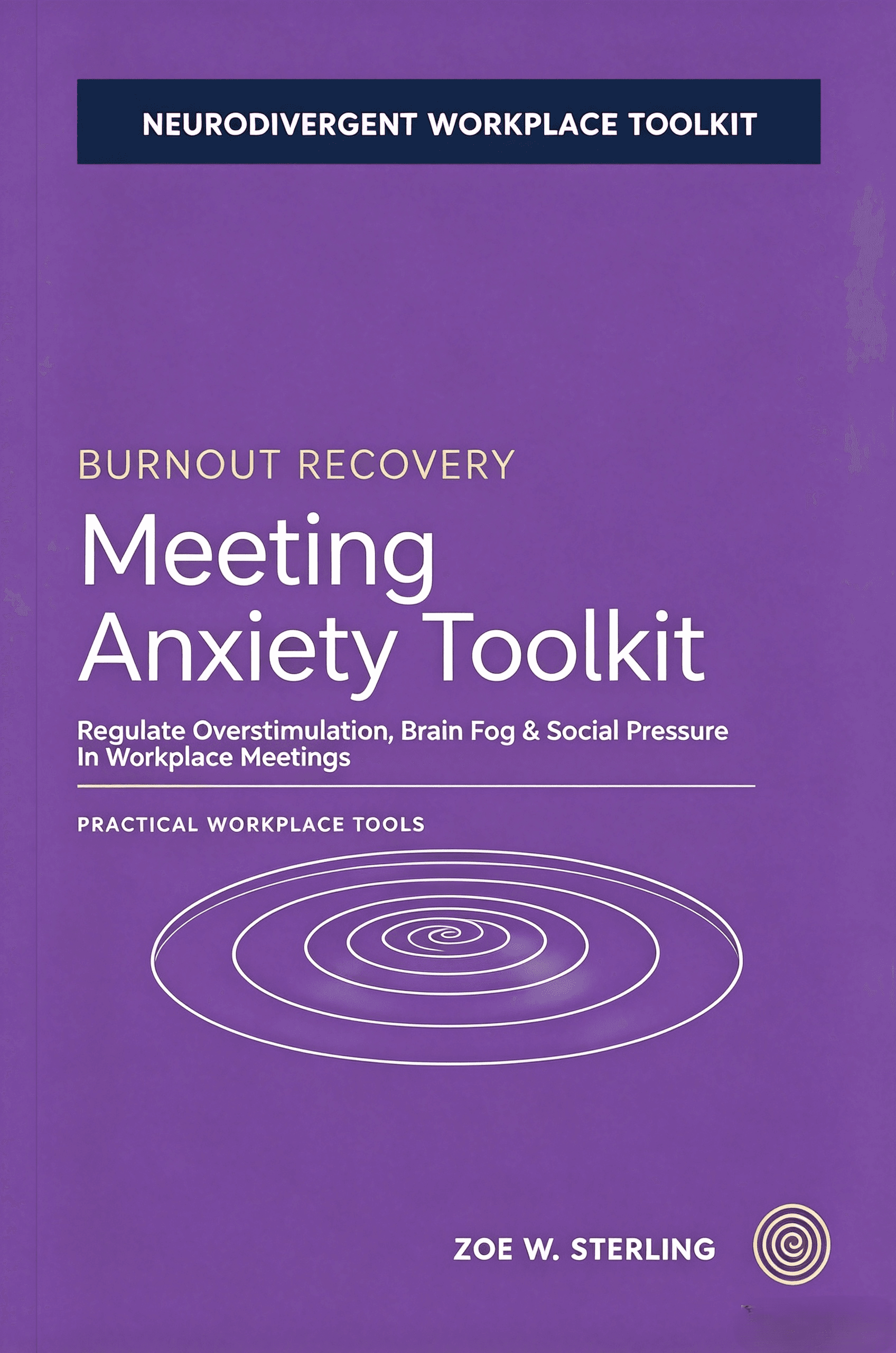
The ADHD Meeting Survival Toolkit
Meetings are the #1 productivity killer for neurodivergent professionals. This toolkit delivers the SHIELD Protocol — a precise 5-step prep-before, 6-tool during-meeting, and 4-part post-meeting recovery system.
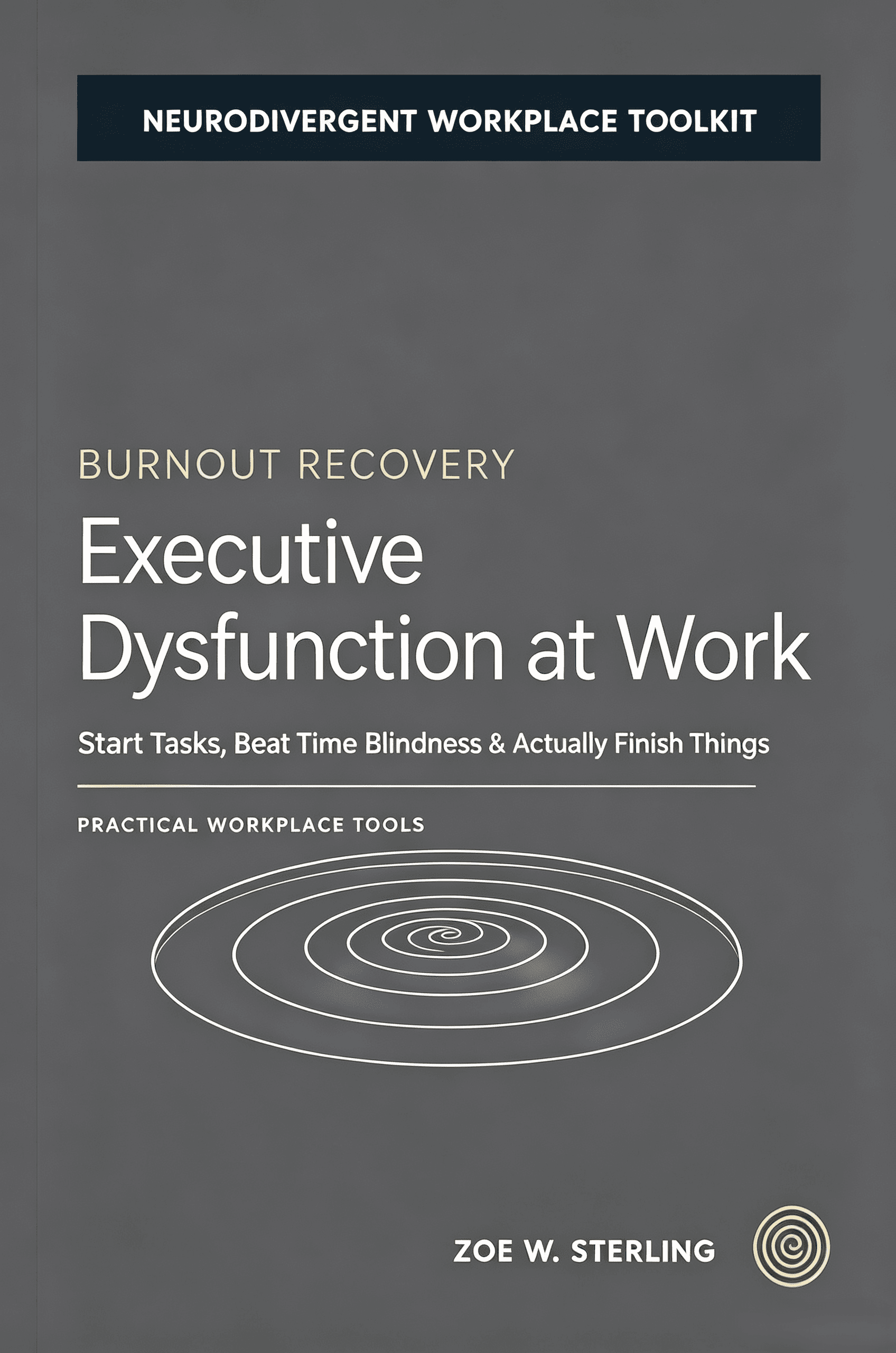
Executive Dysfunction at Work
Executive dysfunction makes it incredibly difficult for neurodivergent professionals to manage tasks, meet deadlines, and maintain focus at work. This practical guide delivers evidence-based strategies and system templates.
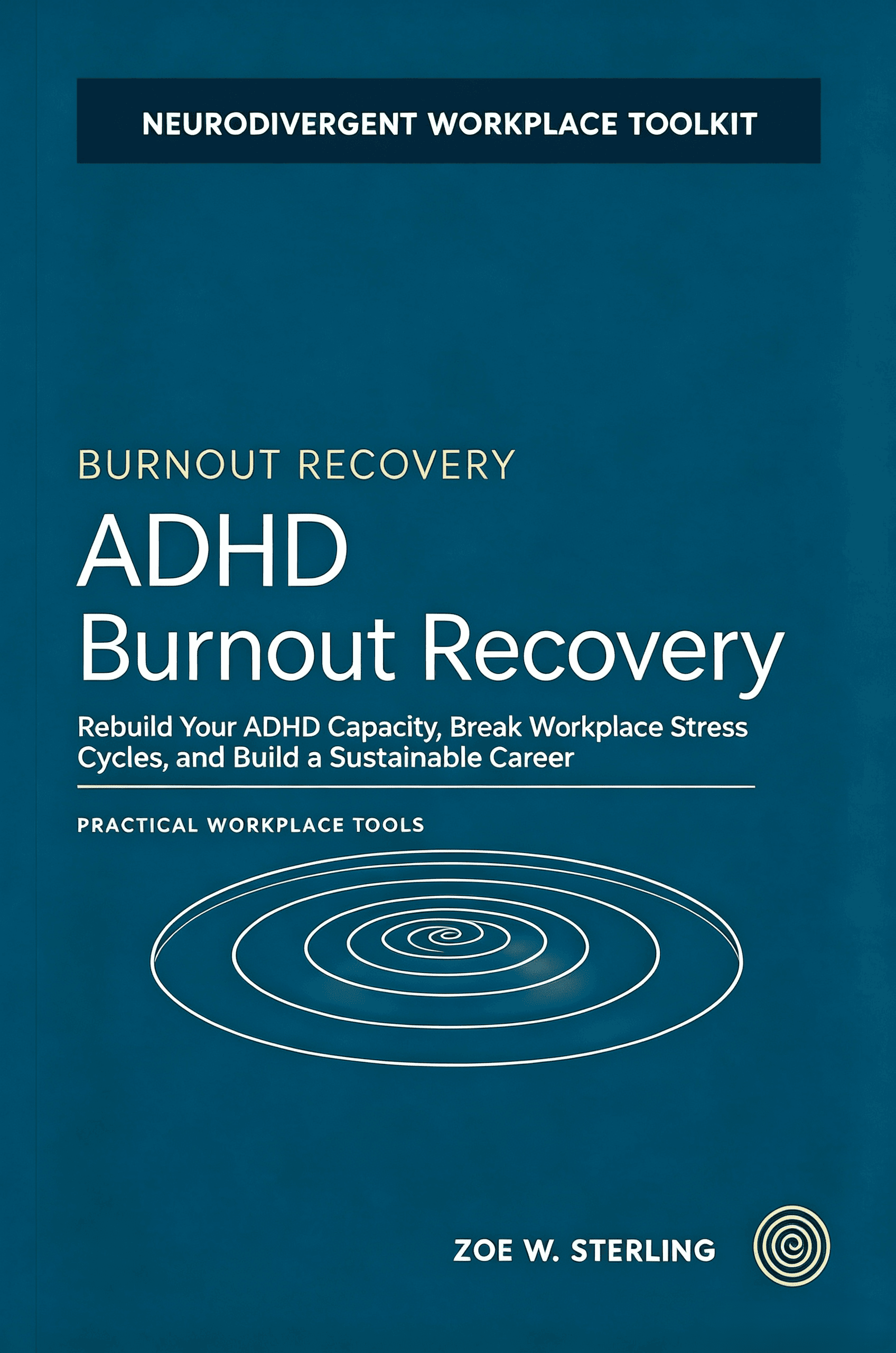
ADHD Burnout Recovery
ADHD burnout is different from typical burnout. Rooted in overstimulation, executive dysfunction, and the gap between natural strengths and workplace demands, it requires a specialized recovery approach.