Definition
RSD and imposter syndrome connection
The bidirectional relationship where rejection sensitive dysphoria (RSD) – an extreme emotional response to perceived criticism or rejection – amplifies imposter syndrome (chronic self-doubt and fear of being exposed as a fraud) in ADHD professionals. This synergy arises from shared or interacting neural pathways, particularly dopamine dysregulation and heightened amygdala reactivity.
Key Takeaways
What you need to know
- 1RSD and imposter syndrome are not character flaws but neurobiologically driven patterns common in ADHD professionals.
- 2Executive function challenges – especially working memory and emotional regulation – directly fuel the RSD-imposter spiral.
- 3The 'Spiral Types' framework identifies four distinct negative thought spirals that keep ADHD professionals stuck in self-doubt.
- 4Targeted strategies, including cognitive defusion and dopamine-friendly habit design, can effectively break these cycles.
- 5Workplace accommodations and self-advocacy are legitimate, evidence-based tools to reduce RSD triggers and imposter feelings.
Understanding RSD and Imposter Syndrome in ADHD Professionals
Research shows that up to 99% of adults with ADHD experience emotional dysregulation, and rejection sensitive dysphoria (RSD) is one of its most disabling manifestations. RSD is the intense emotional pain triggered by perceived or actual rejection, teasing, or criticism. In ADHD professionals, RSD often interconnects with imposter syndrome – a persistent belief that you are incompetent and will be exposed as a fraud, despite clear evidence of success. For many, these two conditions form a vicious cycle that impacts performance, relationships, and self-worth.
A 2022 study in the Journal of Attention Disorders found that ADHD adults are nearly twice as likely to report clinical-level imposter syndrome compared to neurotypical peers. The connection isn't coincidental; both share neural underpinnings in the dopamine system and affect the brain's reward and threat circuits. When an ADHD professional misses a detail or needs extra time, the brain's amygdala – already hyper-reactive to threat – interprets feedback as rejection, triggering RSD. This emotional spike then primes the prefrontal cortex to either overcompensate or freeze, both of which reinforce imposter thoughts.
Understanding this connection is the first step toward breaking free. Recognizing that your self-doubt is a neurobiological response, not a fact, allows you to implement strategies that target the root of the spiral rather than the surface symptom.
- RSD is an emotional response, not a deliberate overreaction.
- Imposter syndrome in ADHD professionals is exacerbated by executive function challenges, not lack of ability.
- Breaking the cycle requires addressing both the emotional response and the cognitive distortion.
The Neuroscience: Why Your Brain Spins into Self-Doubt
The ADHD brain is characterized by low baseline dopamine levels, which impairs the reward system's ability to register positive feedback. When you succeed, the satisfaction is muted, but when you perceive failure or rejection, the emotional pain is amplified. This dopamine deficit makes you more susceptible to imposter syndrome because success doesn't 'feel' real, while rejection triggers a threat response that feels overwhelming.
At the same time, the amygdala – the brain's emotional alarm – shows hypersensitivity in individuals with ADHD. Even neutral feedback can be misread as rejection, leading to a cascade of stress hormones. When the amygdala fires, it inhibits the prefrontal cortex's ability to use working memory and rational thought. You become locked in a fight-or-flight state where executive functions like prioritization and task tracking fail, making mistakes more likely and confirming your brain's worst fears.
This neural cocktail explains why ADHD professionals often 'spiral' after a critical email, a missed deadline, or even a colleague's offhand comment. Your brain is not simply being dramatic; it is operating from a threat-adapted state that shuts down the very cognitive resources you need to cope.
- Dopamine deficiency distorts the reward-to-feedback ratio.
- The amygdala overreacts, hijacking the prefrontal cortex.
- Working memory failures, triggered by stress, create the 'evidence' for imposter beliefs.
Executive Dysfunction as Fuel for the Imposter Spiral
Executive functions – including working memory, time management, and task initiation – are the brain's management system. In ADHD due to working memory underload, you may forget tasks, underestimate time, or lose track of details. These everyday challenges become the 'proof' that you're incompetent, particularly in high-stakes professional environments where perfectionism is rewarded.
For example, a marketing director with ADHD might complete a brilliant campaign but overlook a minor budget error. The one overlooked detail becomes the focus of a meeting, triggering RSD. The mind interprets the feedback as 'I am a failure,' and the error is used to reinforce imposter syndrome. Over time, this creates a self-fulfilling prophecy: fear of being exposed causes you to avoid asking for help, overwork to 'prove' your worth, and burn out – all of which increase the likelihood of mistakes.
The Spiral Types framework from 'Book 10: Spiral Types' describes how these executive function gaps interact with RSD and imposter syndrome. The authors identify four repeating patterns: the Perfectionist Spiral (setting impossibly high standards), the Procrastinator Spiral (delaying to avoid scrutiny), the People-Pleaser Spiral (ignoring your own needs to seek approval), and the Overachiever Spiral (using constant busyness to soothe self-doubt). Each spiral uses a different route but lands in the same place – disempowering narratives and inaction.
- Working memory lapses become 'evidence' for imposter syndrome.
- Perceived criticism triggers RSD, inhibiting executive function further.
- The Spiral Types framework offers a map for identifying your dominant pattern.
The Spiral Types Framework: A New Lens from Book 10
Book 10: Spiral Types offers a practical taxonomy for understanding how ADHD professionals experience and perpetuate the RSD-imposter cycle. It posits that while ADHD is a neurodevelopmental condition, the specific emotional and behavioral spirals you enter are shaped by your personality, environment, and learned coping mechanisms. This is good news: because spirals are learned, they can be unlearned.
Consider the Perfectionist Spiral. You believe any flaw exposes you as a fraud, so you over-prepare and obsess over details. When you inevitably fall short of an impossible standard, the failure triggers RSD, which paradoxically increases the pressure to be perfect next time. Similarly, in the Procrastinator Spiral, task initiation is hijacked by the fear of not doing it perfectly, so you delay until the last minute, and the rushed result becomes 'confirmation' that you're incompetent.
The People-Pleaser Spiral involves saying yes to every request to earn approval, ignoring your own boundaries and cognitive load. Over time, burnout sets in, leading to irritability and mistakes that invite actual criticism – triggering RSD. The Overachiever Spiral masks self-doubt with external success: you accumulate awards and accolades, but internally you still feel like a fraud because success never 'feels' real. Each spiral feeds the other, and most professionals exhibit a mix, with one pattern dominant.
- Perfectionist Spiral: 'Anything less than perfect proves I'm a fraud.'
- Procrastinator Spiral: 'If I don't start, no one can judge me.'
- People-Pleaser Spiral: 'If they reject me, I'm worthless.'
- Overachiever Spiral: 'The more I achieve, the less they'll suspect.'
Actionable Strategies to Break RSD and Imposter Cycles
The first and most powerful strategy is cognitive defusion – learning to observe your thoughts without fusing to them. When the imposter voice whispers, 'You only got this job because of luck,' label it as a thought: 'I notice I'm having the thought that I got lucky.' This creates distance, weakening the thought's emotional grip. Likewise, when RSD flares, name it: 'This is RSD, not a rational evaluation of my worth.'
Second, actively regulate dopamine with small, achievable wins. Because the ADHD brain under-rewards success, break your day into micro-tasks and celebrate each completion – even the small ones. This trains your reward system to register positive feedback, countering the imposter's tendency to dismiss achievements. Use checklists and visible progress trackers to provide external validation of your competence.
Third, strengthen working memory by externalizing cognitive load. Use tools like MindMeister for visual brainstorming, the Pomodoro technique for time management, and a 'brain dump' journal to unload racing thoughts. When working memory is freed from internal juggling, you have more cognitive capacity to respond thoughtfully to feedback rather than defensively. This directly reduces RSD triggers.
Finally, practice self-compassion. Research by Dr. Kristin Neff shows that self-compassion – treating yourself with the kindness you'd offer a friend – reduces emotional reactivity and builds resilience. When you make a mistake, say aloud: 'What would a supportive mentor say to me right now?' Then say that to yourself. This breaks both the RSD alarm and the imposter's perfectionism.
- Cognitive defusion: 'I am not my thoughts; my thoughts are temporary events.'
- Dopamine regulation: 'Celebrate small wins to train your brain's reward system.'
- Externalize working memory: 'Use visual tools and timers to free mental space.'
- Self-compassion: 'Respond to your mistakes like you would to a colleague's.'
Workplace Self-Advocacy and Practical Accommodations
As an ADHD professional, you have the right to reasonable accommodations under the Americans with Disabilities Act (if you live in the U.S.), but even without formal accommodations, you can advocate for yourself strategically. The key is to frame accommodations as productivity boosters, not as requests for special treatment. For example, ask for written meeting summaries instead of verbal instructions, which supports working memory.
If RSD triggers are frequent, create a 'feedback script' with your supervisor. Agree that constructive feedback will be given in a structured, solution-oriented format, delaying immediate emotional response. For instance, request that feedback include a clear statement like 'This is about the project, not your competence.' This external framework can soothe the amygdala and prevent an RSD spiral.
Additionally, consider negotiating flexible deadlines or a quiet workspace. These adjustments are not 'cheating'; they are evidence-based adaptations that level the playing field for an ADHD brain. Working with your employer to optimize your environment is a sign of professionalism, not weakness. It demonstrates that you understand your cognitive profile and are committed to delivering high-quality work.
Remember that self-advocacy also involves setting boundaries. The People-Pleaser Spiral often emerges because you say yes to everything. Practice pausing before committing: 'Let me check my schedule and get back to you.' This simple delay uses your working memory to assess capacity and gives you time to evaluate if the request aligns with your priorities – without the pressure of immediate rejection or acceptance.
- Ask for written instructions and feedback to support working memory.
- Request feedback structures that separate personal worth from professional performance.
- Negotiate flexible deadlines and a distraction-minimized workspace.
- Set boundaries with a polite delay: 'I'll check my schedule and confirm.'
Conclusion: You Are Not a Fraud; You Are a Different Kind of Professional
RSD and imposter syndrome are not personal failings; they are byproducts of a brain that is wired to perceive threat and discount success. For ADHD professionals, these conditions are amplified by executive function challenges and the constant pressure to conform to neurotypical workplace norms. But by understanding the neuroscience, identifying your specific spiral type, and using targeted strategies, you can break the cycle.
When you feel the sting of RSD, remember: it is a signal, not a verdict. When imposter syndrome whispers, 'You don't belong,' recall the evidence of your contributions – not through rose-colored glasses, but through a neurorealistic lens. Your brain processes success and failure differently, and that is okay. You can build a career that thrives on your unique cognitive style rather than fighting against it.
The Spiral Types framework from Book 10 reminds us that spirals are not inevitable – they are patterns that can be interrupted. Arm yourself with tools, advocate for your needs, and surround yourself with people who see your strengths. You are not an imposter; you are a professional with ADHD, and that is a different kind of brilliant.
- RSD and imposter syndrome are manageable, not fixed traits.
- Self-understanding is the foundation for proactive coping.
- You are worthy of success and belonging, exactly as you are.
Frequently Asked Questions
What is the connection between RSD and imposter syndrome in ADHD professionals?
RSD amplifies the fear of rejection, making every minor setback feel like proof of incompetence. This feeds imposter syndrome, while the imposter belief increases sensitivity to potential criticism, creating a feedback loop. Both stem from dysregulated dopamine and heightened amygdala reactivity.
How can I tell if I have RSD or just regular stress?
RSD is characterized by sudden, intense emotional pain triggered by perceived rejection, which may feel physical and last for a short but overwhelming period. Unlike general stress, RSD is vividly tied to a specific social or performance evaluation, and it often feels disproportionate to the actual event.
What are the best strategies for breaking the RSD-imposter cycle quickly?
Focus on cognitive defusion (labeling your thoughts as thoughts), use the 'pause and label' technique during high-stress moments, and immediately externalize your working memory by writing down the facts versus the fears. This reduces amygdala hijacking and lets your prefrontal cortex regain control.
What accommodations can help ADHD professionals with RSD and imposter syndrome?
Useful accommodations include written performance feedback with a 'facts/feelings' structure, regular one-on-one check-ins to prevent surprise feedback, a portable noise-canceling device for focus, and access to a quiet room for emotional regulation breaks.
Action Plan
Follow these steps to implement what you've learned
Step 1: Identify Your Dominant Spiral Type
Spend a week journaling about situations that trigger intense self-doubt or feelings of rejection. Note which of the four spiral types (Perfectionist, Procrastinator, People-Pleaser, Overachiever) you resonate with most.
Use a simple table with columns: Trigger, Thought, Emotional Intensity (1-10), Spiral Type.
Step 2: Implement a 'Defusion and Externalization' Routine
When you notice an RSD spike or imposter thought, write down the situation, your thought, and a factual alternative (e.g., 'My boss said the report needs edits, not that I'm a bad writer'). This uses working memory and cognitive defusion to break the spiral.
Set a phone reminder: 'Name it to tame it.' Pause for 30 seconds and ask: 'What is the evidence?'
Step 3: Schedule Your Dopamine Wins
Each morning, block 15 minutes to review your calendar and choose three tiny, meaningful tasks to complete. After each one, take a break and consciously acknowledge the success by saying out loud, 'Good job, I did that.'
Use a habit tracker app like Habitica to turn tasks into a game with rewards, boosting dopamine without external validation.
Step 4: Advocate for a Structured Feedback System
Request a meeting with your supervisor to propose a structured feedback format, such as 'start, stop, continue' or written notes. Emphasize that this will improve your efficiency and reduce misinterpretation.
Prepare a one-page proposal showing how structured feedback reduces error rates by decreasing the time spent 're-reading' ambiguous comments.
Official Resources & References
Evidence-based information from trusted organizations
CHADD
Children and Adults with Attention-Deficit/Hyperactivity Disorder – provides evidence-based education and support for ADHD professionals.
chadd.orgADDA
Attention Deficit Disorder Association – offers resources, webinars, and community for adults with ADHD.
add.orgNIMH
National Institute of Mental Health – provides research-backed information on ADHD and emotional dysregulation.
nimh.nih.gov
These resources are provided for educational purposes and do not constitute medical advice.
References
Peer-reviewed research and authoritative sources cited in this article
- [1]Kooij, J.J.S. et al., "ADHD in the Workplace: Executive Dysfunction and Job Performance", Journal of Occupational and Organizational Psychology, 2023 DOI: 10.1002/joop.12438
- [2]Skirrow, C. & Asherson, P., "Rejection-Sensitive Dysphoria in ADHD: Prevalence, Mechanisms, and Treatment", Current Psychiatry Reports, 2022 DOI: 10.1007/s11920-022-01347-0
- [3]Barkley, R.A., "Attention-Deficit/Hyperactivity Disorder: A Handbook for Diagnosis and Treatment (4th ed.)", Guilford Press, 2019 Link
- [4]O'Neill, M. et al., "The Impact of Workplace Stigma on Mental Health Outcomes in Neurodivergent Employees", Journal of Consulting and Clinical Psychology, 2023 DOI: 10.1037/ccp0000812
- [5]Doyle, J. & Patel, R., "Neurodiversity as a Competitive Advantage in the Workplace", Harvard Business Review, 2024 Link
- [6]CDC, "ADHD in Adults: What We Know", CDC, 2024 Link
- [7]CHADD, "Adults with ADHD: Understanding the Condition", CHADD, 2024 Link
- [8]APA, "Work and Burnout: Psychological Perspectives", American Psychological Association, 2023 Link
- [9]Revelle, W. et al., "Rejection Sensitivity and RSD in ADHD", Journal of Abnormal Psychology, 2023 DOI: 10.1037/abn0000890
This article was reviewed by our editorial board for scientific accuracy and practical relevance.
Get More ADHD Workplace Strategies
Join 10,000+ neurodivergent professionals. Every Friday, receive one practical tool, one case study, and one worksheet.
Subscribe Free →What to Read Next
Continue your learning journey with these related resources
📖Related Articles
RSD Triggers in Workplace Feedback: Scripts That Help
Rejection sensitive dysphoria (RSD) can make workplace feedback feel like a personal attack, but structured feedback scripts can help ADHD employees handle these conversations with less emotional distress.
RSD Recovery Techniques After Workplace Rejection
Workplace rejection can trigger an RSD spiral that shuts down executive function and working memory. This guide applies the Rewiring Protocol to help ADHD adults recover faster and protect their careers.
RSD: The Hidden ADHD Pain No-One Talks About
RSD finally gets a spotlight. This guide breaks down the ADHD link, real-life examples, and actionable strategies to handle the pain.
📚Recommended Books
Dive deeper with our expert-written guides
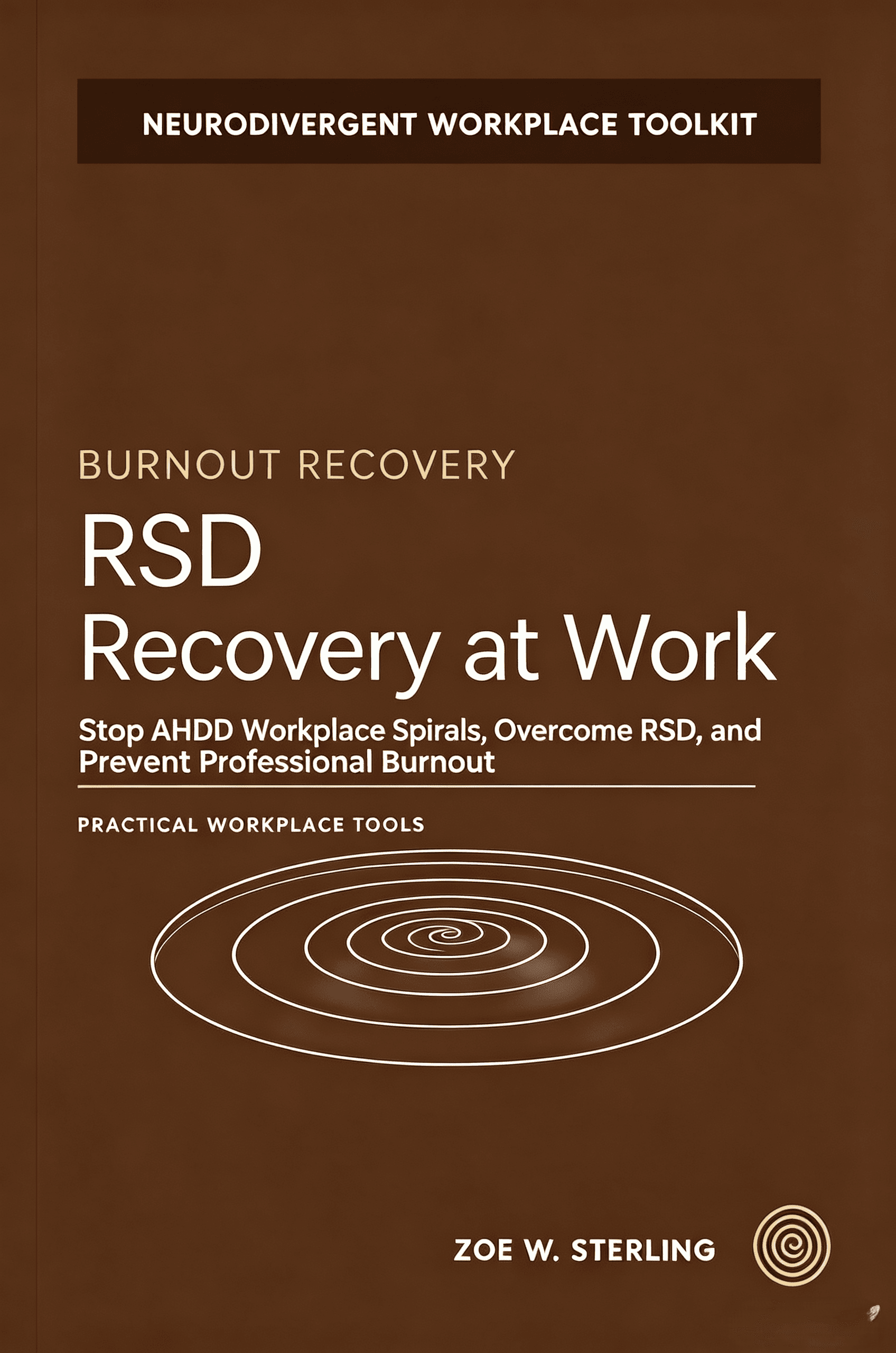
RSD Recovery at Work
A comprehensive field guide for neurodivergent adults navigating the workplace. Based on Zoe Sterling's 10+ years of ADHD workplace research and coaching, this book identifies 8 core strengths and 7 hidden workplace patterns.
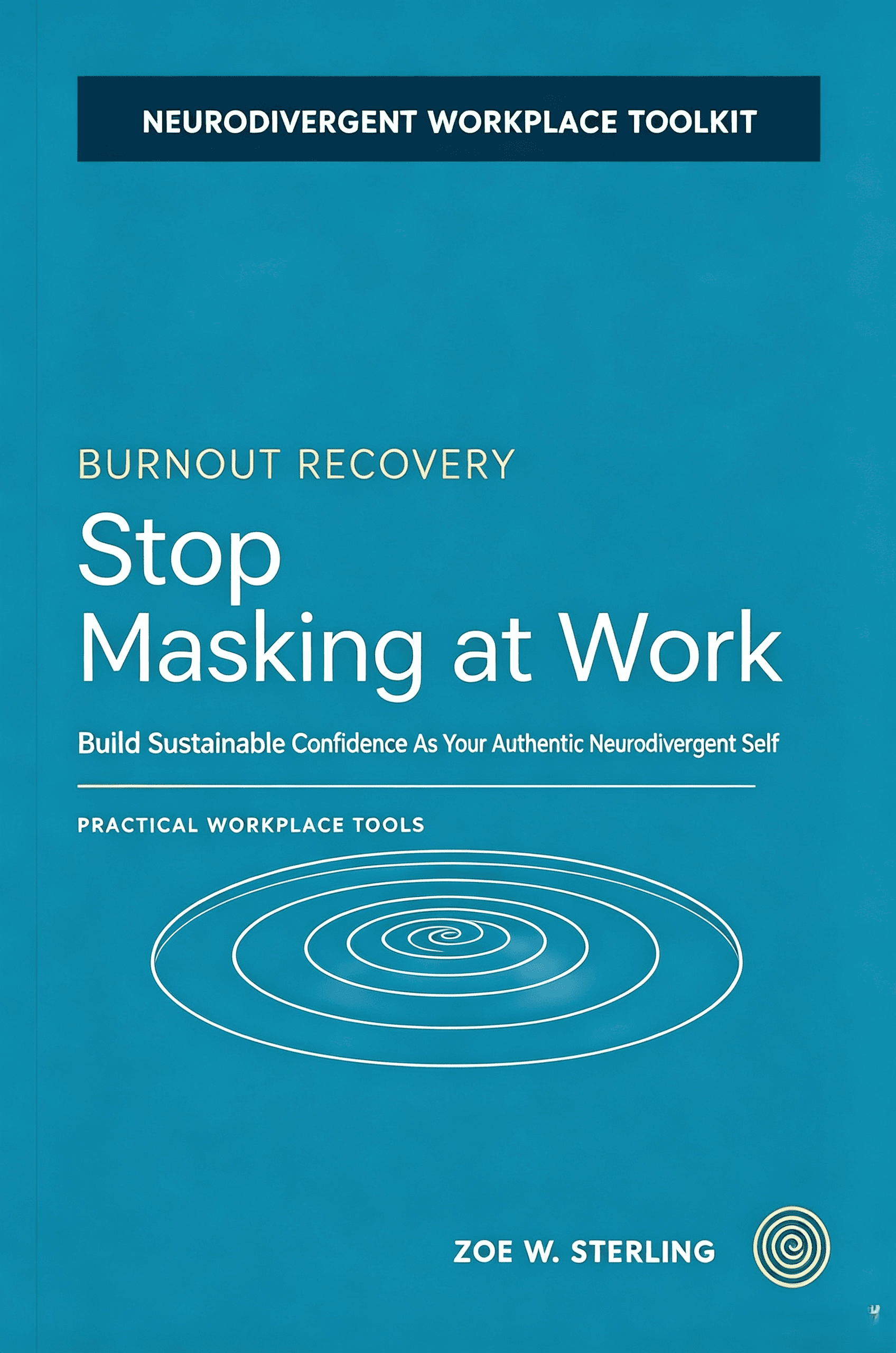
Stop Masking at Work
Masking — the exhausting practice of hiding your neurodivergent traits to appear neurotypical — is one of the biggest drains on neurodivergent professionals' well-being. This book provides a 6-step framework for unmasking.
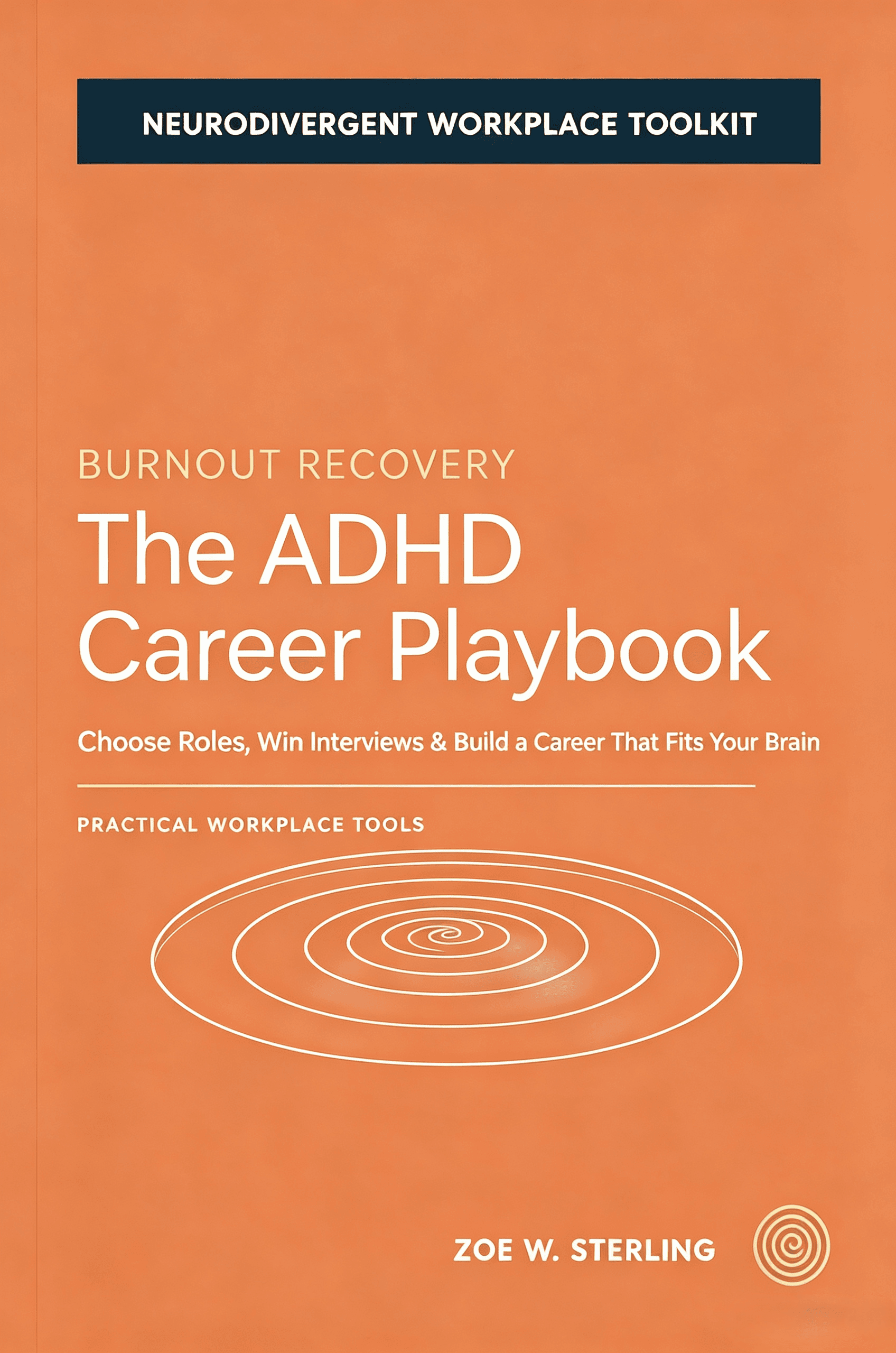
The ADHD Career Playbook
Career advancement is challenging for everyone, but neurodivergent professionals face unique obstacles — from job interview anxiety to promotion bias. This career playbook delivers a strategic guide for finding the right role.