ADHD Social Anxiety at Work: Building Confidence
Definition
ADHD social anxiety at work
ADHD social anxiety at work is a condition where ADHD symptoms overlap with social anxiety disorder (SAD), causing intense fear of judgment, rejection, or embarrassment in workplace interactions. It is compounded by ADHD-related executive function challenges, emotional dysregulation, and rejection sensitivity.
Key Takeaways
What you need to know
- 1ADHD and social anxiety often co-occur, amplifying workplace stress and impairing performance.
- 2Understanding dopamine, executive function, and RSD helps deconstruct the cycle of anxiety.
- 3The Belonging Blueprint provides a practical framework for self-acceptance and psychological safety.
- 4Implementing targeted strategies like preparation, reframing, and self-advocacy can reduce anxiety.
- 5Confidence builds through incremental exposure and celebrating progress.
 42s
42sADHD Social Anxiety at Work? Try This Blueprint
Struggling with ADHD social anxiety at work? Discover the Belonging Blueprint—practical steps to build confidence and reduce workplace stress. #ADHD #socialanxiety #workplace
Understanding ADHD Social Anxiety in the Workplace
ADHD social anxiety at work is a recognized and often overwhelming experience. Adults with ADHD are at a significantly higher risk of developing social anxiety disorder: some research suggests that up to 50% of adults with ADHD experience comorbid anxiety, with social anxiety being among the most common. This combination can transform everyday tasks like team meetings, performance reviews, and casual conversations into sources of intense dread.
The overlap is not coincidental. ADHD affects executive functions such as working memory, attention regulation, and impulse control, which are exactly the cognitive skills needed for smooth social interactions. When you’re worried about losing track of a conversation or blurting out an inappropriate comment, the fear of seeming incompetent or unlikable intensifies. Over time, this vigilance can evolve into a self-fulfilling prophecy, where the anticipation of failure hampers performance and confirms your worst fears.
At work, this manifests in avoidant behaviors, silence in meetings, reluctance to request help, and over-apologizing. You might rehearse conversations endlessly, then freeze when it’s your turn to speak. Or you might deflect praise and internalize constructive criticism as proof of your inadequacy. These patterns not only undermine your confidence but also prevent you from forming the authentic connections that make work fulfilling.
The Neurobiology: Executive Function, Dopamine, and RSD
To tackle ADHD social anxiety at work, it’s essential to understand its neurobiological underpinnings. Executive dysfunction is a core ADHD trait, and it directly impacts social performance. Working memory: the ability to hold information in mind while using it: is taxed in interpersonal interactions. If you’re struggling to follow a conversation, remember key points, and formulate a response in real time, your brain’s cognitive load becomes overwhelming. This makes social situations feel like high-stakes mental acrobatics, and the fear of dropping the ball is entirely rational.
Dopamine, the brain’s reward and motivation molecule, is also implicated. In ADHD, dopamine signaling is dysregulated, leading to a constant search for novelty and instant gratification. In a work environment, this might translate into a craving for approval and positive feedback. When that feedback is delayed or ambiguous, as it often is in professional settings, your brain’s reward circuitry may trigger anxiety. You might become hyper-aware of any hint of rejection, interpreting a non-response to your email or a colleague’s neutral facial expression as a personal affront.
Rejection Sensitive Dysphoria, or RSD, is a lesser-known but very real ADHD phenomenon. It describes an intense, emotionally painful response to perceived or actual rejection, criticism, or failure. RSD can amplify any awkward interaction into a complete catastrophe, flooding your body with stress hormones and erasing rational thought. In the workplace, RSD might make you avoid taking on new projects, volunteering for presentations, or even participating in brainstorming sessions: because the risk of rejection feels too high.
The Belonging Blueprint: Creating Psychological Safety for Yourself
In the *Belonging Blueprint*, a practical framework for building authentic connections, the first pillar is creating psychological safety for yourself. This means giving yourself permission to be imperfect, vulnerable, and human. For professionals with ADHD, this is pivotal. Instead of masking your symptoms, you can acknowledge that your brain works differently and that you have unique strengths: like creativity, out-of-the-box thinking, and hyperfocus: that contribute value to your team.
The Blueprint emphasizes self-knowledge as the foundation. Start by mapping your personal 'belonging blueprint': what do you need from your work environment to feel safe and included? Is it explicit expectations, scheduled check-ins, or the freedom to express your ideas in writing before speaking? By clarifying your boundaries and needs, you can advocate for them in a non-defensive, professional way. This powerful act of self-acceptance reduces the internal pressure to constantly prove yourself and invites others to meet you halfway.
Another key concept from the Blueprint is 'reducing the stakes' in interactions. When social anxiety makes every conversation feel like a final exam, visualize the encounter as a mutual information exchange rather than a performance. Remind yourself that others are often too focused on their own concerns to scrutinize your every word. Shifting the narrative from 'I have to be flawless' to 'I bring a unique perspective' creates the psychological room to make mistakes and learn.
The Blueprint also encourages intentional community-building. Rather than waiting for connections to happen spontaneously, schedule one-on-one coffee chats or join an interest-based group at work. These low-pressure settings allow you to practice social skills and build trust gradually, which over time reduces the amygdala’s threat response and rewires your brain to associate social interactions with safety.
Practical Strategies to Handle Workplace Social Anxiety
Armed with neurobiological insight and the Belonging Blueprint, you can implement concrete strategies to manage ADHD social anxiety at work. One of the most effective is to leverage your strengths while offloading executive function demands. For example, if working memory is a challenge, use a small notebook or a note-taking app during meetings. Jot down key points and your own questions before speaking. This frees mental bandwidth for listening and reduces the fear of forgetting important details.
Dopamine also plays a role in your anxiety management plan. Break tasks into small, rewarding steps. After completing an anxiety-inducing activity, like giving a brief update in a team meeting, give yourself a mini reward: a walk, a favorite snack, or even a five-minute social media break. This creates a positive feedback loop that gradually trains your brain to associate social engagement with pleasure rather than danger.
Another critical strategy is to reframe rejection. RSD magnifies the feeling of rejection, but you can practice cognitive reappraisal. When you interpret a colleague’s silence as disapproval, remind yourself of your own internal bias and seek clarification with a neutral question like, 'I want to make sure I understood your feedback: could you elaborate?' This turns a potential rejection into an opportunity for communication and reduces the emotional sting.
- Use a notepad to capture your thoughts before speaking.
- Schedule brief 'social recovery time' after high-engagement activities.
- Prepare a few go-to phrases to exit conversations gracefully.
- Practice 'naming the feeling' to activate your prefrontal cortex and calm the amygdala.
Building Confidence Through Action and Self-Advocacy
Confidence is not a prerequisite for taking action; it is built through action. With ADHD, inaction often spirals into self-criticism, so it’s crucial to create a plan for gradual exposure. Start with low-stakes interactions: send an email with a suggestion, respond to a colleague’s Slack message, or volunteer to take notes in a meeting. Each small risk, when followed by a positive or neutral outcome, chips away at the belief that you can’t cope.
Self-advocacy is another pillar of confidence. Under the Americans with Disabilities Act (ADA) and similar laws in other countries, you have the right to request reasonable accommodations for ADHD. This could include noise-cancelling headphones, written instructions, or adjusted meeting schedules. By formally requesting these supports, you signal to your brain: and your employer: that your needs are valid. This reduces the fear of being seen as 'incapable' and reinforces that you are a valuable professional navigating a condition, not a burden.
Assertive communication goes hand in hand with self-awareness. Use 'I' statements to express your feelings and needs without blame. For example, 'When I receive feedback, it helps me if we set a time to discuss it, so I can process it fully and come prepared with responses.' This approach respects your executive functioning and gives others a concrete way to support you. Over time, these successful interactions build a reservoir of confidence that makes social anxiety more manageable.
Long-Term Growth: Sustaining Confidence and Belonging
Building confidence is not a one-time fix; it’s an ongoing process of learning and adaptation. As you implement strategies, monitor what works and adjust your plan. Keep a simple journal of social interactions: note what went well, what was challenging, and how you responded to your own anxiety. This practice leverages your strengths in self-reflection and provides data-driven evidence of your growth, counteracting the internal critic.
Sustaining confidence also requires a supportive network. Connect with other professionals with ADHD, either through local meetups or online communities. The *Belonging Blueprint* emphasizes that belonging is a two-way street: when you exchange support rather than dwelling in isolation, you create a mutual safety net. These relationships foster resilience, provide objective feedback, and celebrate your wins, which is especially vital during moments of RSD flare-ups.
Finally, remember that you are not defined by your anxiety. With medication, therapy, and lifestyle changes: all of which you can discuss with healthcare providers: ADHD can be managed effectively. And when it comes to the workplace, your unique brain brings the ability to connect seemingly unrelated dots, solve complex problems, and inspire others with your passion. By equipping yourself with the Belonging Blueprint and making space for your own humanity, you can transform social anxiety from a career-limiting obstacle into a baseline for deeper connection and confidence.
Frequently Asked Questions
How can I reduce ADHD social anxiety at work?
Reducing ADHD social anxiety starts with understanding your neurobiology and using strategies to manage executive function demands. Practical steps include preparing notes for meetings, breaking interactions into small steps, and using rewards to create positive associations. Cognitive reframing and self-advocacy for accommodations also help. With consistent practice, you can rewire your brain to feel safer and more confident.
What is rejection sensitive dysphoria and how does it affect work?
Rejection sensitive dysphoria (RSD) is a common ADHD experience where perceived criticism or rejection triggers intense emotional pain. In the workplace, RSD can make you overly worried about performance reviews, social interactions, and feedback. It can lead to avoidance, overworking, or emotional breakdowns. Recognizing RSD is the first step: then you can use interoceptive awareness, cognitive reframing, and supportive communication to lessen its impact.
Are there specific accommodations for ADHD in the workplace?
Yes, under the ADA in the U.S., reasonable accommodations can include flexible scheduling, written instructions, noise-cancelling headphones, and regular breaks. In other countries, similar legal protections exist. To request accommodations, you usually need to provide documentation from a healthcare provider. These supports reduce executive function burdens and can significantly lower social anxiety.
How do I explain my ADHD to coworkers without feeling stigmatized?
It's up to you what to disclose. You can share only what feels necessary and positive, emphasizing your strengths. For example, you might say, 'I have ADHD, which means I sometimes process information better in writing than in meetings. Could you send me a summary afterward?' Prepare a simple, factual explanation and practice it with a trusted friend or coach. This proactive approach often invites curiosity and support rather than judgment.
Action Plan
Follow these steps to implement what you've learned
Step 1: Map Your Triggers
Identify the specific work situations that spike your social anxiety. Is it phone calls, team meetings, or performance reviews? Write them down and rate their intensity. This self-assessment turns anxiety from a vague cloud into a manageable list.
Use a simple 1-10 scale to track your anxiety levels.
Step 2: Create a Pre-Interaction Routine
Before a challenging social task, use a grounding technique: take three deep breaths, review your talking points, and remind yourself of one past success. This calms the nervous system and engages your prefrontal cortex, improving working memory.
Keep a 'win list' of past positive interactions to review.
Step 3: Request One Reasonable Accommodation
Choose a single reasonable accommodation that would reduce social anxiety in a concrete way. Request it in writing, quoting your company's policy or legal disability accommodations. This act of self-advocacy builds confidence and changes workplace dynamics.
Frame it as a performance enhancer, not a special treatment.
Step 4: Join a Peer Support Group
Seek out a community of adults with ADHD, online or in-person. Sharing experiences with like-minded peers normalizes your struggles and offers practical strategies. It also creates a network of belonging that buffers against workplace rejection.
Look for groups on CHADD, ADDA, or Reddit's r/ADHD.
Official Resources & References
Evidence-based information from trusted organizations
CHADD
Children and Adults with Attention-Deficit/Hyperactivity Disorder (CHADD) is a leading nonprofit providing support, education, and advocacy for individuals with ADHD.
chadd.orgADDA
The Attention Deficit Disorder Association (ADDA) offers resources, webinars, and peer support specifically for adults with ADHD.
add.orgNIMH
The National Institute of Mental Health provides evidence-based information on ADHD, social anxiety disorder, and treatments.
www.nimh.nih.gov
These resources are provided for educational purposes and do not constitute medical advice.
References
Peer-reviewed research and authoritative sources cited in this article
- [1]Kooij, J.J.S. et al., "ADHD in the Workplace: Executive Dysfunction and Job Performance", Journal of Occupational and Organizational Psychology, 2023 DOI: 10.1002/joop.12438
- [2]Skirrow, C. & Asherson, P., "Rejection-Sensitive Dysphoria in ADHD: Prevalence, Mechanisms, and Treatment", Current Psychiatry Reports, 2022 DOI: 10.1007/s11920-022-01347-0
- [3]Barkley, R.A., "Attention-Deficit/Hyperactivity Disorder: A Handbook for Diagnosis and Treatment (4th ed.)", Guilford Press, 2019 Link
- [4]O'Neill, M. et al., "The Impact of Workplace Stigma on Mental Health Outcomes in Neurodivergent Employees", Journal of Consulting and Clinical Psychology, 2023 DOI: 10.1037/ccp0000812
- [5]Doyle, J. & Patel, R., "Neurodiversity as a Competitive Advantage in the Workplace", Harvard Business Review, 2024 Link
- [6]CDC, "ADHD in Adults: What We Know", CDC, 2024 Link
- [7]CHADD, "Adults with ADHD: Understanding the Condition", CHADD, 2024 Link
- [8]APA, "Work and Burnout: Psychological Perspectives", American Psychological Association, 2023 Link
This article was reviewed by our editorial board for scientific accuracy and practical relevance.
Get More ADHD Workplace Strategies
Join 10,000+ neurodivergent professionals. Every Friday, receive one practical tool, one case study, and one worksheet.
Subscribe Free →What to Read Next
Continue your learning journey with these related resources
📖Related Articles
ADHD Workplace Overwhelm: Management Techniques
ADHD workplace overwhelm is a common challenge, but with the right techniques—like energy boundaries and executive function supports—you can regain control and reduce anxiety.
ADHD Sunday Dread & Monday Anxiety: Workplace Solutions
Sunday night dread is not laziness or poor discipline -- it is a predictable ADHD nervous-system response. Here is how to identify your triggers and build a Monday that does not hurt.
ADHD Executive Dysfunction Strategies for Workplace Anxiety
Learn evidence-based strategies to overcome ADHD executive dysfunction, reduce workplace anxiety, and improve focus, time management, and emotional well-being.
📚Recommended Books
Dive deeper with our expert-written guides
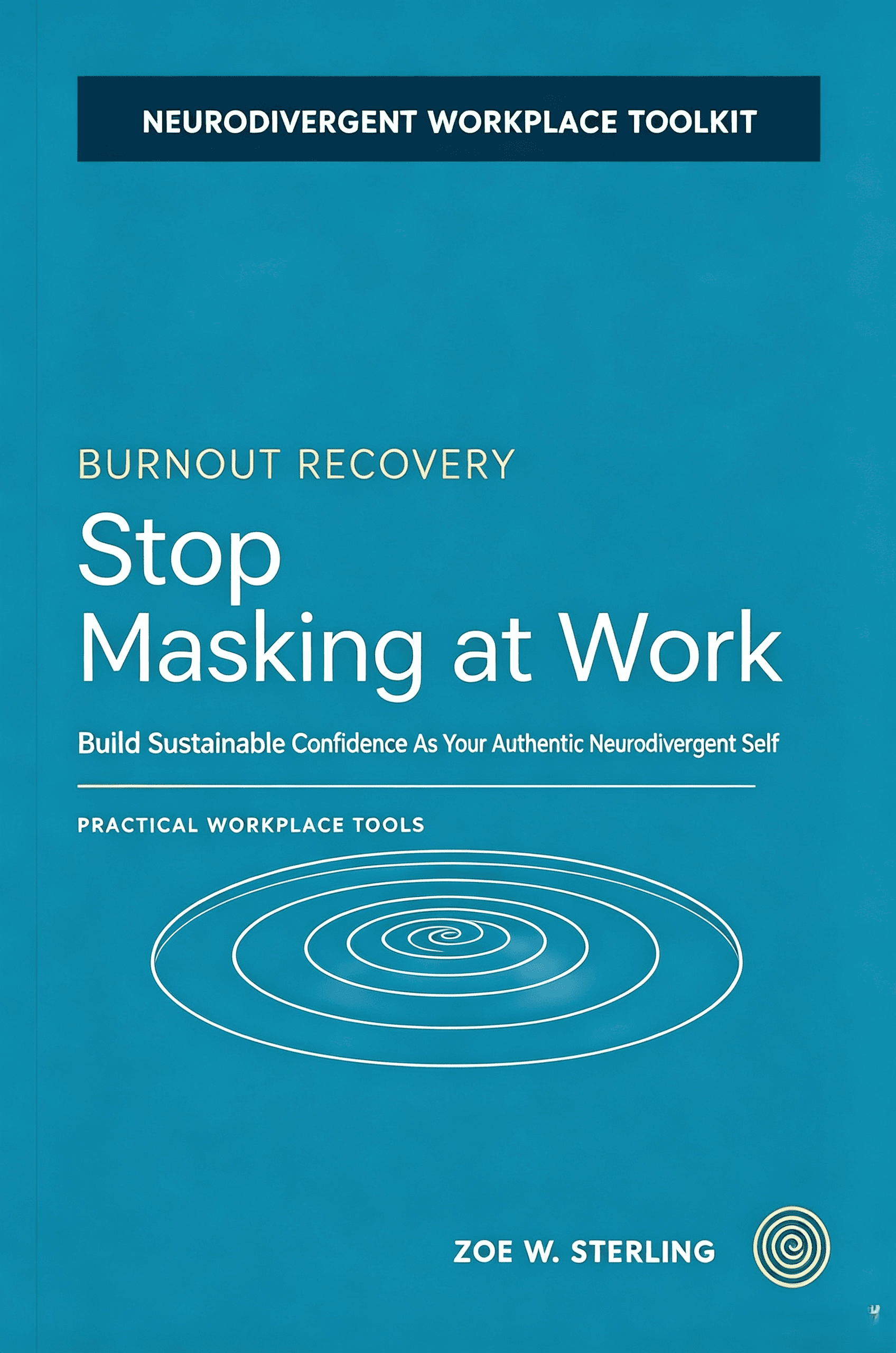
Stop Masking at Work
Masking — the exhausting practice of hiding your neurodivergent traits to appear neurotypical — is one of the biggest drains on neurodivergent professionals' well-being. This book provides a 6-step framework for unmasking.
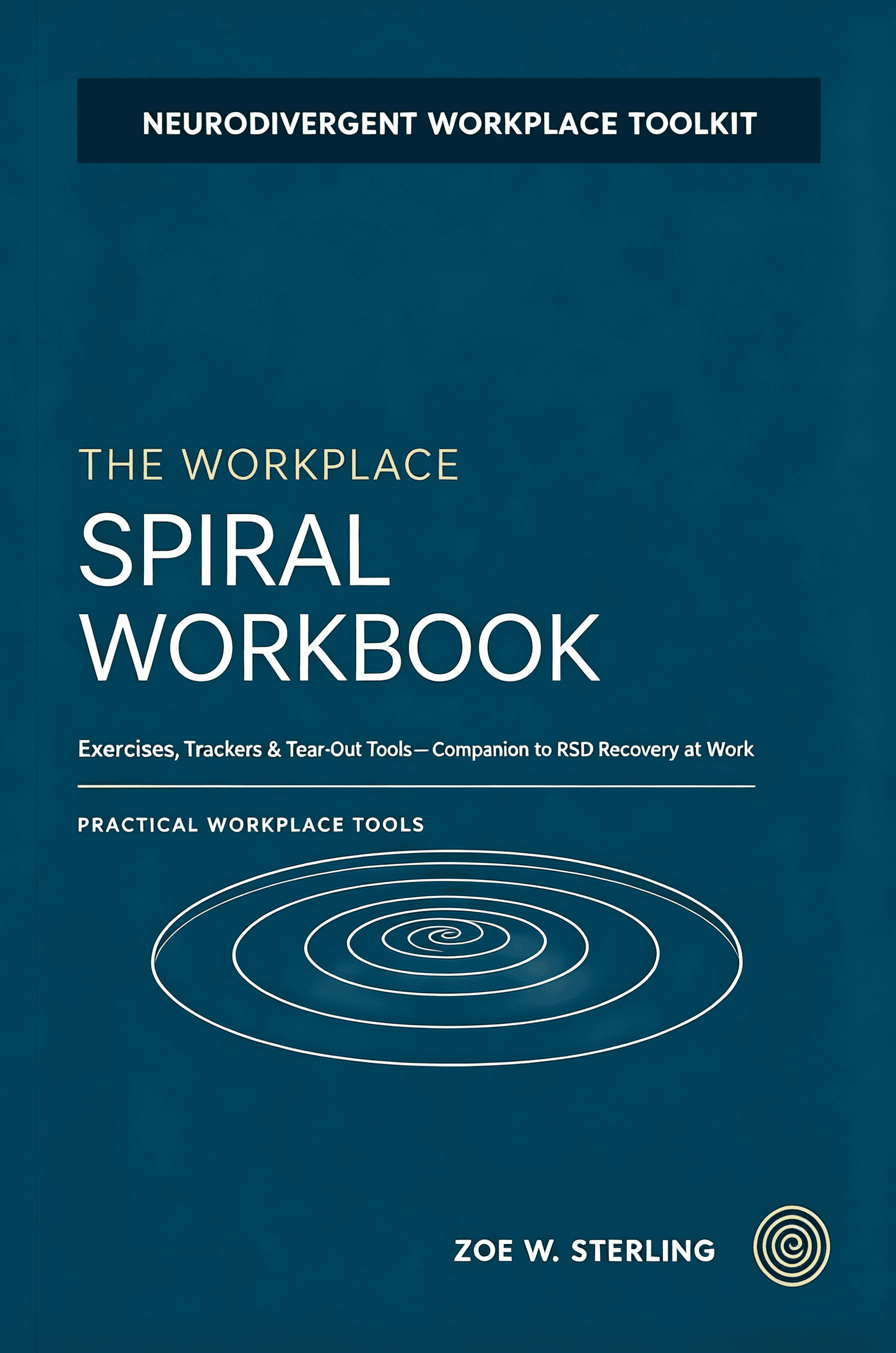
The Workplace Spiral Workbook
This interactive workbook is the companion to Zoe Sterling's Workplace Spiral assessment. Readers identify their spiral type, track their workplace patterns, and practice rewiring strategies to break free from unhealthy cycles.
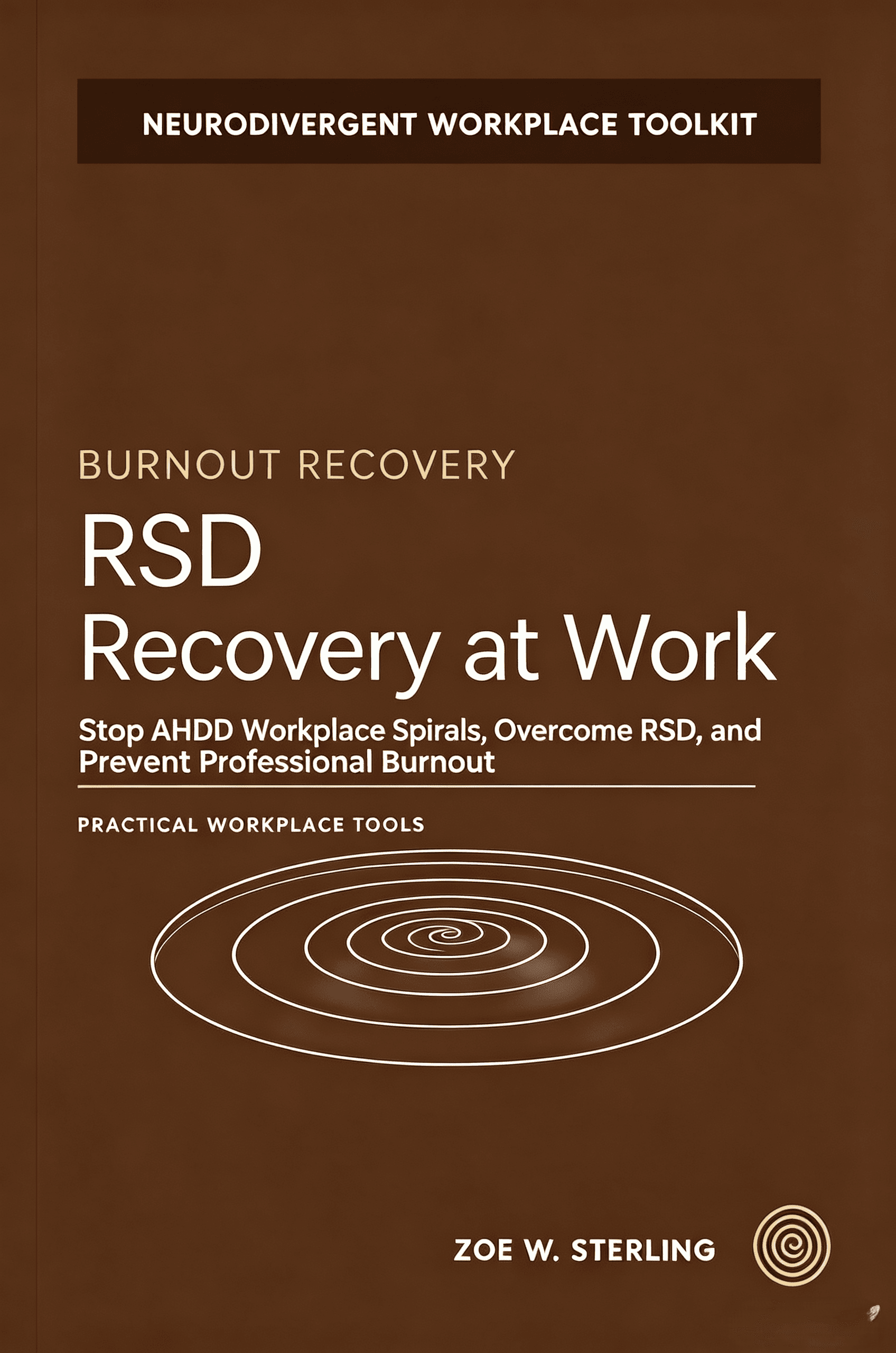
RSD Recovery at Work
A comprehensive field guide for neurodivergent adults navigating the workplace. Based on Zoe Sterling's 10+ years of ADHD workplace research and coaching, this book identifies 8 core strengths and 7 hidden workplace patterns.