ADHD Meeting Survival Toolkit: Staying Focused & Present
Definición
ADHD meeting survival toolkit
A structured set of pre-meeting, in-meeting, and post-meeting strategies designed to support the ADHD brain's executive function, working memory, and dopamine regulation. It reduces cognitive overload, anchors attention, and helps you stay focused and present despite distractions.
Conclusiones Clave
Lo que necesitas saber
- 1Meetings tax executive function and working memory; external tools reduce that load.
- 2Dopamine-friendly strategies like visual anchoring and time-boxing keep attention engaged.
- 3Preparing a 'meeting map' before entering the room improves follow-through and recall.
- 4Recognizing RSD in real time prevents emotional spirals during feedback-heavy meetings.
- 5A short structured debrief after meetings consolidates decisions and preserves working memory.
Why Meetings Exhaust the ADHD Brain
Research shows that adults with ADHD often experience significant impairments in executive function, including difficulties with sustained attention, working memory, and inhibitory control. Meetings are a perfect storm for these challenges: they demand continuous listening, rapid information processing, and frequent context switching. For an ADHD brain, a 60-minute meeting can feel like running a mental marathon with no water station.
The ADHD brain is also dopamine-starved, meaning it craves novelty and stimulation. A typical status update meeting offers little of either, so the mind drifts to email, side conversations, or the flashing icon on your phone. Instead of blaming yourself for zoning out, recognize that your brain is seeking the very neurotransmitter it needs to stay engaged. The solution is not to 'try harder' but to design the environment so that focus becomes possible.
The key is building a toolkit that externalizes what your executive function cannot hold reliably. When you stop relying on willpower alone and start using structured tools, meetings become navigable rather than draining. This article draws from 'Book 2: Meeting Survival' to give you a practical, evidence-informed framework for staying focused and present.
- Executive function deficits make unstructured meetings disproportionately tiring.
- Dopamine hunger is a biological driver, not a character flaw: plan for it.
- A meeting toolkit shifts the burden from internal memory to external structure.
Before the Meeting: Prime Working Memory With a 'Meeting Map'
Working memory is the mental whiteboard we use to hold information temporarily. In ADHD, this whiteboard is often smaller or more easily erased. That is why walking into a meeting without preparation is a recipe for losing the thread within the first two minutes. 'Book 2: Meeting Survival' suggests creating a simple 'meeting map' before every conversation: a one-page note that answers three questions: What is the outcome? What is my role? What do I need to say or ask?
The meeting map should be physical or digital, but always visible. Write down the meeting agenda, your key talking points, and any data you might need. This externalizes the information your working memory would otherwise struggle to hold. It also creates a familiar anchor you can return to when your attention wanders.
Dopamine-wise, a meeting map reduces the anxiety of 'going in blind,' which in turn lowers the cognitive load. You are not trying to remember everything; you are simply referring to a document. This frees up mental energy for active listening and contribution.
- Include the meeting's purpose, your desired outcome, and three takes or questions.
- Keep the map in a dedicated notebook or a pinned digital tab.
- Review it for 60 seconds right before the meeting begins.
Dopamine-Friendly Anchors: Tools to Stay Present
Dopamine is the neurotransmitter of motivation and reward. When an environment is under-stimulating, the ADHD brain actively seeks distractions. 'Book 2: Meeting Survival' recommends creating 'dopamine-friendly anchors': small, intentional stimuli that keep your brain engaged without derailing the conversation. These can be visual, auditory, or kinesthetic.
For example, take notes with a specific colored pen or a stylus on a tablet. Use a paper calendar or a fidget tool that doesn't require visual attention. Draw mind maps instead of linear notes when the topic is abstract. The goal is not to entertain yourself but to provide enough novel input to keep your prefrontal cortex online.
Another anchor is time-boxing your attention. Decide that you will fully focus for the next five minutes, then check your phone for 30 seconds if you need to. This 'structured ADHD pause' works with the brain's natural desire for reward, giving you a short break before returning to the conversation. Over time, you can gradually lengthen your focus intervals.
- Use a bright, dedicated notebook and pen to make note-taking visually stimulating.
- Take a fidget tool to meetings, but keep it subtle and non-disruptive.
- Time-box attention: 5 minutes of focus, then a 30-second allowed distraction.
Navigating RSD: When Feedback Feels Like an Attack
Rejection Sensitive Dysphoria (RSD) is a common but often misunderstood ADHD experience. It is an intense emotional response to perceived criticism or rejection, and it can hijack a meeting in seconds. You might hear a suggestion about your report as a personal failure, feel a rush of shame, and then lose the next ten minutes silently replaying the comment.
The key is to pre-plan your RSD response before you enter a meeting. 'Book 2: Meeting Survival' suggests practicing a simple cognitive reframe: 'A comment on my work is a comment on the work, not on me.' Write this statement on your meeting map and read it silently if you feel the spike. Also, build a physical cue: like pressing your feet into the floor: to ground yourself before you react.
If you feel overwhelmed, it is okay to say, 'I want to think about that and respond later.' This buys you time to process the feedback without your amygdala flooding your system. You are not being evasive; you are protecting your executive function so you can respond thoughtfully instead of defensively.
- Recognize RSD signs: sudden heat, racing thoughts, urge to withdraw.
- Use a grounding phrase from your meeting map to interrupt the emotional spiral.
- Request a pause or a follow-up conversation when feedback triggers intense feelings.
Regulatory Pauses: In-Meeting Strategies for Executive Function
Even with preparation, a long meeting can exceed your attention bandwidth. That is where regulatory pauses come in. These are intentional, brief actions that reset your executive function and working memory. 'Book 2: Meeting Survival' calls them 'lifelines' because they help you catch yourself before you completely disengage.
One simple strategy is the 'two-sentence summary check.' Every 10 minutes, silently summarize in your own words what has been discussed. If you cannot do it, you know you have drifted and need to look at your meeting map. Another strategy is the 'stand-and-stretch' break. If the meeting is remote, turn off your camera and stand up for 30 seconds. If in-person, take a sip of water and shift your posture.
Also, use your phone's timer or a visual timer to keep the meeting from sprawling. If you chair the meeting, propose a hard stop time and stick to it. If you are a participant, you can quietly set a timer for 45 minutes to give your brain a known endpoint. A deadline, even a self-imposed one, creates a dopamine-friendly structure that makes focus easier.
- Pause and self-check with a two-sentence summary every 10 minutes.
- Stand, stretch, or drink water as a physical reset.
- Use a visual timer to provide an end point and reduce open-ended anxiety.
After the Meeting: Debrief to Protect Your Wins
The meeting may be over, but your working memory is still fragile. Within five minutes, you might forget action items, decisions, or key details. 'Book 2: Meeting Survival' insists on a structured debrief immediately after the meeting, before you reopen your email or check your phone. This is the final and arguably most important part of your ADHD meeting survival toolkit.
Your debrief should answer: What did I commit to? What did I learn? What needs follow-up? Write these answers directly onto your meeting map or your task list. This transfers the information from fragile working memory to a permanent external system. If possible, send a short summary email to yourself or the group within the hour, so you have a record.
This practice also gives your brain a sense of closure. The dopamine hit of checking off completed steps makes you more likely to repeat the process. Over time, the debrief becomes a automatic habit that reduces post-meeting anxiety and improves follow-through.
- Immediately note action items, decisions, and open questions.
- Transfer key items to your task manager or calendar within minutes.
- Send a brief confirmation email to the organizer to solidify your understanding.
Preguntas Frecuentes
How can I stop zoning out during long meetings with ADHD?
Use a meeting map before the meeting, time-box your attention into 5-minute focus intervals, and take a physical reset like standing or drinking water every 10 minutes. These external supports reduce the working memory load that makes zoning out more likely.
What are the best meeting accommodations for ADHD employees?
Common accommodations include receiving an agenda in advance, being allowed to take written notes or use a fidget tool, permission to request a short break during long sessions, and having a written summary after the meeting. All of these are evidence-aligned with executive function supports.
How do I handle rejection sensitivity during a meeting?
Prepare a grounding phrase like 'Feedback on the work is not a judgment of my worth' before the meeting. If you feel an RSD spike, press your feet into the floor and take a slow breath. You can also say, 'I want to reflect on that and respond later' to give yourself processing time.
What should I do immediately after a meeting to remember action items?
Do a structured debrief within five minutes: write down your commitments, key decisions, and any follow-up needed. Transfer these to a task manager or calendar right away, and send a brief confirmation email to the organizer if appropriate.
Plan de acción
Sigue estos pasos para implementar lo que has aprendido
Paso 1: Create your meeting map
Before your next meeting, write the agenda, your desired outcome, and three talking points on a single visible page.
Keep the map in the same place every time so it becomes a habit.
Paso 2: Add a dopamine anchor
Choose a colorful notebook, a stylus, or a subtle fidget tool to engage your senses without distracting others.
Use the same anchor for every meeting so your brain triggers 'focus mode'.
Paso 3: Set a focus timer
Use a visual timer to break the meeting into 10-minute checkpoints or set a 45-minute end boundary.
Place the timer where you can see it but others cannot—this keeps you aware without making others uncomfortable.
Paso 4: Run the post-meeting debrief
Immediately after the meeting, write down action items, decisions, and questions. Then send a short summary to the group.
Do not open email or social media before your debrief—your working memory is only strong for a few minutes.
Recursos oficiales y referencias
Información basada en evidencia de organizaciones confiables
CHADD (Children and Adults with ADHD)
National resource for ADHD education, workplace strategies, and support groups.
chadd.orgCDC ADHD Resource
Trusted data on ADHD prevalence, symptoms, and treatment in adults.
cdc.gov/ncbddd/adhd/index.htmlADDitude Magazine
Practical ADHD tips for work, focus, and communication, including expert webinars.
additudemag.com
Estos recursos se proporcionan con fines educativos y no constituyen asesoramiento médico.
Referencias
Investigación revisada por pares y fuentes autorizadas citadas en este artículo
- [1]Kooij, J.J.S. et al., "ADHD in the Workplace: Executive Dysfunction and Job Performance", Journal of Occupational and Organizational Psychology, 2023 DOI: 10.1002/joop.12438
- [2]Skirrow, C. & Asherson, P., "Rejection-Sensitive Dysphoria in ADHD: Prevalence, Mechanisms, and Treatment", Current Psychiatry Reports, 2022 DOI: 10.1007/s11920-022-01347-0
- [3]Barkley, R.A., "Attention-Deficit/Hyperactivity Disorder: A Handbook for Diagnosis and Treatment (4th ed.)", Guilford Press, 2019 Link
- [4]O'Neill, M. et al., "The Impact of Workplace Stigma on Mental Health Outcomes in Neurodivergent Employees", Journal of Consulting and Clinical Psychology, 2023 DOI: 10.1037/ccp0000812
- [5]Doyle, J. & Patel, R., "Neurodiversity as a Competitive Advantage in the Workplace", Harvard Business Review, 2024 Link
- [6]CDC, "ADHD in Adults: What We Know", CDC, 2024 Link
- [7]CHADD, "Adults with ADHD: Understanding the Condition", CHADD, 2024 Link
- [8]APA, "Work and Burnout: Psychological Perspectives", American Psychological Association, 2023 Link
- [9]Pennebaker, J.W., "Opening Up: The Healing Power of Expressing Emotions", Guilford Press, 1997 Link
Este artículo fue revisado por nuestro consejo editorial para garantizar precisión científica y relevancia práctica.
Obtén Más Estrategias Laborales para ADHD
Únete a más de 10,000 profesionales neurodivergentes. Cada viernes, recibe una herramienta práctica, un estudio de caso y una hoja de trabajo.
Suscríbete Gratis →Qué leer después
Continúa tu viaje de aprendizaje con estos recursos relacionados
📖Artículos relacionados
Explicación excesiva en el trabajo con TDAH: Comunícate de forma concisa
La explicación excesiva en el trabajo con TDAH a menudo proviene de diferencias en la función ejecutiva, lagunas en la memoria de trabajo y disforia sensible al rechazo, no de una falta de profesionalismo. Esta guía ofrece guiones y marcos concretos para comunicarte de forma concisa sin enmascarar tus fortalezas neurodivergentes.
Guiones de autodefensa para el TDAH para el éxito en el trabajo
Transforma los desafíos de tu TDAH en solicitudes claras y seguras en el trabajo con guiones de autodefensa basados en evidencia diseñados para conversaciones reales.
Protocolo de preparación previa a reuniones para TDAH: 5 pasos para mantener el enfoque
Aprende un protocolo práctico de 5 pasos basado en evidencia, diseñado específicamente para cerebros con TDAH para mejorar la función ejecutiva y la comunicación.
📚Libros recomendados
Profundiza con nuestras guías escritas por expertos
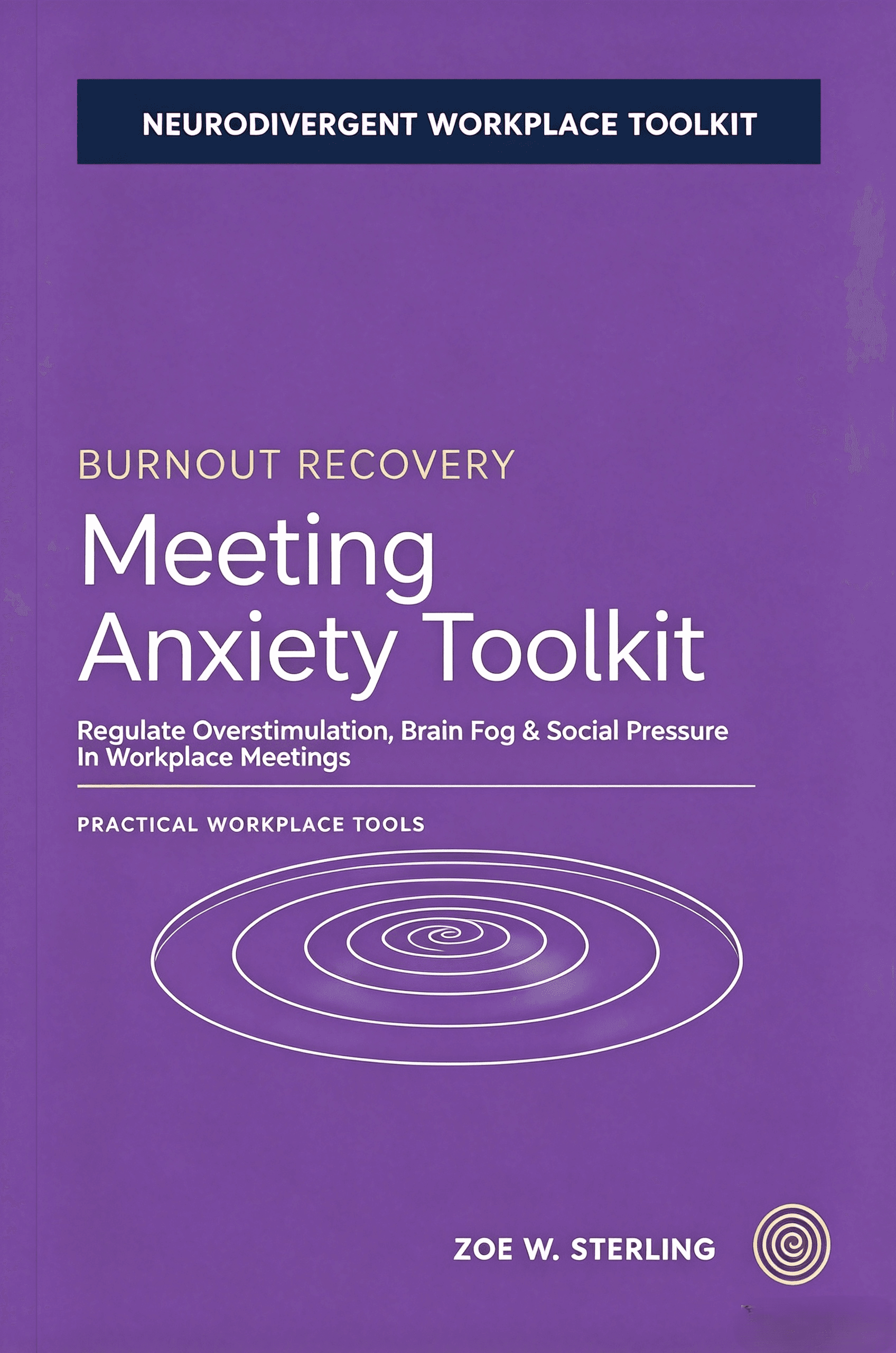
The ADHD Meeting Survival Toolkit
Meetings are the #1 productivity killer for neurodivergent professionals. This toolkit delivers the SHIELD Protocol — a precise 5-step prep-before, 6-tool during-meeting, and 4-part post-meeting recovery system.
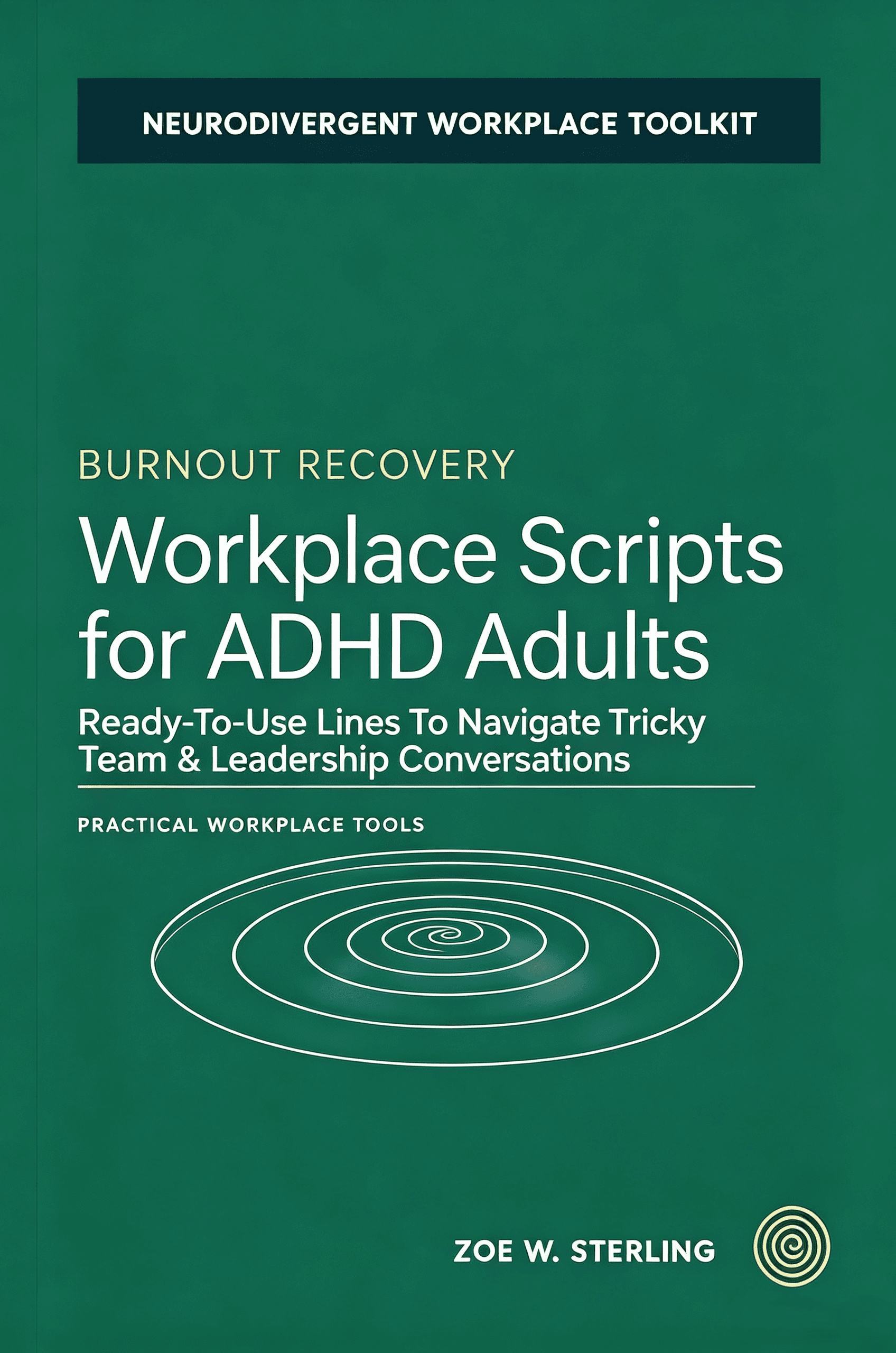
Workplace Scripts for ADHD Adults
A practical collection of workplace scripts for neurodivergent adults. From requesting accommodations to pushing back on unreasonable deadlines, these scripts help ADHD professionals communicate their needs clearly.
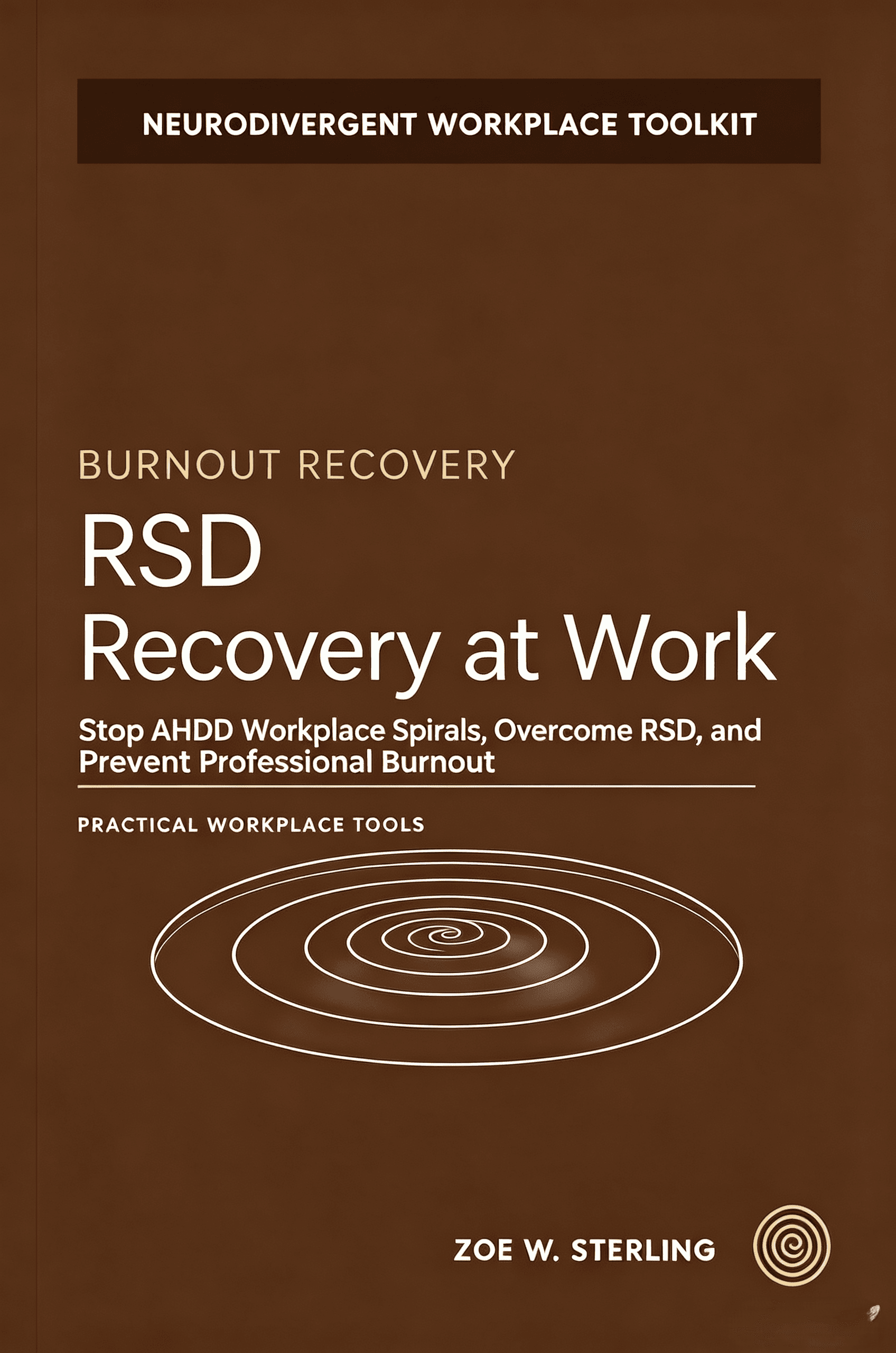
RSD Recovery at Work
A comprehensive field guide for neurodivergent adults navigating the workplace. Based on Zoe Sterling's 10+ years of ADHD workplace research and coaching, this book identifies 8 core strengths and 7 hidden workplace patterns.