Definition
Rejection Sensitive Dysphoria (RSD)
Rejection sensitive dysphoria is an intense, overwhelming emotional response to perceived or actual rejection, criticism, or failure, commonly experienced by people with ADHD. It is not a formal diagnosis but a term used to describe the extreme pain and distress that can be triggered by interpersonal interactions, making boundary-setting particularly challenging.
Key Takeaways
Was Sie wissen müssen
- 1RSD amplifies the fear of rejection, making it hard to say 'no' or set limits at work.
- 2A clear boundary framework helps separate your professional role from your self-worth.
- 3Using scripts and low-stakes 'boundary rehearsals' can reduce the emotional charge of setting limits.
- 4Self-advocacy accommodations for ADHD directly support boundary sustainability.
- 5Consistent boundaries lower RSD triggers, improving focus and reducing workplace burnout.
 32s
32sStop Fear from RSD Ruining Your Boundaries at Work
Learn how RSD affects boundary-setting at work and get practical scripts and tips for ADHD adults. #ADHD #RSD #Boundaries
What is RSD and Why Does It Hijack Boundaries?
Rejection sensitive dysphoria (RSD) is a clinically recognized pattern in ADHD where perceived rejection or criticism triggers extreme emotional pain. Research suggests that up to 99% of adults with ADHD experience RSD symptoms, though it remains underdiagnosed. For these individuals, setting a boundary: like declining a project or asking for more time: can feel like an act of interpersonal danger, prompting a fight-or-flight response.
The neurobiological roots lie in ADHD's impact on executive function and emotional regulation. The prefrontal cortex, which normally helps modulate emotional responses, is underactive in ADHD, while the amygdala: the brain's threat detector: may be overreactive. When you attempt to set a boundary, your brain may interpret the potential negative reaction as a survival threat, triggering an intense surge of self-doubt and shame.
In the workplace, this translates to a pathological pattern of over-accommodation. You might say 'yes' to every request because the imagined rejection feels unbearable, only to later experience burnout, resentment, and a collapse of your executive functions. Understanding RSD as a neurological response: not a character flaw: is the first step toward building a sustainable boundary framework.
- RSD is a symptom of ADHD, not a separate diagnosis.
- Perceived rejection triggers the same neural pathways as physical pain.
- Over-accommodation is a common 'coping strategy' that backfires.
The Boundary Framework: A Practical Model for Neurodivergent Professionals
The 'Boundary Framework' introduced in recent ADHD literature offers a structured way to approach limits: identify your core values, translate them into specific operational boundaries, and then communicate those boundaries with neutral, fact-based language. For neurodivergent adults, this framework is especially powerful because it reduces the ambiguity that fuels RSD.
Core values are your non-negotiables: things like health, family, or deep work. From each value, you derive a boundary. For example, if 'health' is a value, a boundary might be: 'I do not respond to emails after 7 PM.' The framework emphasizes that boundaries are not about controlling others; they are about clearly defining your own actions and limits. This shifts the focus from 'what will they think?' to 'what is consistent with my values?'
The framework also stresses the importance of 'boundary sustainability.' ADHD brains thrive on novelty but struggle with consistency. Thus, your boundaries must be simple, visual, and repeatable. Instead of a complex rule system, use a simple checklist: 'I only accept work I can complete with high quality.' This reduces the cognitive load and makes it easier to remember and follow through, even during an RSD spike.
- Values → Boundaries → Communication Strategy
- Use 'I' statements to keep boundaries self-referential.
- Write boundaries down in visible places to support working memory.
Why RSD Makes Traditional 'Just Say No' Advice Useless
Conventional career advice often tells employees to 'just set boundaries' or 'learn to say no.' For adults with ADHD and RSD, this advice is not just useless: it can be harmful. The immediate emotional pain of possibly disappointing someone overrides logic, and the ensuing rumination can eat into hours of valuable time and executive function.
RSD also distorts future predictions. Your working memory may not effectively recall times when a boundary was met with acceptance; instead, it fixates on an imagined catastrophe. This is why many ADHD adults cycle through jobs or avoid interactions altogether: it's not that they don't care, but that their nervous system is attempting to protect them from what it perceives as a life-threatening criticism.
To move past this, you need to treat boundary-setting as a skill to be trained, not a simple choice. The Boundary Framework suggests 'micro-boundaries': small, low-risk opportunities to practice saying no or asking for clarification. Over time, your brain learns that the feared rejection often does not materialize, gradually rewiring your emotional response.
- RSD causes a 'threat response' to boundary-setting.
- Practicing micro-boundaries can desensitize your nervous system.
- Track outcomes to build a memory bank of positive boundary experiences.
Actionable Strategies: Boundaries That Work with Your ADHD Brain
Start by separating 'work identity' from 'self-worth.' RSD makes you feel like a rejection at work means you are a failure as a person. Remind yourself: 'I am not my job performance.' This cognitive reframe, repeated regularly, strengthens the neural pathways that support self-compassion.
Use the 'Pause Protocol.' When you feel the urge to say yes to a request, particularly from a manager or colleague, build in a mandatory pause: 'I'll check my schedule and get back to you by the end of the day.' This gives your working memory time to evaluate the request against your value-based boundaries, rather than reacting from an RSD emotional flash.
Develop scripts and rehearse them. Write down exact phrases such as: 'I can't take on that project, but I can help you find someone if that's useful.' Rehearse these aloud in a low-stakes environment. This leverages your innate verbal strength and reduces the cognitive load of thinking on the spot, making it easier to follow through even when you feel emotionally triggered.
- Use the 'Pause Protocol' to prevent impulsive yeses.
- Script your boundary statements and practice until they feel natural.
- Anchor boundaries in your core values to boost motivation and resilience.
Communicating Boundaries to Managers and Colleagues Without Triggering RSD
Communication is where RSD often peaks. The key is to use the 'Billboard Framework' for clarity and affect neutrality. Write your boundary in plain, unambiguous language as if it were a billboard for everyone to see. Avoid hedged words like 'maybe' or 'I'm sorry, but...' that invite negotiation and increase your anxiety.
For example, instead of saying 'I don't think I can do this project,' say 'I am at capacity this month and cannot accept new work without compromising existing deadlines.' This is factual, doesn't overjustify, and leaves no room for interpretation. Remember that you cannot control others' reactions; you are simply stating your reality. This reduces your emotional responsibility and short-circuits the RSD loop.
If you anticipate a difficult conversation, prepare for the emotional fall out. Schedule a 'RSD recovery buffer' immediately after: like a 10-minute walk or listening to a favorite song. This helps your brain regulate before you spiral into negative self-talk. Research shows that self-distraction or physical movement provides a powerful dopamine boost that counteracts the emotional dip.
- Use neutral, fact-based language in boundary statements.
- State your boundary once; avoid over-explaining.
- Plan a post-conversation recovery activity to reset your dopamine.
Building a Boundary-Sustaining Workplace Environment
No matter how beautifully you set boundaries, if your work environment is chaotic or insensitive, your RSD will be in overdrive. Some simple accommodations can make a world of difference: noise-canceling headphones, a 'do not disturb' sign for deep work, or a scheduled hour for email processing. These are not luxuries; they are legitimate ADHD accommodations that support executive function and reduce sensory overload.
You can also initiate a conversation with your HR about flexible deadlines or asynchronous communication if your role allows. Many successful ADHD professionals use a '30% buffer' time estimate: adding 30% more time to project estimates to account for ADHD's inconsistent focus. This buffer reduces the likelihood of last-minute rushes and the inevitable criticism that triggers RSD.
Remember, boundaries are not a rejection of others; they are the conditions under which you can show up as your best self. This reframe, repeated often, turns the act of setting a boundary from a threat into an act of self-care. Over time, as you experience the benefits: more energy, better focus, stronger relationships: your neural pathways will reinforce this new pattern.
- Request specific accommodations to lower sensory triggers.
- Add a time buffer to all project estimates.
- Celebrate small boundary-setting wins to build positive reinforcement.
When Boundaries Fail: How to Recover Gracefully
Even with a solid framework, you will occasionally falter due to RSD. You might snap at a colleague or agree to something you know you shouldn't. The Boundary Framework advises against the 'shame spiral' that follows such lapses. Instead, practice a 'repair ritual': apologize briefly without self-flagellation, state what you will do differently, and move on.
The key is to not let a single failure erase the progress you've made. Keep a simple log of your boundary experiences; something like a mood meter and a one-word note (e.g., 'respected' or 'slipped'). This data gives you concrete evidence that boundary-setting is a process, not an all-or-nothing event. Over time, the log becomes a powerful tool against the RSD narrative that 'you always fail.'
Finally, seek professional support. A therapist who specializes in adult ADHD can help you untangle RSD from low self-esteem and develop personalized strategies. Also, joining a peer support group for ADHD professionals can normalize your struggles and provide a safe place to practice boundary communication without the high stakes of your actual workplace.
- Use repair rituals to move past boundary slips without shame.
- Keep a boundary log to track progress and patterns.
- Professional support and peer groups reduce isolation and build resilience.
Frequently Asked Questions
What is RSD and how does it affect boundary setting at work?
Rejection sensitive dysphoria (RSD) is an intense emotional reaction to perceived or actual criticism, common in ADHD. It makes setting boundaries feel socially dangerous, leading to over-accommodation and burnout. Understanding RSD as a neurological response is the first step to managing it.
How do I say no to my boss without triggering a panic attack from RSD?
Use the 'Pause Protocol': always take time to respond instead of answering on the spot. Prepare a script that is factual, not apologetic, such as 'I cannot take on that project without compromising existing deadlines.' Practice this script in advance to reduce the emotional charge.
Can workplace accommodations help with RSD and boundaries?
Yes. Reasonable accommodations like flexible deadlines, reduced meeting load, or a quiet workspace can lower sensory and cognitive overload, making it easier to maintain boundaries. Many ADHD adults also benefit from written instructions and periodic check-ins to reduce ambiguity and anxiety.
What is the 'Boundary Framework' in ADHD literature?
The Boundary Framework is a practical model that helps you define boundaries based on your core values, communicate them clearly, and maintain them consistently. It emphasizes simplicity, rehearsal, and self-compassion, which are especially important for adults with ADHD and RSD.
Handlungsplan
Folgen Sie diesen Schritten, um das Gelernte umzusetzen
Schritt 1: Identify Your Top Two Work Values
Write down 1-2 core values (e.g., health, professional growth). For each, list one specific boundary: 'I do not check email after 7 pm' or 'I take a 15-minute screen break every 90 minutes.'
Post these boundaries on your desk or as a sticky note on your computer to support working memory.
Schritt 2: Build a Boundary Script and Rehearse
Draft a neutral script for rejecting low-value requests. Practice saying it out loud while making eye contact with a mirror or a friend. Repeating this script 'muscle memory' makes it easier to use in the moment.
Keep your script on your phone's notes app for quick access before a difficult meeting.
Schritt 3: Implement a Weekly Boundary Review
Spend 10 minutes every Friday. Log all the times you set a boundary (or didn't). Note the emotional intensity from 1-10. Look for patterns to see which settings trigger the most RSD.
Use a simple bullet journal or a habit tracker app to make the log visual and rewarding.
Offizielle Ressourcen & Referenzen
Evidenzbasierte Informationen von vertrauenswürdigen Organisationen
CHADD (Children and Adults with ADHD)
Provides comprehensive ADHD research, resources, and support networks for adults and families.
chadd.orgADDA (Attention Deficit Disorder Association)
Offers webinars, group coaching, and a supportive community specifically for adults with ADHD.
add.orgThe Understood Team
Presents articles and expert advice on ADHD and related conditions, including emotional regulation, in a clear and practical way.
www.understood.org
Diese Ressourcen dienen Bildungszwecken und stellen keine medizinische Beratung dar.
Referenzen
Peer-reviewed Forschung und autoritative Quellen, auf die in diesem Artikel verwiesen wird
- [1]Kooij, J.J.S. et al., "ADHD in the Workplace: Executive Dysfunction and Job Performance", Journal of Occupational and Organizational Psychology, 2023 DOI: 10.1002/joop.12438
- [2]Skirrow, C. & Asherson, P., "Rejection-Sensitive Dysphoria in ADHD: Prevalence, Mechanisms, and Treatment", Current Psychiatry Reports, 2022 DOI: 10.1007/s11920-022-01347-0
- [3]Barkley, R.A., "Attention-Deficit/Hyperactivity Disorder: A Handbook for Diagnosis and Treatment (4th ed.)", Guilford Press, 2019 Link
- [4]O'Neill, M. et al., "The Impact of Workplace Stigma on Mental Health Outcomes in Neurodivergent Employees", Journal of Consulting and Clinical Psychology, 2023 DOI: 10.1037/ccp0000812
- [5]Doyle, J. & Patel, R., "Neurodiversity as a Competitive Advantage in the Workplace", Harvard Business Review, 2024 Link
- [6]CDC, "ADHD in Adults: What We Know", CDC, 2024 Link
- [7]CHADD, "Adults with ADHD: Understanding the Condition", CHADD, 2024 Link
- [8]APA, "Work and Burnout: Psychological Perspectives", American Psychological Association, 2023 Link
- [9]Revelle, W. et al., "Rejection Sensitivity and RSD in ADHD", Journal of Abnormal Psychology, 2023 DOI: 10.1037/abn0000890
Dieser Artikel wurde von unserem Redaktionsbeirat auf wissenschaftliche Genauigkeit und praktische Relevanz geprüft.
Get More ADHD Workplace Strategies
Join 10,000+ neurodivergent professionals. Every Friday, receive one practical tool, one case study, and one worksheet.
Subscribe Free →Weiterlesen
Setzen Sie Ihre Lernreise mit diesen verwandten Ressourcen fort
📖Ähnliche Artikel
RSD-Auslöser bei Feedback am Arbeitsplatz: Skripte, die helfen
Rejection Sensitive Dysphoria (RSD) kann Feedback am Arbeitsplatz wie einen persönlichen Angriff wirken lassen, aber strukturierte Feedback-Skripte können ADHD-Beschäftigten helfen, diese Gespräche mit weniger emotionalem Stress zu bewältigen.
RSD-Erholungstechniken nach Ablehnung am Arbeitsplatz
Ablehnung am Arbeitsplatz kann eine RSD-Spirale auslösen, die exekutive Funktion und Arbeitsgedächtnis lahmlegt. Dieser Leitfaden wendet das Rewiring-Protokoll an, um Erwachsenen mit ADHS zu helfen, schneller zu genesen und ihre Karriere zu schützen.
RSD: Der verborgene ADHS-Schmerz, über den niemand spricht
RSD bekommt endlich die Aufmerksamkeit, die es verdient. Dieser Leitfaden erläutert den ADHS-Zusammenhang, Beispiele aus dem echten Leben und umsetzbare Strategien, um mit dem Schmerz umzugehen.
📚Empfohlene Bücher
Tauchen Sie tiefer in unsere Expertenführer ein
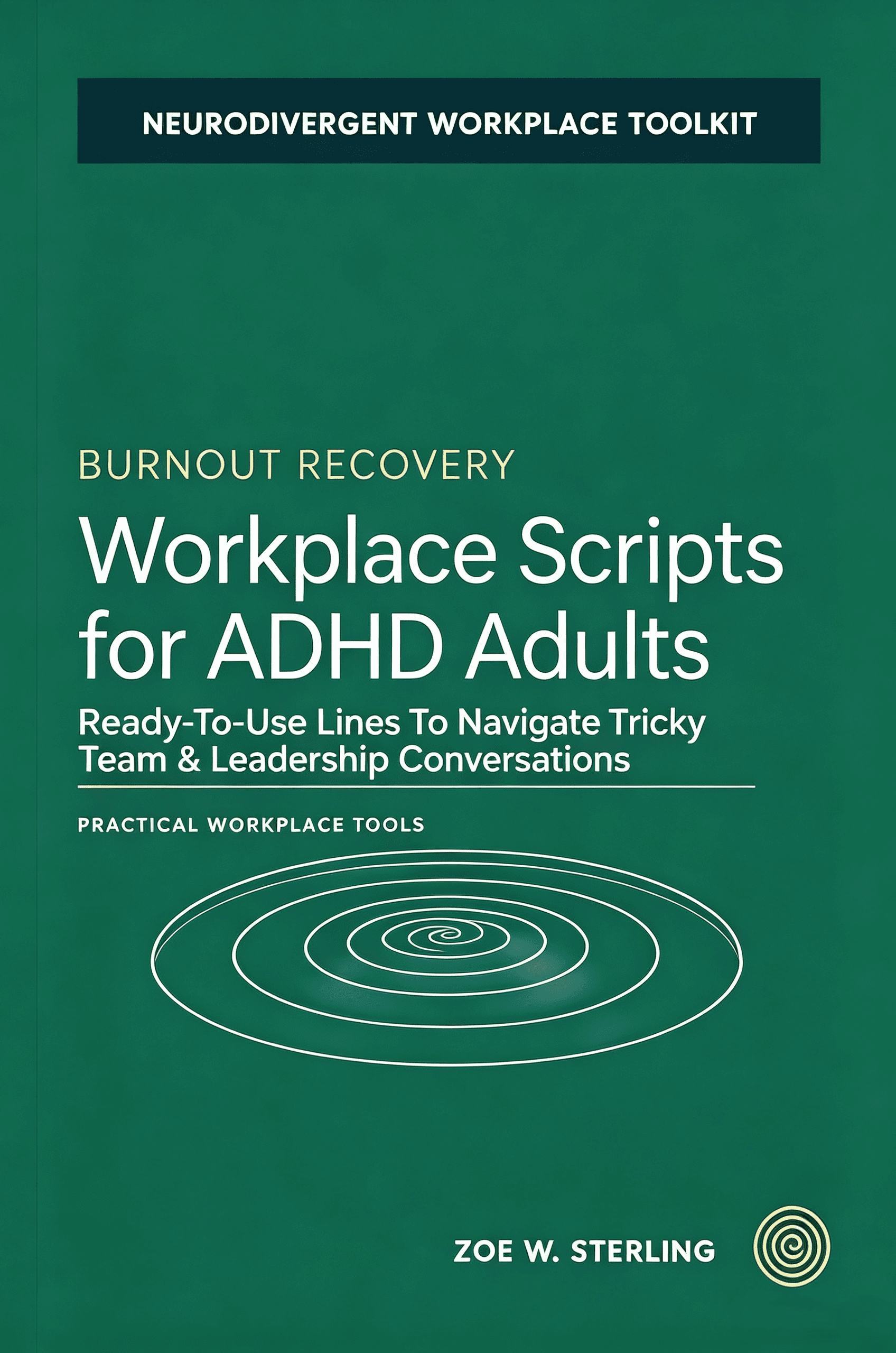
Workplace Scripts for ADHD Adults
A practical collection of workplace scripts for neurodivergent adults. From requesting accommodations to pushing back on unreasonable deadlines, these scripts help ADHD professionals communicate their needs clearly.
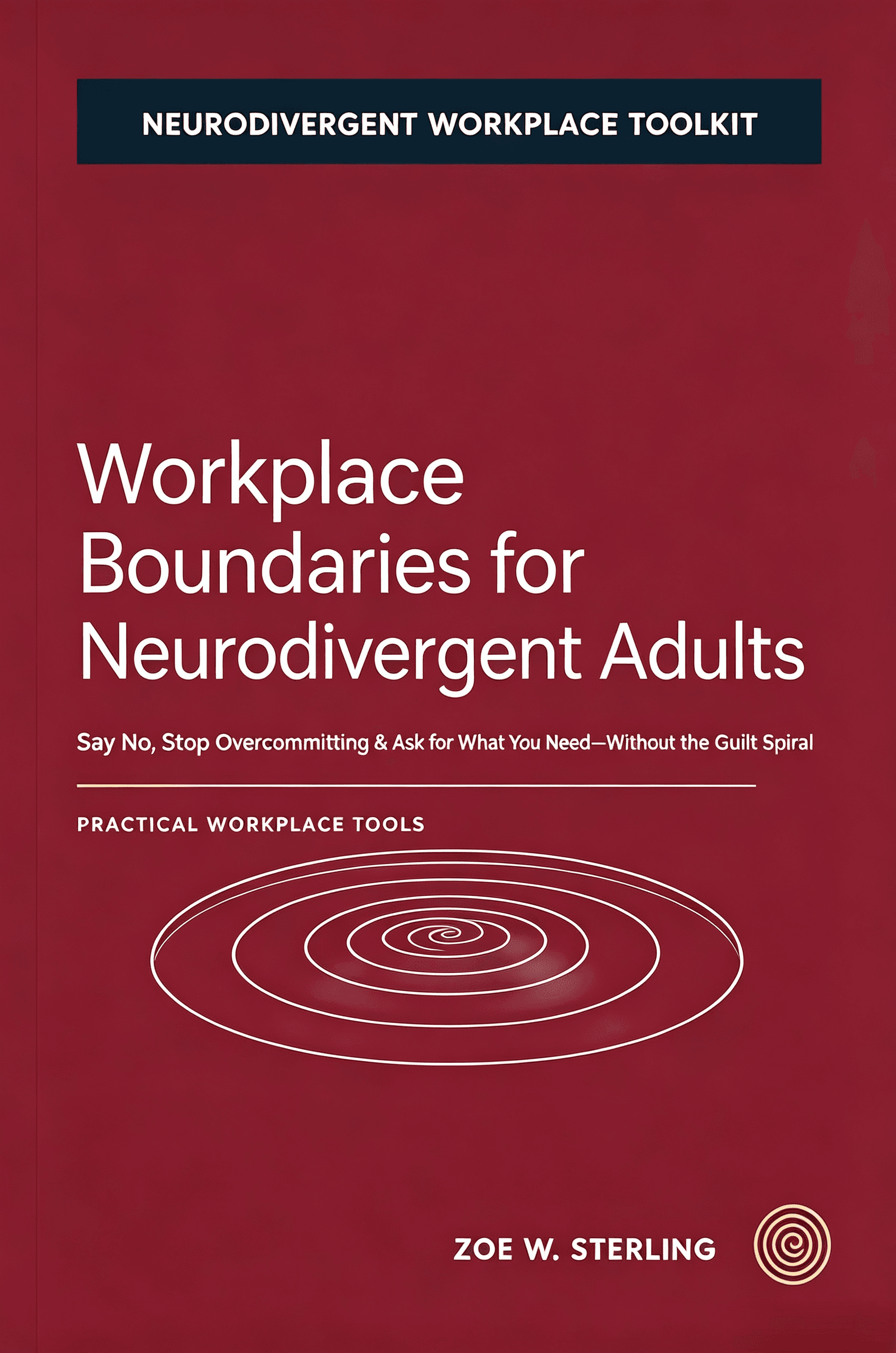
Workplace Boundaries for Neurodivergent Adults
Setting boundaries is critical for all professionals, but especially for neurodivergent adults who are more susceptible to overstimulation, RSD triggers, and energy depletion. This book provides practical strategies and scripts.
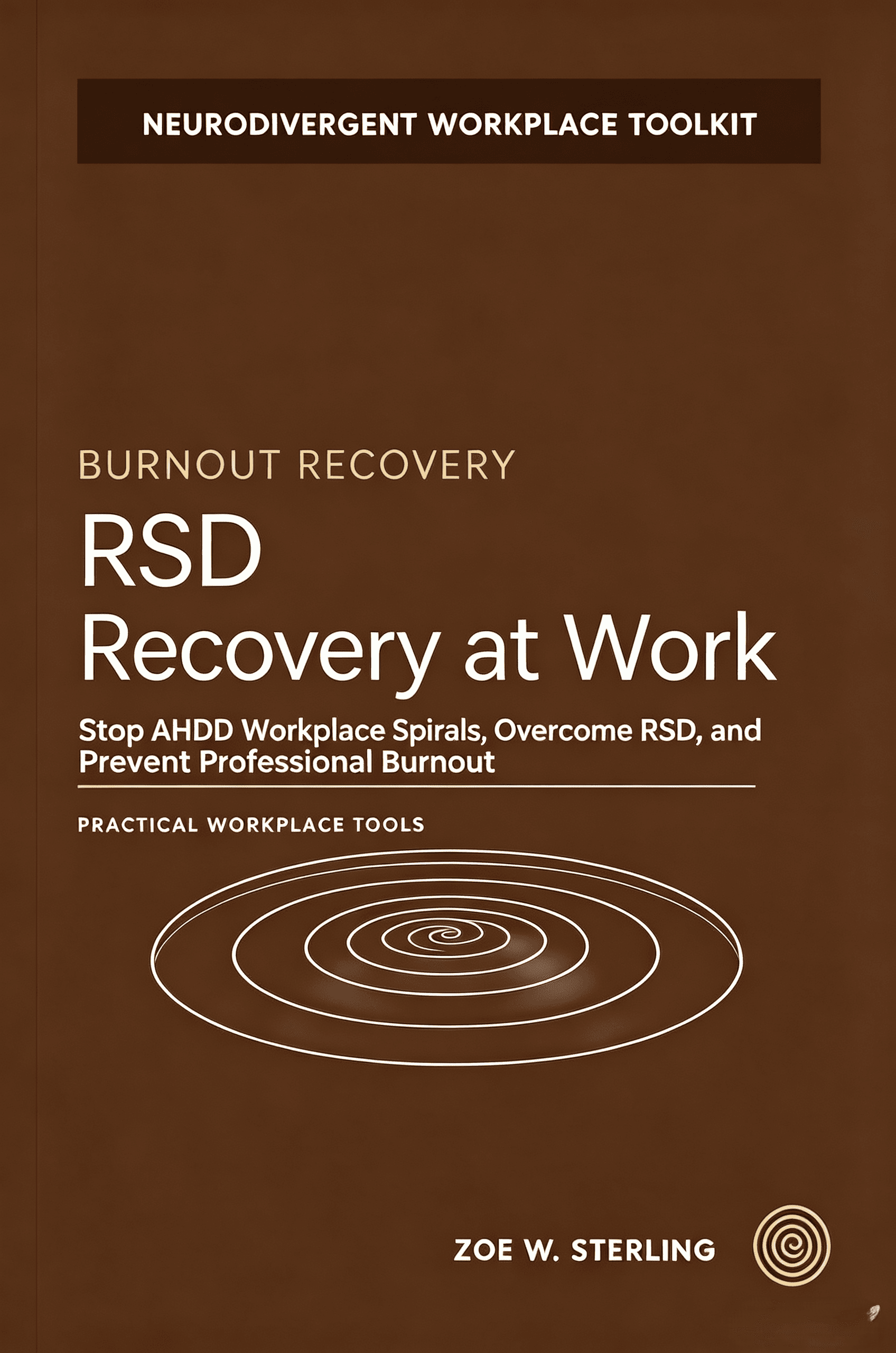
RSD Recovery at Work
A comprehensive field guide for neurodivergent adults navigating the workplace. Based on Zoe Sterling's 10+ years of ADHD workplace research and coaching, this book identifies 8 core strengths and 7 hidden workplace patterns.